JSTOR Global Plants Home
  • Home
  • Browse
  • About
  • Access
  • Account
    • Saved Items
    • Profile
  • Log in

Global Plants

Skip to Main Content
  • JSTOR Global Plants Home
  • Global Plants

    • Browse
    • About
    • Access
    • Account
      • Saved Items
      • Profile
Log in
  • Browse
  • About
  • Access
  • Account
    • Saved Items
    • Profile
Advanced Search

Compilation
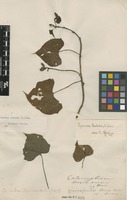
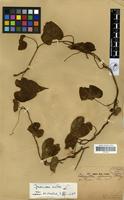
Calonyction bona-nox

6 Images see all

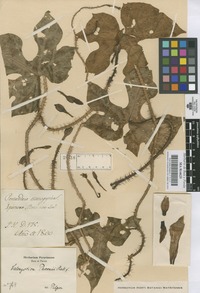
Original material of Calonyction pavonii (Choisy) Hallier f. [family CONVOLVULACEAE]
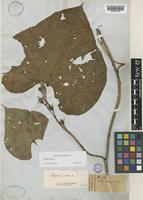
Ipomoea alba L. [family CONVOLVULACEAE]
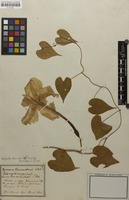
Filed as Calonyction bona-nox (L.) Bojer [family CONVOLVULACEAE]
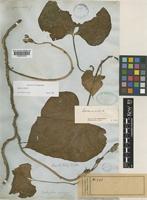
Ipomoea alba L. [family CONVOLVULACEAE]
Filed as Ipomoea batatas (L.) Lam. [family CONVOLVULACEAE]
Filed as Ipomoea alba L. [family CONVOLVULACEAE]
Previous
Next

Name

Identification
Calonyction bona-nox (L.) Bojer [family CONVOLVULACEAE ] (stored under name); Verified by Not on Sheet, Ipomoea bona-nox L. [family CONVOLVULACEAE ] Verified by Montes de Oca, P., 2012
Related name
  • Ipomoea bona-nox
  • Calonyction bona-nox

Flora

Entry for Ipomoea alba L. [family CONVOLVULACEAE]
Herbarium
Royal Botanic Gardens, Kew (K)
Collection
Flora of Tropical East Africa
Resource Type
Reference Sources
Entry From
Flora of Tropical East Africa, page 1, (1963) Author: B. VERDCOURT (East African Herbarium)
Names
Ipomoea alba L. [family CONVOLVULACEAE], Sp. Pl. : 161 (1753); van Ooststr. in Fl. Males., ser. 1, 4 (4) : 480, fig. 53 (1953); Meeuse in Bothalia 6 : 765 (1958). Type : India, Malabar : illustration of Convolvulus malabaricus flore amplo. .. in Rheede, Hort. Malab. 11, t. 50 (1692) (holo. !)
Convolvulus aculeatus L. [family CONVOLVULACEAE], Sp. Pl. : 155 (1753). Type: tropical America, collector unknown, specimen 99 : 213 Herb. Pluk. (BM–SL, lecto.!)
Ipomoea bona-nox L. [family CONVOLVULACEAE], Sp. Pl., ed. 2 : 228 (1762); U.O.P.Z. : 308 (1949). Type : as I. alba
Calonyction speciosum Choisy [family CONVOLVULACEAE], in Mém Soc. Phys. Genève 6 : 441, t. 1, fig. 4 excl. var. b (1834); Bak. & Rendle in F.T.A. 4 (2) : 117 (1905). Type : based on I. bona-nox L. (G, a specimen seen which substantiates this interpretation)
Calonyction bona-nox (L.) Bojer [family CONVOLVULACEAE], Hort. Maurit. : 227 (1837); Hall.f. in Bull. Herb. Boiss. 5 : 1028 (1897)
Calonyction aculeatum (L.) House [family CONVOLVULACEAE], in Bull. Torr. Bot. Club 31 : 590 (1904); F.W.T.A. 2 : 213 (1931)
Information
A glabrous or very rarely pubescent, annual or perennial; stems prostrate or twining, up to 2.4 m. long, smooth or rarely muriculate. Leaf-blade ovate or orbicular in outline, entire or 3-lobed, 6–20 cm. long, 5–16 cm. wide, acute, acuminate or obtuse at the mucronulate apex, cordate at the base; petiole 5–20 cm. long. Inflorescences axillary, 1–several-flowered; peduncle stout, 1–24 cm. long; pedicels 0.7–1.5 cm. long, lengthening to 2.5–3 cm. long and becoming very thick in fruit. Sepals elliptic, unequal; outer 2–3 sepals 5–12 mm. long, 6–7 mm. wide, with a long awn-like appendage 4–10 mm. long at the apex (Fig. 22/4, p. 102); inner sepals longer, 8–15 mm. long, 9 mm. wide, shortly mucronulate. Corolla opening at night, scented, white or greenish-cream below; tube cylindrical, 7–12 cm. long, 5 mm. wide; limb salver-shaped, 11–16 cm. wide. Capsule ovoid, 2.5–3 cm. tall, glabrous. Seeds 4, ovoid, white to black, glabrous, 10–12 mm. long, 7–9 mm. wide.
Range
DISTR. U2, K1, 4, 7; T3 originally American but now pantropical as an escape and also cultivated
Altitude range
290–1000 m.
Distribution
KENYA Northern Frontier Province Tanaland, Chebale, 28 Sept. 1945, J. Adamson 187 !KENYA Fort Hall District Makuyu, June 1952, C. van Someren 178 !KENYA Teita District Taveta, Babault in Bally 5199 !TANGANYIKA Lushoto District Amani, 22 Feb. 1950, Verdcourt 85 ! & 15 Jan. 1929, Greenway 1086!UGANDA Toro District Bwamba, Kiremia, 26 Nov. 1935, A. S. Thomas 1481 ! & Hakitengya, 17 Jan. 1932, Hazel 156 !

Related Materials

  • Terms and Conditions
  • Privacy Policy
  • Cookie Policy
  • Cookie Settings
  • Accessibility
  • Help
  • Contact Us
  • Facebook
  • Twitter
ITHAKA

JSTOR is part of ITHAKA, a not-for-profit organization helping the academic community use digital technologies to preserve the scholarly record and to advance research and teaching in sustainable ways.

©2000-2026 ITHAKA. All Rights Reserved. JSTOR®, the JSTOR logo, JPASS®, Aluka®, and ITHAKA® are registered trademarks of ITHAKA.

╳