JSTOR Global Plants Home
  • Home
  • Browse
  • About
  • Access
  • Account
    • Saved Items
    • Profile
  • Log in

Global Plants

Skip to Main Content
  • JSTOR Global Plants Home
  • Global Plants

    • Browse
    • About
    • Access
    • Account
      • Saved Items
      • Profile
Log in
  • Browse
  • About
  • Access
  • Account
    • Saved Items
    • Profile
Advanced Search

Compilation
Cactus ficus-indica

3 Images see all

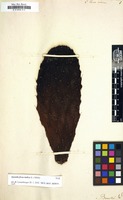
Filed as Cactus ficus-indica [family CACTACEAE]
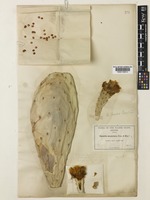
Isotype of Opuntia laevis J.M.Coult. [family CACTACEAE]
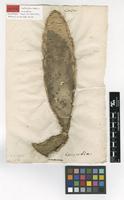
Neotype of Cactus ficus-indica L. [family CACTACEAE]
Previous
Next

Name

Identification
Cactus ficus-indica L. [family CACTACEAE ] (stored under name); Verified by Solander, D.C., Opuntia not on sheet Not on sheet [family CACTACEAE ] Verified by Wikström, J.E.,
Related name
  • Opuntia not on sheet
  • Cactus ficus-indica
Common name
  • Indian-fig pricklypear, Flora of North America Vol. 4
  • tuna cactus, Flora of North America Vol. 4
  • mission pricklypear, Flora of North America Vol. 4

Flora

Entry for Opuntia ficus-indica (Linnaeus) Miller [family CACTACEAE]
Herbarium
Flora of North America (FNA)
Collection
Flora of North America
Resource Type
Reference Sources
Entry From
Flora of North America, Vol 4,
Names
Opuntia ficus-indica (Linnaeus) Miller [family CACTACEAE], Gard. Dict. ed., 8, Opuntia no. 2. 1768
Cactus ficus-indica Linnaeus [family ], Sp. Pl., 1: 468. 1753
Cactus opuntia Linnaeus [family ]
Opuntia compressa J. F. Macbride [family CACTACEAE]
Opuntia vulgaris Miller [family CACTACEAE]
Treatment Author(s)
Donald J. Pinkava
Information
Trees, 3–6 m; trunk to 30–45 cm diam. Stem segments green, broadly oblong to ovate to narrowly elliptic, (20–)4–60 × 2–3+ cm, low tuberculate; areoles 7–11 per diagonal row across midstem segment, rhombic to subcircular, 2–4(–5) mm diam.; wool brown. Spines 1–6 per areole, absent or very highly reduced, or in marginal to nearly all areoles, erect to spreading, whitish, tan, or brown, setaceous only or setaceous and subulate, straight to slightly curved, basally angular-flattened, 1–10(–40) mm; 0–2 small bristlelike deflexed spines to 5 mm. Glochids along adaxial margin of areole and small, inconspicuous tuft, yellowish, aging brown, less than 2 mm. Flowers: inner tepals yellow to orange throughout, 25–50 mm; filaments and anthers yellow; style bright red; stigma lobes yellow. Fruits yellow to orange to purple, 50–100 × 40–90 mm, fleshy to ± juicy, glabrous, usually spineless; areoles 45–60, evenly distributed on fruit. Seeds pale tan, subcircular, 4–5 mm diam., warped; girdle protruding to 1 mm. 2n = 88.
Phenology
mar-may (spring)
Altitude range
0–300 m;
Distribution
Mexico.USA Ariz.USA Calif.
Discussion
R. P. Wunderlin (1998) listed this taxon in Florida, but I have not seen specimens.
Opuntia ficus-indica, cultivated nearly worldwide, is presumed to be a native of Mexico, but is definitely known only from cultivation or escapes from cultivation. The species has been used for cattle feed, ornament, and fuel. As human food, the young stem segments, “nopalitos,” are eaten as salad or pickled as a vegetable, and the large delicious fruits, “tunas,” are enjoyed in tropical and subtropical regions worldwide.
This species probably originated through selection by native peoples of Mexico for spineless forms of Opuntia streptacantha (also 2n = 88) to ease the culturing and collection of cochineal scale insects for their red dye. Numerous cultivar names are known.
Naturalized Opuntia ficus-indica (octoploid, spiny morphotype) is known to hybridize in central California with O. phaeacantha (hexaploid), forming a heptaploid with usually intermediate morphology.
Native/Introduced
introduced;

Related Materials

  • Terms and Conditions
  • Privacy Policy
  • Cookie Policy
  • Cookie Settings
  • Accessibility
  • Help
  • Contact Us
  • Facebook
  • Twitter
ITHAKA

JSTOR is part of ITHAKA, a not-for-profit organization helping the academic community use digital technologies to preserve the scholarly record and to advance research and teaching in sustainable ways.

©2000-2026 ITHAKA. All Rights Reserved. JSTOR®, the JSTOR logo, JPASS®, Aluka®, and ITHAKA® are registered trademarks of ITHAKA.

╳