JSTOR Global Plants Home
  • Home
  • Browse
  • About
  • Access
  • Account
    • Saved Items
    • Profile
  • Log in

Global Plants

Skip to Main Content
  • JSTOR Global Plants Home
  • Global Plants

    • Browse
    • About
    • Access
    • Account
      • Saved Items
      • Profile
Log in
  • Browse
  • About
  • Access
  • Account
    • Saved Items
    • Profile
Advanced Search

Compilation
Cincinnobotrys oreophila

4 Images see all

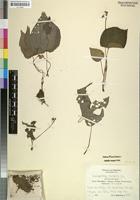
Not a type Sole type exemplar lost fide Wickens, Fl. Trop. E. Africa (Melastomataceae) p. 66. 1975. of Cincinnobotrys oreophila Gilg [family MELASTOMATACEAE]
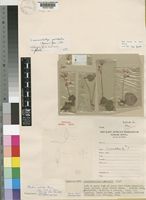
Holotype of Primularia pulchella Brenan [family MELASTOMATACEAE]
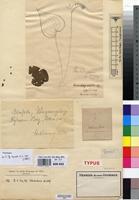
Type of Cincinnobotrys oreophila Gilg [family MELASTOMATACEAE]
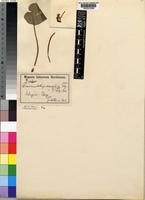
Cincinnobotrys oreophila Gilg [family MELASTOMATACEAE]
Previous
Next

Name

Identification
Cincinnobotrys oreophila Gilg [family MELASTOMATACEAE ] (stored under name); Verified by Not on sheet,
Related name
  • Cincinnobotrys oreophila
  • Primularia pulchella
  • Cincinnobotrys pulchella
  • Cincinnobotrys unrecorded

Flora

Entry for CINCINNOBOTRYS oreophila Gilg [family MELASTOMATACEAE]
Herbarium
Royal Botanic Gardens, Kew (K)
Collection
Flora of Tropical East Africa
Resource Type
Reference Sources
Entry From
Flora of Tropical East Africa, page 1, (1975) Author: G. E. WICKENS
Names
CINCINNOBOTRYS oreophila Gilg [family MELASTOMATACEAE], in E. & P., Pf., Nachtr. 3, 7: 265 (1897) & in E.M. 2: 30, t. 6/A (1898); V.E. 3 (2): 757, fig. 318/E (1921); A. & R. Fernandes in Bol. Soc. Brot., sér.2, 43: 299, t. 10 (1969). Type: Tanzania, Uluguru Mts., Nghwenn, Stuhlmann 8804 (B, holo. †)
Information
Rhizomes slender or knobbly, with stellate trichomes, often swollen and more hairy just below the scape. Leaves 1– 5, slightly fleshy; lamina ovate to ovate-orbicular, 4–15 cm. long, 3–10.5 cm. wide, acuminate, base cordate, serrate, ciliate, sometimes flushed purple beneath, scabrous-pubescent above with some longer hairs interspersed, scabrous-pubescent to setose on the nerves beneath; main nerves 7–9, prominent beneath; petiole 5–22 cm. long, retrorsely pubescent. Scape 8–30 cm. long, retrorsely pubescent, with 1-few small sterile bracts on the upper part. Inflorescence (1–)2–15-flowered, congested at first, usually becoming lax; bracts linear-lanceolate, 0.5–3 mm. long; pedicels 4–8(–15 in fruit) mm. long. Calyx-tube 1.5–2.5 mm. long, densely covered with simple and often some gland-tipped irregularly arranged hairs; lobes narrowly to broadly triangular, 0.5–3 mm. long. Petals pink or white, 5–10 mm. long, 4.5–8 mm. wide. Large anthers ± 1.5–1.8 mm. long, small anthers ± 1.1–1.4 mm. long; connective produced 0.1–0.3 mm.; posterior connective-appendage ± 0.5 mm. long; filaments 2.5–3 mm. long. Fruiting calyx 3–4 .5 mm. long, 3.5–5 mm. in diameter. Fig. 17.
Range
DISTR. U2; T6
Altitude range
1500–2200 m.
Distribution
TANZANIA Kilosa District Ukaguru Mts., Mamiwa Forest Reserve, Mnyera Peak, 30 July 1972, Mabberley, Pócs & Alehe 1280 !TANZANIA Morogoro District Uluguru Mts., Lupanga Peak, 22 May 1933, B. D. Burtt 4717 ! & Aug. 1951, Eggeling 6272 ! & Ngula, above Bunduki, 23 Aug. 1951, Greenway 8658 !UGANDA Kigezi District Impenetrable Forest, Oct. 1940, Eggeling 4173 ! & Nov. 1948, Eggeling 5835 !
Distribution (external)
eastern Zaire
Rwanda
Burundi
Notes
VARIATION. The plants from western Uganda, Burundi and Kivu differ from those of eastern Tanzania by having only 1–3 rather than 6–15-flowered inflorescences, narrowly triangular aristate calyx-lobes 1.5–3 mm. long, not broadly triangular lobes 0.5–1.2 mm. long without a notably developed terminal bristle, and by lacking glandular hairs, which in the Tanzania specimens occur at least as cilia on the crown of ovary-scales and generally also among the hairs of the calyx and pedicel. There is clearly some incipient divergence (and interestingly Gravesiella speciosa has a mixture of these features), but it is uncertain whether these differences may be bridged by further collections (there are still very few specimens from the northern populations and the species may occur in intermediate localities).

Related Materials

  • Terms and Conditions
  • Privacy Policy
  • Cookie Policy
  • Cookie Settings
  • Accessibility
  • Help
  • Contact Us
  • Facebook
  • Twitter
ITHAKA

JSTOR is part of ITHAKA, a not-for-profit organization helping the academic community use digital technologies to preserve the scholarly record and to advance research and teaching in sustainable ways.

©2000-2026 ITHAKA. All Rights Reserved. JSTOR®, the JSTOR logo, JPASS®, Aluka®, and ITHAKA® are registered trademarks of ITHAKA.

╳