JSTOR Global Plants Home
  • Home
  • Browse
  • About
  • Access
  • Account
    • Saved Items
    • Profile
  • Log in

Global Plants

Skip to Main Content
  • JSTOR Global Plants Home
  • Global Plants

    • Browse
    • About
    • Access
    • Account
      • Saved Items
      • Profile
Log in
  • Browse
  • About
  • Access
  • Account
    • Saved Items
    • Profile
Advanced Search

Compilation
Chrysophyllum gorungosanum

9 Images see all

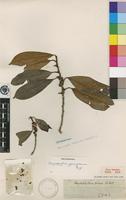
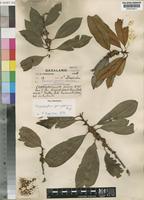
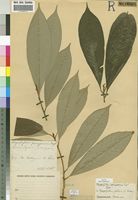
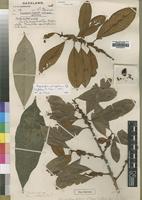
Type of Chrysophyllum gorungosanum Engl. [family SAPOTACEAE]
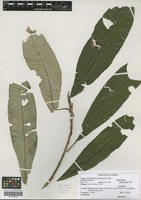
Chrysophyllum gorungosanum Engl. [family SAPOTACEAE]
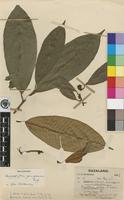
Filed as Chrysophyllum gorungosanum Engl. [family SAPOTACEAE]
Type of Chrysophyllum gorungosanum Engl. [family SAPOTACEAE]
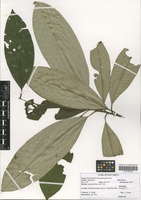
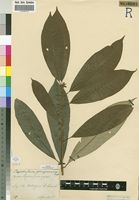
Isotype of Chrysophyllum gorungosanum Engl. [family SAPOTACEAE]
Type of Chrysophyllum gorungosanum Engl. [family SAPOTACEAE]
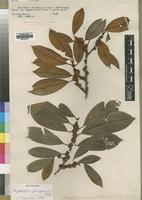
Holotype of Chrysophyllum fulvum S.Moore [family SAPOTACEAE]
Previous
Next

Name

Identification
Chrysophyllum fulvum S.Moore [family SAPOTACEAE ] Chrysophyllum gorungosanum Engl. [family SAPOTACEAE ] (stored under name);
Related name
  • Chrysophyllum gorungosanum
  • Chrysophyllum fulvum

Flora

Entry for CHRYSOPHYLLUM gorungosanum Engl. [family SAPOTACEAE]
Herbarium
Royal Botanic Gardens, Kew (K)
Collection
Flora of Tropical East Africa
Resource Type
Reference Sources
Entry From
Flora of Tropical East Africa, page 1, (1968) Author: J. H. Hemsley
Names
CHRYSOPHYLLUM gorungosanum Engl. [family SAPOTACEAE], E.M. 8: 44, t. 15/B (1904); Brenan in Mem. N.Y. Bot. Gard. 8: 498 (1954); Meeuse in Bothalia 7: 329 (1960); K.T.S.: 524(1961); Heine in F.W.T.A., ed. 2, 2: 28 (1963). Type: Mozambique, Manica e Sofala, Mt. Gorongosa [Gorungosa], Carvalho (B, holo. †, COI, iso.)
CHRYSOPHYLLUM fulvum S. Moore [family SAPOTACEAE], in J.L.S. 40: 131 (1911); T.S.K.: 120 (1936); T.T.C.L.: 562 (1949); I.T.U.,ed. 2: 392 (1952); F.P.S. 2: 374 (1952). Type: Rhodesia, Chipinga District, Chirinda Forest, Swynnerton 19 (BM, holo. !, K, iso. !)
CHRYSOPHYLLUM albidum [family SAPOTACEAE], [sensu T.T.C.L.: 562 (1949), non G. Don]
CHRYSOPHYLLUM boivinianum [family SAPOTACEAE], [sensu F.F.N.R.: 320 (1962), non (Pierre) Baehni]
Information
Tall tree, height up to 40 m., with long straight fluted bole. Young branches, buds and petioles with ferrugineous or golden-brown indumentum. Petioles l–2.5(–4) cm. long. Leaf-lamina narrowly to broadly elliptic, oblanceolate or obovate-elliptic to oblong-elliptic, 7–15(–25) cm. long, 2.3–5.5(–8) cm. wide, obtuse to broadly acute or shortly acuminate, cuneate; lower surface with dense ferrugineous, golden-brown or pale silvery-brown or silvery sericeous indumentum of short closely appressed hairs; midrib and lateral nerves prominently raised, primary lateral nerves 10–17(–24) on each side, arcuate, ascending. Flowers clustered in current leaf axils, shortly pedicellate; pedicels 1–2 mm. long; pedicels and calyx densely ferrugineous pubescent. Sepals broadly ovate, up to 3.5 mm. long, 3 mm. wide. Corolla cream or pale yellowish; tube up to 2 mm. long; lobes rounded, up to 2 mm. long, ciliate. Filaments up to 2 mm. long, flattened; small triangular or ± subulate staminodes occasionally present. Ovary densely pilose; style up to 1.5 mm. long. Fruits very shortly stalked, ± ovoid to subglobose or ellipsoid, up to 4 cm. long, 3 cm. in diameter, with dense reddish-brown pubescence, frequently rubbing away in irregular patches. Seeds dark brown or blackish, obliquely ellipsoid to obovoid, up to 2.8 cm. long and 1.2 cm. wide. Fig. 1.
Range
DISTR. U1, 2; K4, 7; T3, 6–8 Mt. Cameroon and mountains along eastern border of Congo Republic, southwards to Zambia, Malawi, Mozambique and Rhodesia
Altitude range
1300–2250 m.
Distribution
KENYA Aberdare Mts., Battiscombe 560 !KENYA S. Nyeri/Embu Districts S. of Mt. Kenya, Hockliffe in F.D. 1370 !KENYA Teita Hills, Ngangao Forest, 15 Sept. 1953 (fr.), Drummond & Hemsley 4364 ! & 4365 !TANGANYIKA W. Usambara Mts., Magamba, Jan. 1932 (fl.), Wigg 106 in F.H. 790!TANGANYIKA Morogoro District N. Uluguru Forest Reserve [above Morningside], May 1953 (fr.), Semsei 1194!TANGANYIKA Songea District Matengo Hills, Liwiri-Kiteza Forest Reserve, 20 Oct. 1956 (fr.), Semsei 2591 !UGANDA W. Nile District Payida [Paida], Feb. 1934 (fl.), Eggeling 1510 in F.D. 1440!UGANDA W. Ankole Forest, Dawe 357!UGANDA Kigezi, Impenetrable Forest, Sept. 1936 (fl.), Eggeling 3302 !
Notes
VARIATION. A range of colour and density of the lower leaf-surface indumentum may in part be local geographical variation but is also dependent upon leaf-age and position on the tree. Frequently growing with and closely resembling Aningeria adolfi-friedericii (Engl.) Robyns & Gilbert, there is a tendency, as in the latter, for evolution of small infraspecific segregates under conditions of montane isolation. The species is closely allied to the West African C. delevoyi De Wild. and also the Madagascan C. boivinianum (Pierre) Baehni, occupying the median part of the range. Typically a tree of montane forest (cf. the lowland forest habitat of both C. boivinianum and C. delevoyi), C. gorungosanum is distinguished mainly on fruit characters. Fruits of C. delevoyi are much larger, up to 7 cm. in diameter, borne on thick woody stalks, while those of C. boivinianum are small, up to 2 cm. in diameter, subglobose and densely covered with a purplish-brown felted indumentum. The timber is of good quality but often uneconomical to cut, due to the depth and extent of the fluting. The species is probably more widespread in montane forest than present material would indicate and it may be possible to define segregates more precisely when the range and variation is better understood.

Related Materials

  • Terms and Conditions
  • Privacy Policy
  • Cookie Policy
  • Cookie Settings
  • Accessibility
  • Help
  • Contact Us
  • Facebook
  • Twitter
ITHAKA

JSTOR is part of ITHAKA, a not-for-profit organization helping the academic community use digital technologies to preserve the scholarly record and to advance research and teaching in sustainable ways.

©2000-2026 ITHAKA. All Rights Reserved. JSTOR®, the JSTOR logo, JPASS®, Aluka®, and ITHAKA® are registered trademarks of ITHAKA.

╳