JSTOR Global Plants Home
  • Home
  • Browse
  • About
  • Access
  • Account
    • Saved Items
    • Profile
  • Log in

Global Plants

Skip to Main Content
  • JSTOR Global Plants Home
  • Global Plants

    • Browse
    • About
    • Access
    • Account
      • Saved Items
      • Profile
Log in
  • Browse
  • About
  • Access
  • Account
    • Saved Items
    • Profile
Advanced Search

Compilation
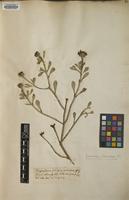
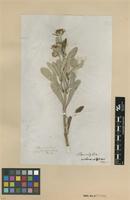
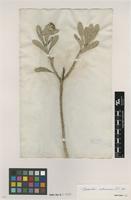
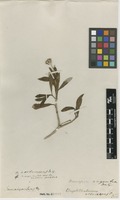
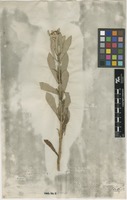
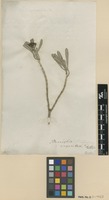
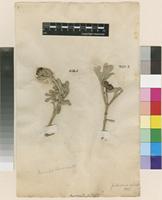
Buphthalmum arborescens

7 Images see all

Filed as Borrichia arborescens (L.) DC. [family ASTERACEAE]
Filed as Buphthalmum arborescens L. [family ASTERACEAE]
Filed as Borrichia arborescens (L.) DC. [family ASTERACEAE]
Filed as Buphthalmum arborescens L. [family ASTERACEAE]
Previous
Next

Name

Identification
Buphthalmum arborescens L. [family ASTERACEAE ] (stored under name); Borrichia arborescens (L.) DC. [family ASTERACEAE ] Verified by H.F. Wernham,
Related name
  • Buphthalmum arborescens
  • Borrichia arborescens

Flora

Entry for Borrichia arborescens (Linnaeus) de Candolle [family COMPOSITAE]
Herbarium
Flora of North America (FNA)
Collection
Flora of North America
Resource Type
Reference Sources
Entry From
Flora of North America, Vol 21,
Names
Borrichia arborescens (Linnaeus) de Candolle [family COMPOSITAE], in A. P. de Candolle and A. L. P. P. de Candolle, Prodr., 5: 489. 1836
Buphthalmum arborescens Linnaeus [family COMPOSITAE], Syst. Nat. ed., 10, 2: 1227. 1759
Treatment Author(s)
John C. Semple
Information
Stems decumbent to ascending. Leaves (at least mid cauline) oblanceolate to linear, 5–10(–15) × 0.4–2 cm, margins entire or dentate to serrate (teeth remote mostly toward apices), faces glabrous or sericeous (sometimes on same leaf). Heads borne singly or (3–6) in cymiform arrays (peduncles 0.5–5 cm). Involucres ovoid to hemispheric, (8–)10–14(–17) mm. Phyllaries 10–16 in 3–4 series (chartaceous in fruiting heads, outer ovate-elliptic, apices obtuse or acute, faces glabrate or sericeous; inner oblanceolate, apices rounded, obtuse, or acute, faces glabrous). Paleae: apices obtuse to acute. Ray florets 7–15; laminae 5–8 × 2.5–4 mm. Disc florets 20–50; corollas 5–6 mm, lobes 1–1.5 mm. Cypselae 3.5–5 mm, 4-angled. 2n = 28.
Phenology
mar-may (spring), jun-aug (summer)
Altitude range
0–10 m;
Distribution
West IndiesBermuda.USA Fla.
Discussion
Borrichia arborescens grows in the Florida Keys, Bermuda, and the West Indies, including Jamaica and Guadeloupe. Plants of B. arborescens are usually glabrous; both glabrous and hairy plants occur in the northern West Indies. Common names that include “tree” are misleading because the plants are shrubs.

Related Materials

  • Terms and Conditions
  • Privacy Policy
  • Cookie Policy
  • Cookie Settings
  • Accessibility
  • Help
  • Contact Us
  • Facebook
  • Twitter
ITHAKA

JSTOR is part of ITHAKA, a not-for-profit organization helping the academic community use digital technologies to preserve the scholarly record and to advance research and teaching in sustainable ways.

©2000-2026 ITHAKA. All Rights Reserved. JSTOR®, the JSTOR logo, JPASS®, Aluka®, and ITHAKA® are registered trademarks of ITHAKA.

╳