JSTOR Global Plants Home
  • Home
  • Browse
  • About
  • Access
  • Account
    • Saved Items
    • Profile
  • Log in

Global Plants

Skip to Main Content
  • JSTOR Global Plants Home
  • Global Plants

    • Browse
    • About
    • Access
    • Account
      • Saved Items
      • Profile
Log in
  • Browse
  • About
  • Access
  • Account
    • Saved Items
    • Profile
Advanced Search

Compilation
Bulbostylis rarissima

5 Images see all

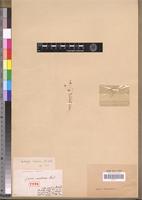
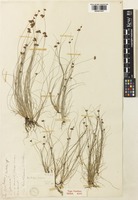
Type of Cyperus rarissimus Steud. [family CYPERACEAE]
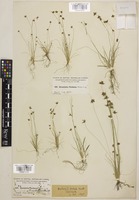
Bulbostylis rarissima (Steud.) C.B.Clarke [family CYPERACEAE]
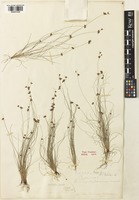
Type of Bulbostylis japonica C.B.Clarke [family CYPERACEAE]
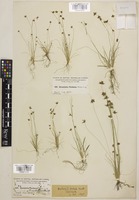
Bulbostylis rarissima (Steud.) C.B.Clarke [family CYPERACEAE]
Type of Bulbostylis japonica C.B.Clarke [family CYPERACEAE]
Previous
Next

Name

Identification
Bulbostylis rarissima (Steud.) C.B.Clarke [family CYPERACEAE ] (stored under name); Verified by Clarke, C.B., Cyperus rarissimus Steud. [family CYPERACEAE ]
Related name
  • Bulbostylis rarissima
  • Cyperus rarissimus

Flora

Entry for BULBOSTYLIS rarissima C. B. Clarke [family CYPERACEAE]
Herbarium
Royal Botanic Gardens, Kew (K)
Collection
Flora of Tropical Africa
Resource Type
Reference Sources
Entry From
Flora of Tropical Africa, Vol 8, page 264, (1902) Author: (By C. B. Clarke.)
Names
BULBOSTYLIS rarissima C. B. Clarke [family CYPERACEAE], in Durand & Schinz, Conspect. Fl. Afr. v. 615.
Cyperus rarissimus Steud. [family CYPERACEAE], Syn. Pl. Glum. ii. 16.
Information
Stem 2–3 in. long, setaceous, with 1 spikelet or 2 sessile together, glabrous. Leaves nearly glabrous; sheaths hardly ciliate in the throat. Spikelets 1/8 by 1/12 in., 8–12-flowered, pale brown. Glumes pubescent, in fruit spreading horizontally. Style 3-fid. Nut 1/3 the length of the glume, trigonous, obovoid, almost truncate, transversely wavy-lineate (owing to the outermost cells being longitudinally oblong); crowned by the persistent depressed-bulbous style-base; otherwise resembling small examples of B. barbata .
Distribution
Abyssinia Nile Land Schimper!

Related Materials

  • Terms and Conditions
  • Privacy Policy
  • Cookie Policy
  • Cookie Settings
  • Accessibility
  • Help
  • Contact Us
  • Facebook
  • Twitter
ITHAKA

JSTOR is part of ITHAKA, a not-for-profit organization helping the academic community use digital technologies to preserve the scholarly record and to advance research and teaching in sustainable ways.

©2000-2026 ITHAKA. All Rights Reserved. JSTOR®, the JSTOR logo, JPASS®, Aluka®, and ITHAKA® are registered trademarks of ITHAKA.

╳