JSTOR Global Plants Home
  • Home
  • Browse
  • About
  • Access
  • Account
    • Saved Items
    • Profile
  • Log in

Global Plants

Skip to Main Content
  • JSTOR Global Plants Home
  • Global Plants

    • Browse
    • About
    • Access
    • Account
      • Saved Items
      • Profile
Log in
  • Browse
  • About
  • Access
  • Account
    • Saved Items
    • Profile
Advanced Search

Compilation
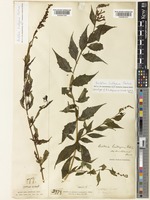
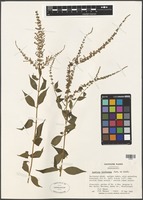
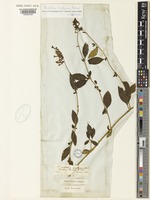
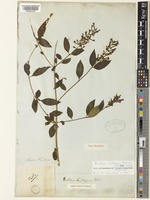
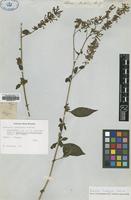
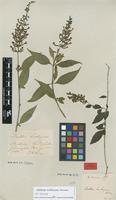
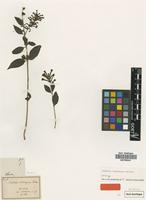
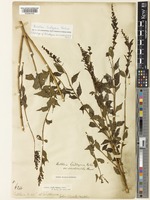
Buddleja lindleyana

12 Images see all

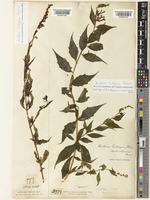
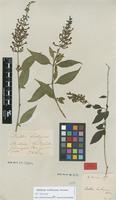
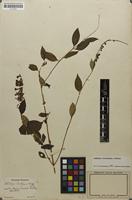
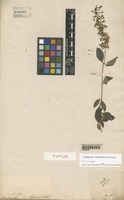
Paratype of Buddleja lindleyana Fortune var. sinuatodentata Hemsl. [family SCROPHULARIACEAE]
Filed as Buddleja lindleyana Fortune [family SCROPHULARIACEAE]
Isoneotype of Buddleja lindleyana Fortune [family SCROPHULARIACEAE]
Neotype of Buddleja lindleyana Fortune [family SCROPHULARIACEAE]
Isoneotype of Buddleja lindleyana Fortune [family LOGANIACEAE]
Lectotype of Buddleja lindleyana Fortune var. sinuatodentata Hemsl. [family SCROPHULARIACEAE]
Buddleja lindleyana Fortune [family SCROPHULARIACEAE]
Filed as Buddleja lindleyana Fortune [family LOGANIACEAE]
Type? of Buddleja lindleyana Fortune [family BUDDLEJACEAE]
Isotype of Buddleja lindleyana Fortune [family BUDDLEJACEAE]
Previous
Next

Name

Identification
Buddleja lindleyana Fortune [family SCROPHULARIACEAE ] (stored under name);
Related name
  • Buddleja lindleyana
  • Adenoplea lindleyana

Flora

Entry for Buddleja lindleyana Fortune [family LOGANIACEAE]
Herbarium
Royal Botanic Gardens, Kew (K)
Collection
Flora Zambesiaca
Resource Type
Reference Sources
Entry From
FZ, Vol 7, Part 1, page 327, (1983) Author: A. J. M. Leeuwenberg
Names
Buddleja lindleyana Fortune [family LOGANIACEAE], in Lindley, Bot. Reg. 30. Misc. 25 (1844); 32. t. 4 (1846). — Prain & Cummins in Fl. Cap. 4, 1: 1048 (1909). — Leeuwenberg in Meded. Landb. Wag. 79–6: 129 (1979). Type a cultivated specimen from the Cambridge Bot. Gard., Great Britain, raised from seeds sent from China.
Information
Shrub or undershrub, 1–3 m. high. Branchlets quadrangular or approximately so, rusty–pubescent with stellate and/or glandular hairs, less often almost glabrous. Leaves opposite or subopposite, very variable in shape and size, shortly petiolate; stellate–pubescent, 1–7 mm. long; lamina sparsely pubescent to glabrous above, minutely to densely pubescent with often stellate hairs beneath, membranaceous when dry, ovate, elliptic, or narrowly elliptic, 2–3(–5) times as long as wide, 2–11 x 0·7–5 cm. or sometimes smaller, long–acuminate at the apex, cuneate at the base, entire to coarsely sinuate–dentate; secondary veins conspicuous. Inflorescence terminal, almost spicate, more or less interrupted, 4–20 x 2–4 cm. Flowers shortly pedicellate. Calyx campanulate or urceolate, 2–3·5 mm. long, outside densely pubescent with glandular and often also some stellate hairs; tube 3–10 x as long as the lobes; lobes often dentate, subequal or unequal, mostly broadly triangular, 0·2–1 x 0·5–1 mm. Corolla purple, usually curved, with erect lobes 4–10 times as long as the calyx, 13–20 mm. long, pubescent with glandular and often also some stellate hairs outside; tube nearly cylindrical, gradually widened from somewhat above the insertion of the stamens, 3·5–8 times as long as the calyx, 5–6 times as long as the lobes, 11–17 mm. long, lobes suborbicular, about as long as wide or wider, 2–3 mm. long, stamens included; filaments inserted 3–6 mm. above the base of the corolla.
Habitat
Bush on road sides, mostly in the mountainsMost probably escaped from cultivation.
Altitude range
Alt. 300–1800 m.
1800
300
Distribution
Zimbabwe C Makoni, Rusapi District, Wild 4646 (BR; K; PRE; SRGH).
Distribution (external)
China (Szechwan, Hupeh, Kiangsu, Anhwei, Shanghai, Chekiang, Fukien, Kiangsi, Hunan, Kwangsi, Kwangtung, Yunnan)
Macao
Hong Kong
Japan

Related Materials

  • Terms and Conditions
  • Privacy Policy
  • Cookie Policy
  • Cookie Settings
  • Accessibility
  • Help
  • Contact Us
  • Facebook
  • Twitter
ITHAKA

JSTOR is part of ITHAKA, a not-for-profit organization helping the academic community use digital technologies to preserve the scholarly record and to advance research and teaching in sustainable ways.

©2000-2026 ITHAKA. All Rights Reserved. JSTOR®, the JSTOR logo, JPASS®, Aluka®, and ITHAKA® are registered trademarks of ITHAKA.

╳