JSTOR Global Plants Home
  • Home
  • Browse
  • About
  • Access
  • Account
    • Saved Items
    • Profile
  • Log in

Global Plants

Skip to Main Content
  • JSTOR Global Plants Home
  • Global Plants

    • Browse
    • About
    • Access
    • Account
      • Saved Items
      • Profile
Log in
  • Browse
  • About
  • Access
  • Account
    • Saved Items
    • Profile
Advanced Search

Compilation
Buchnera speciosa

5 Images see all

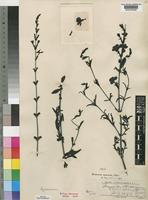
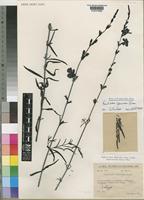
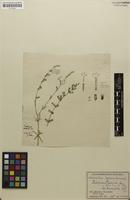
Type of Buchnera speciosa Skan [family SCROPHULARIACEAE]
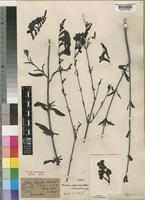
Isotype of Buchnera pruinosa Gilli [family SCROPHULARIACEAE]
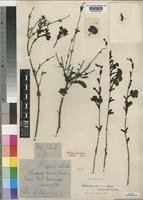
Filed as Buchnera speciosa Skan [family SCROPHULARIACEAE]
Previous
Next

Name

Identification
Buchnera speciosa Skan [family SCROPHULARIACEAE ] (stored under name); Verified by Philcox, D., Isotype of Buchnera pruinosa Gilli [family SCROPHULARIACEAE ] Verified by Gilli, A.,
Related name
  • Buchnera speciosa
  • Aulaya unrecorded
  • Cycnium unrecorded
  • Buchnera pruinosa

Flora

Entry for BUCHNERA speciosa Skan. [family SCROPHULARIACEAE]
Herbarium
Royal Botanic Gardens, Kew (K)
Collection
Flora of Tropical Africa
Resource Type
Reference Sources
Entry From
Flora of Tropical Africa, Vol IV, Part 2, page 264, (1905) Author: (By W. Botting Hemsley and S. A. Skan).
Names
BUCHNERA speciosa Skan. [family SCROPHULARIACEAE]
Information
An erect branched rather rigid under-shrub, perhaps the largest-flowered species of the genus, drying black; stem up to 4 ft. high, terete, often glaucous, sparingly pubescent in places and densely bifariously pubescent in others or glabrescent, scabrid here and there with the much-thickened bases of small hairs; branches erect-spreading, slender, opposite or subopposite, glaucous, quite glabrous or sparingly covered with short fine hairs thickened at the base. Leaves opposite or subopposite, distant, lanceolate or oblanceolate, up to 1 3/4 in. long and 4 1/2 lin. broad, narrowed to the base, very slightly narrowed at the apex, minutely apiculate, entire, covered with stiff adpressed hairs on both sides, often with a tuft of smaller leaves in their axils. Spikes or racemes interrupted, terminal, up to 9 in. long; flowers mostly in pairs 1/2– 3/4 in. apart, shortly pedicellate; bracts ovate-lanceolate, about 3 lin. long, 1 lin. broad at the base, shortly acuminate, thinly covered with short stiff hairs on the upper side, sparingly ciliate; bracteoles linear-lanceolate, 2–2 1/4 lin. long. Calyx 5 1/2 lin. long, 1 1/2 lin. broad above, slightly narrower below, somewhat curved, glabrous outside, covered with short stiff adpressed hairs on the upper part inside, 10-ribbed; teeth 5, ovate-lanceolate, 1 2/3 lin. long, sparingly ciliate, shortly acuminate, the uppermost slightly narrower than the others. Corolla white, funnel-shaped; tube 8 lin. long, 1 lin. broad, straight or slightly curved, glabrous outside, long-pilose at the throat inside; lobes nearly equal, suborbicular, 5 lin. in diam., overlapping at the margin. Anthers acuminate. Style 1 1/4 lin. long, much thickened in the upper part. Capsule ellipsoid or oblong, 4 lin. long, nearly 2 lin. broad at the base, slightly narrower above, slightly curved, very shortly apiculate.
Distribution
Nyasaland Mozamb. Dist. 4000–7000 ft.; near Mount Masisi, McClounie, 123 partly! Masuku Plateau, Whyte! Nyika Plateau, Whyte!

Related Materials

  • Terms and Conditions
  • Privacy Policy
  • Cookie Policy
  • Cookie Settings
  • Accessibility
  • Help
  • Contact Us
  • Facebook
  • Twitter
ITHAKA

JSTOR is part of ITHAKA, a not-for-profit organization helping the academic community use digital technologies to preserve the scholarly record and to advance research and teaching in sustainable ways.

©2000-2026 ITHAKA. All Rights Reserved. JSTOR®, the JSTOR logo, JPASS®, Aluka®, and ITHAKA® are registered trademarks of ITHAKA.

╳