JSTOR Global Plants Home
  • Home
  • Browse
  • About
  • Access
  • Account
    • Saved Items
    • Profile
  • Log in

Global Plants

Skip to Main Content
  • JSTOR Global Plants Home
  • Global Plants

    • Browse
    • About
    • Access
    • Account
      • Saved Items
      • Profile
Log in
  • Browse
  • About
  • Access
  • Account
    • Saved Items
    • Profile
Advanced Search

Compilation
Buchnera chimanimaniensis

5 Images see all

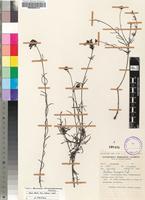
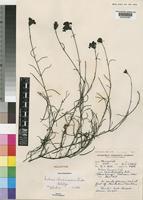
Isotype of Buchnera chimanimaniensis Philcox [family OROBANCHACEAE]
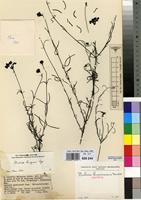
Isotype of Buchnera chimanimaniensis Philcox [family SCROPHULARIACEAE]
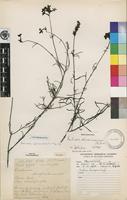
Isotype of Buchnera chimanimaniensis Philcox [family OROBANCHACEAE]
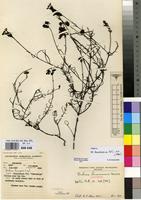
Isotype of Buchnera chimanimaniensis Philcox [family SCROPHULARIACEAE]
Holotype of Buchnera chimanimaniensis Philcox [family SCROPHULARIACEAE]
Previous
Next

Name

Identification
Isotype of Buchnera chimanimaniensis Philcox [family SCROPHULARIACEAE ] (stored under name); Verified by Not on sheet,
Related name
  • Buchnera henriquesii
  • Buchnera chimanimaniensis

Flora

Entry for Buchnera chimanimaniensis Philcox [family SCROPHULARIACEAE]
Herbarium
Royal Botanic Gardens, Kew (K)
Collection
Flora Zambesiaca
Resource Type
Reference Sources
Entry From
FZ, Vol 8, Part 2, (1990) Author: D. Philcox
Names
Buchnera chimanimaniensis Philcox [family SCROPHULARIACEAE], in Kew Bull.42: 208 (1987). TAB.41. Type: Zimbabwe, Chimanimani (Melsetter) Distr., 1820 m., Chase 6906 (K, holotype; BM; BR; MO; SRGH, isotypes).
Information
Annual or perennial herbs, up to 35 cm. tall, erect, decumbent or straggling, much branched with branches spreading; stems slender, minutely bifariously appressed fawn-pubescent. Leaves 10–30(40) x 0.5–1(2.5) mm., linear, entire, flexuous, patent, 1-nerved, sparsely minutely appressed hispid to subglabrous, frequently with secondary leaves or small axillary branches. Inflorescence with flowers clustered at ends of branches into short spikes 1 -2 cm. long, increasing to rarely more than 4.5 cm. at fruiting; flowers sessile or shortly pedicellate with pedicels up to 0.6 mm. long. Bracts 2.5–3 x c. 1 mm., ovate-lanceolate, subglabrous. Bracteoles 1.75–2.5 x 0.3 mm., linear-oblong. Calyx (5)6.5–7.5 mm. long, 10-ribbed, 5-lobed, short appressed fawn pilose; lobes 1.5–2 mm. long, all perfect with none reduced in size, narrowly linear-lanceolate, widely spreading after flowering with apices tending to recurve. Corolla pale blue to mauve; tube 7.5–9 mm. long, widening towards mouth, long fawn pilose especially below limb; limb 9.5–14 mm. in diam.; lobes 4.5–7 x 2.5–4.5 mm., obovate, unequal. Capsule c. 5 x 2.25 mm., cylindric-ovoid, shortly rostrate.
Habitat
Montane grasslands
Range
From Zimbabwe and Mozambique
Altitude range
915–1850 m.
1850
915
Distribution
Mozambique MS Chimanimani Mts., Musapa Gap, c. 915 m., fl. 6.x.1950, Munch 337 (K; SRGH).Zimbabwe E Chimanimani Mts., Martin Forest Res., fl. 14.xi.1967, Mavi 611 (K; LISC; SRGH).
Notes
This plant has hitherto been confused with B. henriquesii Engl. from which it differs in being generally taller, more slender and bearing very fine, linear, flexuous leaves.

Related Materials

  • Terms and Conditions
  • Privacy Policy
  • Cookie Policy
  • Cookie Settings
  • Accessibility
  • Help
  • Contact Us
  • Facebook
  • Twitter
ITHAKA

JSTOR is part of ITHAKA, a not-for-profit organization helping the academic community use digital technologies to preserve the scholarly record and to advance research and teaching in sustainable ways.

©2000-2026 ITHAKA. All Rights Reserved. JSTOR®, the JSTOR logo, JPASS®, Aluka®, and ITHAKA® are registered trademarks of ITHAKA.

╳