JSTOR Global Plants Home
  • Home
  • Browse
  • About
  • Access
  • Account
    • Saved Items
    • Profile
  • Log in

Global Plants

Skip to Main Content
  • JSTOR Global Plants Home
  • Global Plants

    • Browse
    • About
    • Access
    • Account
      • Saved Items
      • Profile
Log in
  • Browse
  • About
  • Access
  • Account
    • Saved Items
    • Profile
Advanced Search

Compilation
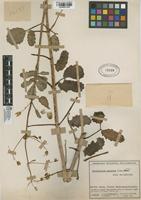
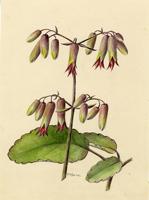
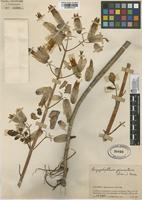
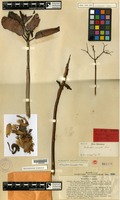
Bryophyllum pinnatum

12 Images see all

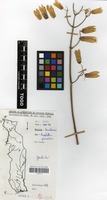
Filed as Bryophyllum pinnatum (Lam.) Oken [family CRASSULACEAE]
Filed as Bryophyllum pinnatum (L. f.) Oken [family CRASSULACEAE]
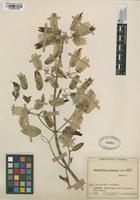
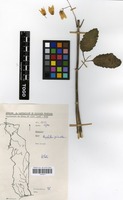
Filed as Bryophyllum pinnatum (Lam.) Oken [family CRASSULACEAE]
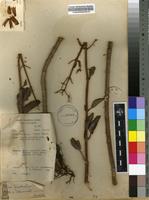
Isoneotype of Bryophyllum germinans Blanco [family CRASSULACEAE]
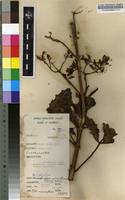
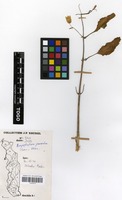
Filed as Bryophyllum pinnatum (Lam.) Oken [family CRASSULACEAE]
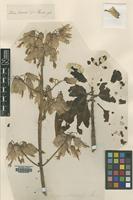
Type of Cotyledon rhizophylla Roxb. [family CRASSULACEAE]
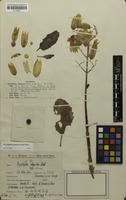
Filed as Bryophyllum pinnatum (L. f.) Oken [family CRASSULACEAE]
Bryophyllum pinnatum
Filed as Bryophyllum pinnatum (L. f.) Oken [family CRASSULACEAE]
Previous
Next

Name

Identification
Bryophyllum pinnatum (Lam.) Oken [family CRASSULACEAE ]
Related name
  • Bryophyllum pinnatum
Common name
  • mother-in-law, Flora of North America Vol. 8
  • Air or life or curtain or Mexican love plant, Flora of North America Vol. 8
  • live or good-luck or miracle or sprouting leaf, Flora of North America Vol. 8
  • floppers, Flora of North America Vol. 8

Flora

Entry for Bryophyllum pinnatum (Lamarck) Oken [family CRASSULACEAE]
Herbarium
Flora of North America (FNA)
Collection
Flora of North America
Resource Type
Reference Sources
Entry From
Flora of North America, Vol 8,
Names
Bryophyllum pinnatum (Lamarck) Oken [family CRASSULACEAE], Allg. Naturgesch., 3: 1966. 1841 ,
Cotyledon pinnata Lamarck [family CRASSULACEAE], in J. Lamarck et al., Encycl., 2: 141. 1786
Kalanchoë pinnata (Lamarck) Persoon [family ]
Treatment Author(s)
Reid V. Moran
Information
Herbs, monocarpic, green streaked with purple, glaucous. Stems little-branched, (suckering at base), terete, 5–20 dm × 0.5–2 cm. Leaves opposite, evenly spaced, the 1st simple, the rest mostly pinnate with 3 or 5 short-stalked leaflets; petiole subterete, 20–100 mm; blade and leaflets green streaked with purple, elliptic-oblong, 5–20 × 2–12 cm, margins crenate-serrate, apex obtuse, surfaces ± glaucous; bulbils in notches of leaf margins. Cymes open, paniculate, 1–8 dm diam.; branches to 12 cm. Pedicels 10–25 mm. Flowers: calyx pale yellow flecked with red, inflated, 25–50 mm, (papery), tube 24–40 mm, lobes deltate, to 10 mm, shorter than tube, apex acute; corolla with tube greenish white and exserted portion maroon, 30–70 mm, contracted basally, (sparsely glandular-puberulent), lobes oblong-ovate to triangular, 10–20 mm, apex acuminate. 2n = 40.
Phenology
Flowering winter–spring
Altitude range
0 m
Distribution
USA Fla.USA Indian Ocean Islands (Madagascar)
Discussion
Bryophyllum pinnatum is common in southern Florida, as far north as Gainesville in good years but killed back in cold winters (Daniel Ward, pers. comm.). It is widely grown as an ornamental and curiosity and for medicine. It has been the subject of many physiological and anatomical studies (A. Berger 1930; P. Boiteau and L. Allorge-Boiteau 1995).
P. Knuth (1906–1909, vol. 2) quoted J. Delpino’s report of abundant nectar in the flowers and his suggestion of visits by hummingbirds—which, however, are not in Madagascar! Perhaps they are visited by sunbirds. On distal leaves J. H. Craft (1943) found nectaries that at flowering time secrete droplets high in glucose.
Native/Introduced
introduced
introduced widely in tropics.

Related Materials

  • Terms and Conditions
  • Privacy Policy
  • Cookie Policy
  • Cookie Settings
  • Accessibility
  • Help
  • Contact Us
  • Facebook
  • Twitter
ITHAKA

JSTOR is part of ITHAKA, a not-for-profit organization helping the academic community use digital technologies to preserve the scholarly record and to advance research and teaching in sustainable ways.

©2000-2026 ITHAKA. All Rights Reserved. JSTOR®, the JSTOR logo, JPASS®, Aluka®, and ITHAKA® are registered trademarks of ITHAKA.

╳