JSTOR Global Plants Home
  • Home
  • Browse
  • About
  • Access
  • Account
    • Saved Items
    • Profile
  • Log in

Global Plants

Skip to Main Content
  • JSTOR Global Plants Home
  • Global Plants

    • Browse
    • About
    • Access
    • Account
      • Saved Items
      • Profile
Log in
  • Browse
  • About
  • Access
  • Account
    • Saved Items
    • Profile
Advanced Search

Compilation
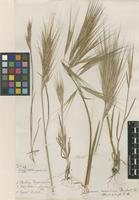
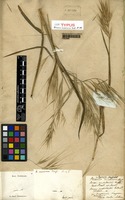
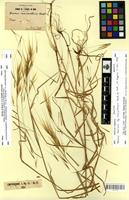
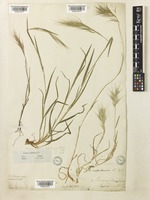
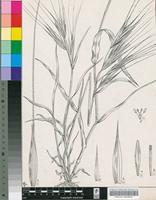
Bromus maximus

16 Images see all

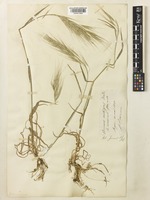
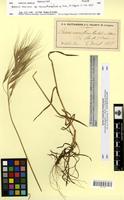
Filed as Bromus maximus Desf. [family POACEAE]
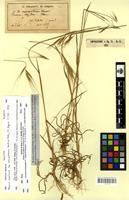
Isotype of Bromus maximus Desf. [family POACEAE]
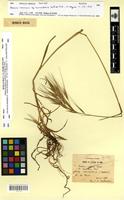
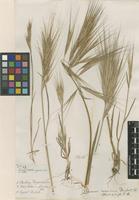
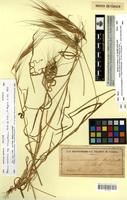
Isosyntype of Bromus maximus Desf. subsp. macrantherus Trab. [family POACEAE]
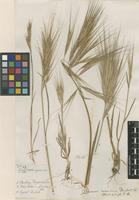
Bromus madritensis L. [family POACEAE]
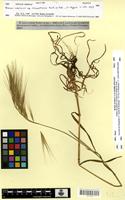
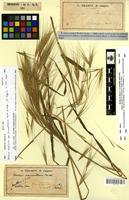
Isotype of Bromus maximus Desf. [family POACEAE]
Isosyntype of Bromus maximus Desf. subsp. macrantherus Trab. [family POACEAE]
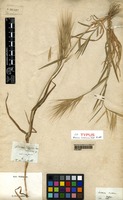
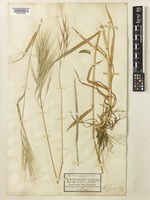
Filed as Bromus maximus Desf. [family POACEAE]
Bromus diandrus Roth [family POACEAE]
Isosyntype of Bromus maximus Desf. subsp. macrantherus Trab. [family POACEAE]
Bromus diandrus Roth [family POACEAE]
Isosyntype of Bromus maximus Desf. subsp. macrantherus Trab. [family POACEAE]
Bromus maximus Desf.
Filed as Bromus maximus Desf. [family POACEAE]
Isosyntype of Bromus maximus Desf. subsp. macrantherus Trab. [family POACEAE]
Previous
Next

Name

Identification
Bromus maximus Desf. [family POACEAE ]
Related name
  • Bromus maximus

Flora

Entry for BROMUS maximus Desf. [family ]
Herbarium
Royal Botanic Gardens, Kew (K)
Collection
Flora Capensis
Resource Type
Reference Sources
Entry From
Flora Capensis, Vol 7, page 310, (1900) Author: (By O. STAPF.)
Names
BROMUS maximus Desf. [family ], Fl. Atlant. i. 95, t. 26;—Kunth, Enum. i. 419; Engl. Bot. t. 2820; ed. iii. t. 1798; Reichb. Ic. Fl. Germ. i. t. 73, fig. 1585; Steud. Syn. Pl. Glum. i. 319; Sowerby, Brit. Grass. t. 101; Durand & Schinz, Consp. Fl. Afr. v. 925.
BROMUS rigidus Boiss. [family ], Fl. Or. v. 649, not (?) of Roth.
Information
annual; culms erect or subascending, geniculate, 1–2 ft. high, glabrous or pubescent to finely villous in the upper part, 5–7-noded, leafy all along, upper internodes usually exserted; leaves scantily to densely hairy all over or almost glabrous; sheaths tight, thin, strongly striate; ligules hyaline, delicate, 2–2 1/2 lin. long, fimbriate-toothed; blades linear, tapering to an acute point, 4–12 in. by 2–4 lin., flat, subflaccid, dark green, margins scaberulous; panicles erect or slightly nodding, more or less contracted, 4–9 in. long (inclusive of the awns); axis terete, striate, scaberulous to hispidulous; branches 3–6-nate, unequal, 2–1- (rarely 3-) spiculate, longest 2–3 in. long, filiform, flexuous, scabrid to minutely hispid or villous; lateral pedicels short, rather stout; spikelets cuneate (when open), 1 1/4–1 3/4 in. long, green, 5–7-flowered; rhachilla slender, scabrid, joints 2–3 lin. long; glumes subulate to lanceolate-subulate in profile, finely acuminate, green along the nerves, otherwise scarious, lower 1- to sub-3-nerved, 7–10 lin. long, upper broader, 3-nerved, 11–14 lin. long, keels scabrid; valves linear-lanceolate, acuminate, about 1 in. long, 7-nerved, scabrid, upper margins and the finely bifid tips hyaline, white; awn permanently straight, scabrid, 2–2 1/2 in. long; callus 1/2 lin. long; pales narrow, about 7 lin. long, keels remotely rigidly ciliolate; stamens 3 (in the South African specimens) or 2; anthers 3/4–1 1/2 lin. long; ovary pubescent just below the appendage; grain linear, about 7 lin. long, strongly convexo-concave. null
Range
A native of the Mediterranean countries and Western Europe.
Distribution
COAST REGION Cape Div.; by the railway at Rondebosch, Wolley Dod, 3153! by wet rocks at Hout Bay Fisheries, Wolley Dod, 3208! Introduced.

Related Materials

  • Terms and Conditions
  • Privacy Policy
  • Cookie Policy
  • Cookie Settings
  • Accessibility
  • Help
  • Contact Us
  • Facebook
  • Twitter
ITHAKA

JSTOR is part of ITHAKA, a not-for-profit organization helping the academic community use digital technologies to preserve the scholarly record and to advance research and teaching in sustainable ways.

©2000-2026 ITHAKA. All Rights Reserved. JSTOR®, the JSTOR logo, JPASS®, Aluka®, and ITHAKA® are registered trademarks of ITHAKA.

╳