JSTOR Global Plants Home
  • Home
  • Browse
  • About
  • Access
  • Account
    • Saved Items
    • Profile
  • Log in

Global Plants

Skip to Main Content
  • JSTOR Global Plants Home
  • Global Plants

    • Browse
    • About
    • Access
    • Account
      • Saved Items
      • Profile
Log in
  • Browse
  • About
  • Access
  • Account
    • Saved Items
    • Profile
Advanced Search

Compilation
Braya novae-angliae

3 Images see all

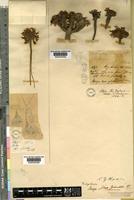
Type of Pachycladon novae-zelandiae Hook.f. [family BRASSICACEAE]
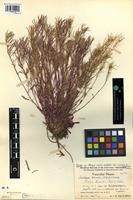
Type of Braya novae-angliae (Rydb.) T.J. S¢rensen var. interior Böcher [family BRASSICACEAE]
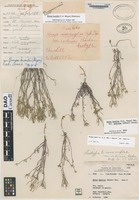
Isotype of Braya novae-angliae (Rydb.) Th. Sor. variety interior Böcher [family BRASSICACEAE]
Previous
Next

Name

Identification
Braya novae-angliae (Rydb.) T.J. S¢rensen [family BRASSICACEAE ] (stored under name); Verified by Not on Sheet, Torularia humilis (C.A.Mey) O.E.Schulz [family BRASSICACEAE ] Verified by Not on Sheet, Braya humilis (C.A.Mey) B.L. Rob. [family BRASSICACEAE ] Verified by Böcher, T.W.,
Related name
  • Braya novae-angliae
  • Braya humilis
  • Torularia humilis
  • Pachycladon novae-zelandiae

Flora

Entry for Braya humilis (C. A. Meyer) B. L. Robinson subsp. humilis [family CRUCIFERAE]
Herbarium
Flora of North America (FNA)
Collection
Flora of North America
Resource Type
Reference Sources
Entry From
Flora of North America, Vol 7,
Names
Braya humilis (C. A. Meyer) B. L. Robinson subsp. humilis [family CRUCIFERAE]
Arabidopsis novae-angliae (Rydberg) Britton [family CRUCIFERAE]
Braya humilis var. abbei (Böcher) B. Boivin [family CRUCIFERAE]
Braya humilis subsp. arctica (Böcher) Rollins [family CRUCIFERAE]
Braya humilis var. arctica (Böcher) B. Boivin [family CRUCIFERAE]
Braya humilis var. interior (Böcher) B. Boivin [family CRUCIFERAE]
Braya humilis var. laurentiana (Böcher) B. Boivin [family CRUCIFERAE]
Braya humilis var. leiocarpa (Trautvetter) Fernald [family CRUCIFERAE]
Braya humilis var. novae-angliae (Rydberg) Fernald [family CRUCIFERAE]
Braya humilis subsp. richardsonii (Rydberg) Hultén [family CRUCIFERAE]
Braya humilis subsp. ventosa Rollins [family CRUCIFERAE]
Braya humilis var. ventosa (Rollins) B. Boivin [family CRUCIFERAE]
Braya intermedia T. J. Sørenson [family CRUCIFERAE]
Braya novae-angliae (Rydberg) T. J. Sørenson [family CRUCIFERAE]
Braya novae-angliae subsp. abbei Böcher [family CRUCIFERAE]
Braya novae-angliae var. interior Böcher [family CRUCIFERAE]
Braya novae-angliae var. laurentiana Böcher [family CRUCIFERAE]
Braya novae-angliae subsp. ventosa (Rollins) Böcher [family CRUCIFERAE]
Braya richardsonii (Rydberg) Fernald [family CRUCIFERAE]
Pilosella novae-angliae Rydberg [family COMPOSITAE]
Pilosella richardsonii Rydberg [family COMPOSITAE]
Torularia humilis subsp. arctica Böcher [family CRUCIFERAE]
Treatment Author(s)
James G. Harris
Information
Stems ascending to erect, branched or unbranched, 0.4–3.3 dm, sparsely to moderately pubescent. Leaves: blade margins sinuate-dentate, shallowly pinnatifid, or entire, surfaces moderately pubescent. Flowers: petals white, pink, or purple, 2.5–6.9(–7.5) × (0.7–)0.9–4(–4.2) mm. Fruits usually fertile and fully developed, somewhat torulose, 0.6–1.2(–1.3) mm wide; septum not fenestrate or split longitudinally. 2n = 28, 42, 56, 70.
Phenology
may (spring), jun-jul (summer)
Altitude range
0–4000 m;
Distribution
Greenlandec Asia.USA AlaskaUSA Colo.USA Mich.USA Mont.USA Vt.USA Wyo.Canada Alta.Canada B.C.Canada Man.Canada Nfld. and Labr. (Nfld.)Canada N.W.T.Canada NunavutCanada Ont.Canada Que.Canada Yukon
Discussion
Subspecies humilis is extremely variable morphologically. In a general way, morphological form correlates with ploidy level, e.g., tetraploids, octoploids, and decaploids tend to be short in stature with small leaves. Hexaploids are less predictable. They range from short plants with small leaves to large, robust, multi-branched plants with large, pinnatifid leaves. Attempting to segregate most morphological forms of Braya humilis into logical infraspecific taxa is an exercise in futility. Populations that appear distinctive in the field almost always blur imperceptibly into the larger subsp. humilis continuum when compared with other populations from across the range of distribution. Subspecies humilis is broadly distributed on calcareous substrates in arctic, subarctic, alpine, and boreal regions of North America and Asia.

Related Materials

  • Terms and Conditions
  • Privacy Policy
  • Cookie Policy
  • Cookie Settings
  • Accessibility
  • Help
  • Contact Us
  • Facebook
  • Twitter
ITHAKA

JSTOR is part of ITHAKA, a not-for-profit organization helping the academic community use digital technologies to preserve the scholarly record and to advance research and teaching in sustainable ways.

©2000-2026 ITHAKA. All Rights Reserved. JSTOR®, the JSTOR logo, JPASS®, Aluka®, and ITHAKA® are registered trademarks of ITHAKA.

╳