JSTOR Global Plants Home
  • Home
  • Browse
  • About
  • Access
  • Account
    • Saved Items
    • Profile
  • Log in

Global Plants

Skip to Main Content
  • JSTOR Global Plants Home
  • Global Plants

    • Browse
    • About
    • Access
    • Account
      • Saved Items
      • Profile
Log in
  • Browse
  • About
  • Access
  • Account
    • Saved Items
    • Profile
Advanced Search

Compilation
Brachystelma pallidum

5 Images see all

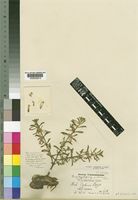
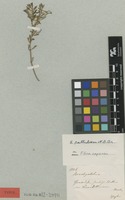
Isotype of Brachystelma pallidum (Schltr.) N.E.Br. [family APOCYNACEAE]
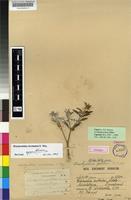
Brachystelma circinatum E.Mey. [family ASCLEPIADACEAE]
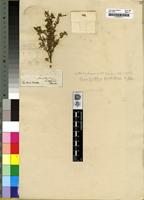
Type of Brachystelma pallidum N.E.Br. [family ASCLEPIADACEAE]
Isotype of Brachystelma pallidum (Schltr.) N.E.Br. [family APOCYNACEAE]
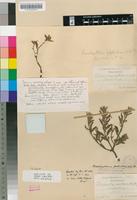
Syntype of Brachystelma pallidum N.E.Br. [family APOCYNACEAE]
Previous
Next

Name

Identification
Brachystelma circinatum E.Mey. [family ASCLEPIADACEAE ] (stored under name); Brachystelma pallidum (Schltr.) N.E.Br. [family ASCLEPIADACEAE ] Brachystelma galpinii (Schltr.) N.E.Br. [family ASCLEPIADACEAE ] Dichaelia pallida Schltr. [family ASCLEPIADACEAE ] Verified by Brown, N.E.,
Related name
  • Brachystelma galpinii
  • Dichaelia pallida
  • Brachystelma not on sheet
  • Brachystelma pallidum
  • Brachystelma circinatum

Flora

Entry for BRACHYSTELMA pallidum N. E. Br. [family ASCLEPIADACEAE]
Herbarium
Royal Botanic Gardens, Kew (K)
Collection
Flora Capensis
Resource Type
Reference Sources
Entry From
Flora Capensis, Vol 4, page 518, (1909) Author: By N. E. BROWN.
Names
BRACHYSTELMA pallidum N. E. Br. [family ASCLEPIADACEAE]
Dichælia pallida Schlechter [family ], in Engl. Jahrb. xx. Beibl. 51, 49, and in Journ. Bot. 1897, 294.
Dichælia microphylla S. Moore [family ], in Journ. Bot. 1903, 312.
Information
tuber 2 in. or more in diam., flattened; stem (often much) branched at the base or towards the middle, 3–10 in. high, shortly velvety-pubescent; leaves spreading, 1/4– 3/4 in. long, 2/3–2 1/2 lin. broad, linear-lanceolate, lanceolate or narrowly elliptic, obtuse or subacute, cuneately narrowed into a short petiole at the base, longitudinally folded, shortly pubescent or velvety-pubescent on both sides, but more densely so beneath; flowers in fascicles of 2–8 at the nodes or occasionally solitary; pedicels 1/2–1 1/2 lin. long; sepals about 1 lin. long, subulate-lanceolate, densely pubescent; corolla cage-like, lobed nearly to the base, with the lobes connate at the tips, pubescent like the leaves all over outside, glabrous within, apparently yellowish or whitish at the lower half and purplish-brown at the upper half; united part flattish or saucer-shaped, about 1/2 lin. long; lobes 5 1/2–8 1/2 lin. long, linear-filiform; outer corona-lobes 1/2– 7/8 lin. long, erect, divided from 2/3– 5/6 of their length into 2 parallel or slightly diverging linear obtuse or acute segments, varying from minutely puberulous on the inner face and ciliate with longer hairs to entirely glabrous, apparently whitish or yellowish; inner corona-lobes 1/3– 2/3 lin. long, linear or linear-spathulate, very obtuse, sometimes broader than the outer corona-teeth, somewhat loosely incurved over the anthers and much longer than them, but a little shorter than the outer corona-lobes, glabrous, apparently whitish; follicles 3–3 1/2 in. long, 1/8– 1/6 in. thick, terete, tapering to the acute apex, smooth, glabrous. null
Distribution
KALAHARI REGION Griqualand West; Lower Campbell, Burchell, 1799! Bechuanaland; near Kuruman, Burchell, 2499! near Lobatsi, Marloth, 3324! Transvaal; Magalies Berg, Burke! Zeyher, 1136! Crocodile River, Burke! Diamond Fields, Tuck! near Johannesburg, 6000 ft., Gilfillan in Herb. Galpin ,  6049! 6050! Rand, 967! near Little Olifants River, 5200 ft., Schlechter, 3810! Modderfontein, Conrath, 1011! Pretoria Kopjes, Miss Leendertz, 658!
Notes
I am very doubtful if this is more than a form of B. Galpinii, they are alike in appearance and only appear to differ in the pubescence of the leaves and corolla, and the form of the inner corona-lobes. But B. Galpinii is a much rarer plant.

Related Materials

  • Terms and Conditions
  • Privacy Policy
  • Cookie Policy
  • Cookie Settings
  • Accessibility
  • Help
  • Contact Us
  • Facebook
  • Twitter
ITHAKA

JSTOR is part of ITHAKA, a not-for-profit organization helping the academic community use digital technologies to preserve the scholarly record and to advance research and teaching in sustainable ways.

©2000-2026 ITHAKA. All Rights Reserved. JSTOR®, the JSTOR logo, JPASS®, Aluka®, and ITHAKA® are registered trademarks of ITHAKA.

╳