JSTOR Global Plants Home
  • Home
  • Browse
  • About
  • Access
  • Account
    • Saved Items
    • Profile
  • Log in

Global Plants

Skip to Main Content
  • JSTOR Global Plants Home
  • Global Plants

    • Browse
    • About
    • Access
    • Account
      • Saved Items
      • Profile
Log in
  • Browse
  • About
  • Access
  • Account
    • Saved Items
    • Profile
Advanced Search

Compilation
Brachystelma foetidum

14 Images see all

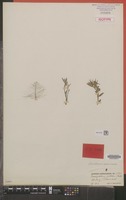
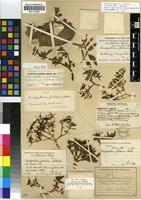
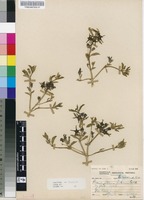
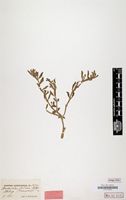
Isotype of Brachystelma foetidum Schltr. [family ASCLEPIADACEAE]
Brachystelma foetidum Schltr.
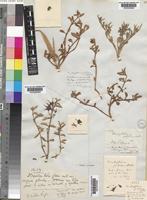
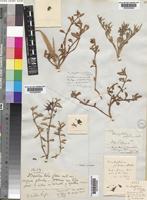
Brachystelma foetidum Schltr. [family ASCLEPIADACEAE]
Brachystelma foetidum Schltr.
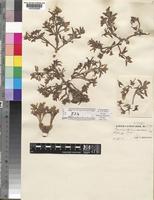
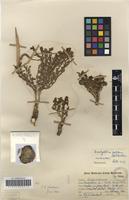
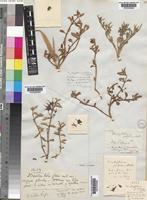
Holotype of Brachystelma foetidum Schltr. [family APOCYNACEAE]
Brachystelma foetidum Schltr. [family ASCLEPIADACEAE]
Filed as Brachystelma foetidum Schltr. [family APOCYNACEAE]
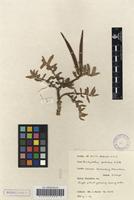
Type of Brachystelma foetidum Schltr. [family ASCLEPIADACEAE]
Filed as Brachystelma foetidum Schltr. [family APOCYNACEAE]
Type of Brachystelma foetidum Schltr. [family ASCLEPIADACEAE]
Brachystelma foetidum Schltr. [family ASCLEPIADACEAE]
Filed as Brachystelma foetidum Schltr. [family APOCYNACEAE]
Previous
Next

Name

Identification
Brachystelma foetidum Schltr. [family APOCYNACEAE ]
Related name
  • Brachystelma foetidum

Flora

Entry for Brachystelma foetidum [family ASCLEPIADACEAE]
Herbarium
South African National Biodiversity Institute, Compton Herbarium, Cape Town (SAM)
Collection
Flora of Southern Africa
Resource Type
Reference Sources
Entry From
Flora of South Africa, (2003) Author: Dr J.P. Roux
Names
Brachystelma foetidum [family ASCLEPIADACEAE]
Common names
B. rehmannii Schltr. in Bull. Herb. Boissier 4: 449 (1896). Type: Transvaal, Houtbosch, Rehmann 5877 (B, holo.t) (see note below).
Information
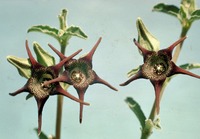
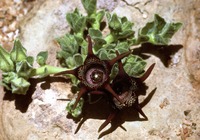
Perennial herb. Tuber up to 0,15-0,2 m diam., depressed from above. Stems 1-several, 70-150 mm long, erect or spreading, some­what branched above, variably pubescent with short, rather coarse, spreading hairs. Leaves linear-lanceolate to ovate or elliptic, 5-30 x 3-10 mm, cuneately narrowed into a short petiole, often somewhat folded upwards and undulate, sometimes glabrous above. Flowers 2-6 together, very variable in size; pedicels up to 10 mm long. Sepals lanceolate, up to 5 mm long, pubescent. Corolla 25-50 mm diam.; tube campanulate, 6-10 mm long; lobes 10-25 mm long, pubescent or glabrescent externally, mainly glabrous within; tube white to yellowish within, with purple-brown warty spots, becoming dark purple-brown to nearly black on lobes. Corona shortly campanulate at base, forming 5 pockets with V-shaped outer margin, with or without minute hairs within, confluent laterally with base of inner lobes; inner lobes incumbent on anthers but not exceeding them. Pollinia subpyriform, attached by short caudicles to carrier. Follicles in pairs or solitary, fusiform, up to 100 mm long, pubescent.
Habitat
With such a wide distribution it is not surprising that B. foetidum shows an extreme range in size of flower, influenced no doubt by the environment and seasonal variations. In the sandy areas the size seems generally smaller than in other areas. It seems appropriate to quote what N. E. Brown said of this species seventy years ago. "Dr Schlechter founded B. foetidum upon a small-flowered specimen with the inner surface of the corolla-lobes glabrous, and B. rehmannii upon a large-flowered specimen with the inner surface of the corolla-lobes puberulous. I have examined both and find no structural difference between the two extreme forms, nor does Dr Schlechter mention any, and they are connected by specimens with flowers of intermediate size, which demonstrate that the size accords with the vigour of the plant, probably depending upon the amount of moisture. Specimens with the inner surface of the corolla-lobes puberulous appear to be uncommon". All observations made since confirm Brown's com­ments. It was found necessary to include it thr
Use
6. Brachystelma foetidum Schltr. in Bot. Jb. 20, Beibl. 51: 52 (1895); N.E. Br. in F.C. 4,1: 840 (1908); Skan in Curtis's bot. Mag. t.8817 (1919); R. A. Dyer in Flower. PI. S. Afr. t.940 (1944). Type: Transvaal, Elsburg, Schlechter 3547 (B, holo.t; BOL, lecto.!).
Range
Widespread in the grassveld of the Transvaal, Botswana, northern Cape, Natal and frequently occurring in northern Orange Free State.

Related Materials

  • Terms and Conditions
  • Privacy Policy
  • Cookie Policy
  • Cookie Settings
  • Accessibility
  • Help
  • Contact Us
  • Facebook
  • Twitter
ITHAKA

JSTOR is part of ITHAKA, a not-for-profit organization helping the academic community use digital technologies to preserve the scholarly record and to advance research and teaching in sustainable ways.

©2000-2026 ITHAKA. All Rights Reserved. JSTOR®, the JSTOR logo, JPASS®, Aluka®, and ITHAKA® are registered trademarks of ITHAKA.

╳