JSTOR Global Plants Home
  • Home
  • Browse
  • About
  • Access
  • Account
    • Saved Items
    • Profile
  • Log in

Global Plants

Skip to Main Content
  • JSTOR Global Plants Home
  • Global Plants

    • Browse
    • About
    • Access
    • Account
      • Saved Items
      • Profile
Log in
  • Browse
  • About
  • Access
  • Account
    • Saved Items
    • Profile
Advanced Search

Compilation
Brachystegia velutina

12 Images see all

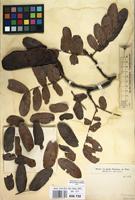
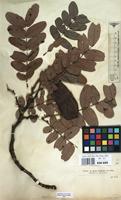
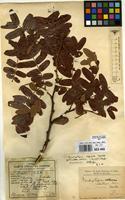
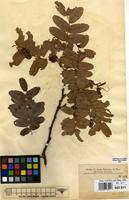
Syntype of Brachystegia velutina De Wild. var. quarrei De Wild. [family LEGUMINOSAE-CAESALPINIACEAE]
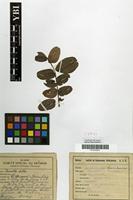
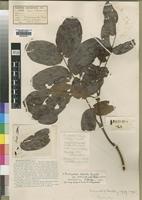
Holotype of Brachystegia velutina De Wild. [family FABACEAE]
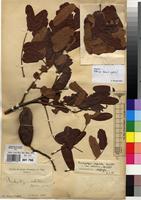
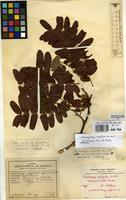
Syntype of Brachystegia velutina De Wild. var. quarrei De Wild. [family LEGUMINOSAE-CAESALPINIACEAE]
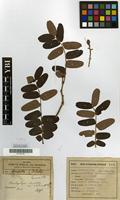
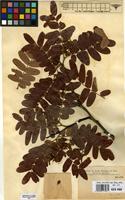
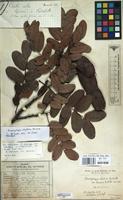
Type of Brachystegia kassneri Baker,f. [family LEGUMINOSAE]
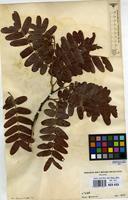
Syntype of Brachystegia velutina De Wild. var. quarrei De Wild. [family LEGUMINOSAE-CAESALPINIACEAE]
Previous
Next

Name

Identification
Brachystegia kassneri Baker,f. [family LEGUMINOSAE ] Brachystegia stipulata (DeWild.) Hayle [family LEGUMINOSAE ] Verified by Hayle,A.C., Brachystegia velutina DeWild. [family LEGUMINOSAE ] (stored under name);
Related name
  • Brachystegia velutina
  • Brachystegia stipulata
  • Brachystegia kassneri

Flora

Entry for BRACHYSTEGIA stipulata De Wild. [family LEGUMINOSAE-CAESALPINIOIDEAE]
Herbarium
Royal Botanic Gardens, Kew (K)
Collection
Flora of Tropical East Africa
Resource Type
Reference Sources
Entry From
Flora of Tropical East Africa, page 1, (1967) Author: J. P. M. Brenan
Names
BRACHYSTEGIA stipulata De Wild. [family LEGUMINOSAE-CAESALPINIOIDEAE], in Ann. Mus. Congo, Bot. sér. 4: 44, t. 12 (1902), in t. sub nom. B. appendiculata De Wild, non Benth.; Burtt Davy & Hutch, in K.B. 1923: 150 (1923); C. H. N. Jackson in Journ. S. Afr. Bot. 6: 39 (1940); B. D. Burtt in Journ. Ecol. 30: 141 (1942); T.T.C.L.: 92 (1949); Hoyle in F.C.B. 3: 457 (1952); Hoyle & White in F.F.N.R.: 106, fig. 22/F (1962). Type: Congo Republic, Katanga, Lukafu, Verdick 18 (BR, holo.!, K, photo.!)
BRACHYSTEGIA velutina De Wild. [family LEGUMINOSAE-CAESALPINIOIDEAE], in F.R. 11: 512 (1913). Type: Congo Republic, Katanga, Elisabethville, Hock (BR, holo. !, K, photo. !) See also additional synonymy in F.C.B. 3: 457–60 and following note.
Information
Tree or treelet 1–7(–9) m. high; mature bark rough, reticulate to fissured, persistent, grey; crown umbrella-shaped or flat; foliage maturing green, often glaucous beneath. Stipules shortly connate, linear to falcate, 1–2 cm. long, usually persistent; auricle usually very persistent and conspicuous, 1–2 cm. long, broadly reniform; intrapetiolar stipule-bases persistent, subtending flattened and laterally keeled dormant buds. Leaves with (5–)6–8(–10) pairs of leaflets, the middle pairs usually the largest; petiole 1–2 cm. long; rhachis (6–)8–15(–20) cm. long, channelled; stipellar expansions variable, often obscure or 0; leaflets oblong-elliptic or more rarely narrowed to the retuse or rounded apex, (2–)3–6(–8) × (1–)1.5–2(–4) cm., ± obliquely rounded to cordate at base; midrib subcentral; basal fanwise nerves (3–)4–5(–6). Racemes simple or few-branched, terminal or terminal and axillary. Flowers few, large; bracteoles 13–20 × 6–10 mm. Tepals 6–8(–11), imbricate, usually all sepaloid and grading from broad to narrow, 4–8 mm. long, densely long-ciliate, or obscurely in 2 whorls with the inner spathulate to vestigial. Stamens 13–18 (sometimes with staminodes, totalling ± 20); filaments 25–30(–40) mm. long, ± connate, the tube usually subequal to the tepals. Ovary 8–10 × 1.5–3 mm., ± densely crispate-setose, tapering gradually into the 20–30 mm. long erect style with small stigma. Pod woody, up to 15(–22) × 5 cm., smooth but often transversely nervose, rarely scurfy in patches, maturing pinkish- (usually pale) brown; sutural wings stiffly spreading, each 4–8 mm. wide. Fig. 35/13.
Range
DISTR. T4
Altitude range
known in Tanganyika only from the cited gathering, at 1460 m.; elsewhere mainly between 900 and 1700 m.
Distribution
TANGANYIKA Ufipa plateau, Rwassi Forest Reserve, fl. 16 Oct. 1928, Wigg in F.H. 387 I
Distribution (external)
; Congo Republic
Mozambique
Malawi
Zambia
Notes
VARIATION. The species, in a broad sense, is easily recognized by its unique large flowers and persistent, short stipules with large auricles. Variation is, however, considerable in hairiness and in the shape, size and number of leaflets; extreme forms, when sterile, are easily confused with B. allenii and its hybrids or with forms of the B. × longifolia complex. The sole record from the Flora area represents one of several forms with spreading fulvous hairs on leaves and inflorescence and is indistinguishable from B. velutina var. quarrel De Wild., the flowering stage of B. velutina De Wild. This specific epithet was used (F.C.B. 3: 459) under B. stipulata in a varietal combination which is now seen to be illegitimate and should not be used. It has become evident, not only that various more or less hairy forms occur widely both inside and especially outside the Congo, but that occasional forms, glabrous like the type (but without apparent connection with it), appear sporadically here and there within the total range. Hairy inflorescences may also be combined with glabrous leaves. Moreover a hairy form can apparently hybridize with B. boehmii to produce B. × bequaertii De Wild, (pro sp.), and a glabrous form with B. glaberrima, so that the position is potentially complex. In these circumstances varietal names seem more misleading than useful.

Related Materials

  • Terms and Conditions
  • Privacy Policy
  • Cookie Policy
  • Cookie Settings
  • Accessibility
  • Help
  • Contact Us
  • Facebook
  • Twitter
ITHAKA

JSTOR is part of ITHAKA, a not-for-profit organization helping the academic community use digital technologies to preserve the scholarly record and to advance research and teaching in sustainable ways.

©2000-2026 ITHAKA. All Rights Reserved. JSTOR®, the JSTOR logo, JPASS®, Aluka®, and ITHAKA® are registered trademarks of ITHAKA.

╳