JSTOR Global Plants Home
  • Home
  • Browse
  • About
  • Access
  • Account
    • Saved Items
    • Profile
  • Log in

Global Plants

Skip to Main Content
  • JSTOR Global Plants Home
  • Global Plants

    • Browse
    • About
    • Access
    • Account
      • Saved Items
      • Profile
Log in
  • Browse
  • About
  • Access
  • Account
    • Saved Items
    • Profile
Advanced Search

Compilation
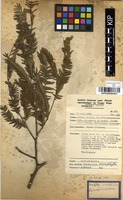
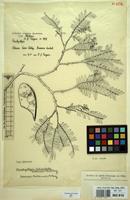
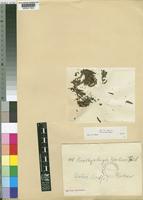
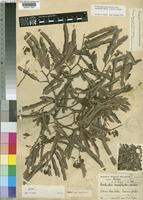
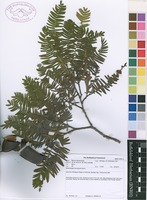
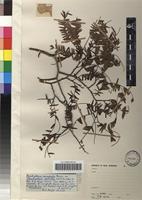
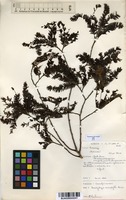
Brachystegia microphylla

19 Images see all

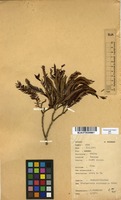
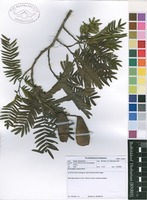
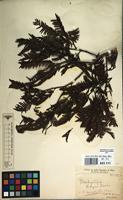
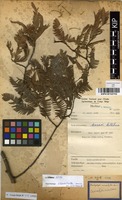
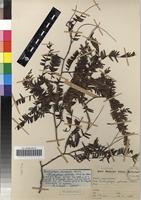
Filed as Brachystegia microphylla Harms [family CAESALPINIACEAE]
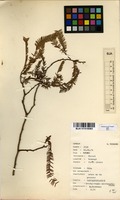
Isotype of Brachystegia fischeri Taub. [family LEGUMINOSAE-CAESALPINIOIDEAE]
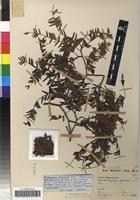
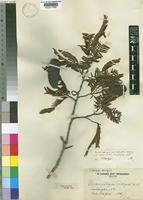
Holotype of Brachystegia glaucescens Burtt Davy & Hutch. [family LEGUMINOSAE-CAESALPINIOIDEAE]
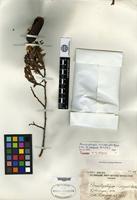
Type of Brachystegia pectinata Sim [family FABACEAE]
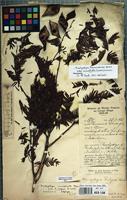
Holotype of Brachystegia robynsii De Wild. [family LEGUMINOSAE-CAESALPINIACEAE]
Isotype of Brachystegia robynsii De Wild. [family LEGUMINOSAE-CAESALPINIACEAE]
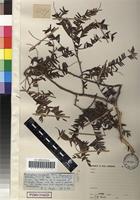
Filed as Brachystegia microphylla Harms [family CAESALPINIACEAE]
Type of Brachystegia reticulata Hutch. & Burtt Davy [family LEGUMINOSAE-CAESALPINIACEAE]
Type of Brachystegia robynsi De Wild. [family LEGUMINOSAE-CAESALPINIOIDEAE]
Filed as Brachystegia microphylla Harms [family CAESALPINIACEAE]
Isotype of Brachystegia robynsii De Wild. [family CAESALPINIACEAE]
Type of Brachystegia pectinata Sim [family FABACEAE]
Filed as Brachystegia microphylla Harms [family CAESALPINIACEAE]
Type of Brachystegia pectinata Sim [family FABACEAE]
Filed as Brachystegia microphylla Harms [family CAESALPINIACEAE]
Previous
Next

Name

Identification
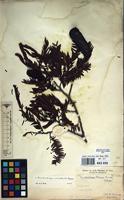
Isotype of Brachystegia robynsii De Wild. [family CAESALPINIACEAE ] (stored under name); Verified by 100829, Brachystegia microphylla Harms [family CAESALPINIACEAE ] Verified by A.C. Hoyle, Brachystegia robynsii De Wild. [family CAESALPINIACEAE ] Verified by Not on Sheet,
Related name
  • Brachystegia tamarindoides
  • Brachystegia microphylla
  • Brachystegia robynsi
  • Brachystegia glaucescens
  • Brachystegia robynsii
  • Brachystegia reticulata
  • Brachystegia fischeri
  • Brachystegia pectinata

Flora

Entry for BRACHYSTEGIA microphylla Harms [family LEGUMINOSAE-CAESALPINIOIDEAE]
Herbarium
Royal Botanic Gardens, Kew (K)
Collection
Flora of Tropical East Africa
Resource Type
Reference Sources
Entry From
Flora of Tropical East Africa, page 1, (1967) Author: J. P. M. Brenan
Names
BRACHYSTEGIA microphylla Harms [family LEGUMINOSAE-CAESALPINIOIDEAE], in E.J. 28: 397 (1900); Burtt Davy & Hutch, in K.B. 1923: 153 (1923); L.T.A.: 716 (1930); C. H. N. Jackson in Journ. S. Afr. Bot. 6: 35, 39 (1940); B. D. Burtt in Journ. Ecol. 30: 74–76, 78, 82–85, 109, 116, 141, t. 2, 5, 7 (1942); T.T.C.L.: 91 (1949), haud tamen qua syn.; Hoyle in F.C.B. 3: 477 (1952); Hoyle & White in F.F.N.R.: 115, 118, fig. 22/L (1962). Type: Tanganyika, Iringa District, Ndegere, Goetze 603 (B, holo. †, K, fragm.!)
BRACHYSTEGIA tamarindoïdes [family LEGUMINOSAE-CAESALPINIOIDEAE], [sensu T.T.C.L.: 90, 91 (1949), pro parte, et in herb, mult., non Benth.]
Information
Tree 4–20(–27) m. high; young bark smooth, pale silver-grey, soon flaking off thinly on bole and main branches, exposing yellowish or buff-coloured patches; older bark becoming rough, darker grey or brownish, flaking in thicker scales exposing large lenticellate patches; crown usually spreading, flat-topped; upper branches divaricate; branchlets ± horizontal with delicate fern-like foliage. Young branchlets usually pubescent to tomentose, brown or rusty, soon grey with small circular lenticels. Stipules fugacious (rarely seen), free, linear to filiform, 0.5–1 cm. long, with or without a small lateral lobe at the base. Leaves with (17–)25–60(–72) closely pectinate pairs of leaflets, the middle pairs the largest; petiole 1–4 mm. long; rhachis very slender, channelled, with ± conspicuous wings and often local stipellar expansions, usually obscured by spreading, often rusty pubescence; leaflets linear to very narrowly triangular, often falcate, (3–)5–15(–20) × 1–2(–3.5) mm., acute to rounded, often minutely apiculate, obliquely truncate to subcordate at base; midrib subcentral, very slender; surfaces usually glabrous, more rarely appressed-puberulous, but usually ciliolate. Panicles terminal or terminal and axillary, 2–4 × 2–4 cm., brown-, rusty- or tawny-pubescent to -tomentose. Flowers small, greenish-white or yellowish; bracteoles 4–6 × 3–4.5 mm., puberulous to tomentose. Tepals apparently (4–)5 only, free or 2–3 partly connate, always (?) all sepaloid, broad and imbricate, up to 2 × 1.5 mm., shortly and sparsely to subdensely and (for their size) rather long-ciliate, otherwise glabrous. Stamens ± 10, usually free, 8–10 mm. long. Ovary 2.5–3 × 0.7–1 mm. Pod thinly woody, smooth, up to 12 × 3 cm. (usually much smaller), immature drying pale or mid-brown, mature blackish-purple and usually pruinose, with numerous but minute and obscure pale lenticels; sutural wings thin, spreading, each up to 4 mm. wide. Fig. 38, p. 175.
Range
DISTR. T1–8
Altitude range
300–2200 m., mainly in highlands.
Distribution
TANGANYIKA Handeni District Kideleko road, fl. 14 Jan., fr. 7 April 1954, Faulkner 1325 ! & 1401 !TANGANYIKA Mpanda District 11 km. on Uruwira-Nyonga road, fr. 3 July 1949, Hoyle & Greenway 1060 !TANGANYIKA SE. Tabora District Itulu Hill, fl. Sept. 1951, Groome 16 !TANGANYIKA Newala escarpment, fl. Nov. 1953, Eggeling 6734 !
Distribution (external)
; Congo Republic
Mozambique
Malawi
Zambia (and ? Rhodesia)
Notes
VARIATION. In T.T.C.L.: 91 (1949), B. microphylla was cited as a “form” of the Angolan B. tamarindoïdes. The latter, although belonging to the same group, is a complex of uncertain status which now seems to be very closely related to B. utilis. Although a manifestly distinct species, B. microphylla varies considerably in number of leaflets on normal specimens, without significant change in other characters, in each area from which several gatherings are available. There is also a vague, clinal variation in maximum number of leaflets per specimen, from 40–72 pairs in E. and NE. Tanganyika to 25–45 pairs in the west and south-west. Occasional specimens, otherwise normal but (for the locality) with exceptionally broad and/or few leaflets, interrupt this cline at several points. Some of these are locally associated with highly aberrant material showing various sizes and numbers of leaflets intermediate in shape, venation and indumentum between local forms of B. microphylla and 1, B. spiciformis; the flowering specimens sometimes have simple racemes with intermediate flowers showing various abnormalities usually associated with hybridity. One of these was described by Taubert as a species which is now more appropriately called B. × fischeri Taub. (pro sp.) and enlarged to include other collections of similar apparent origin. These are dealt with in some detail below under 5 × 1. Other hybrids, very similar in appearance at first sight, seem to occur less often with 2, B. bussei, 6, B. floribunda and 7, B. manga (see below under 2 × 5, 6 × 5 and 7 × 5 respectively). For putative hybrids with 3, B. utilis see under the latter.

Related Materials

  • Terms and Conditions
  • Privacy Policy
  • Cookie Policy
  • Cookie Settings
  • Accessibility
  • Help
  • Contact Us
  • Facebook
  • Twitter
ITHAKA

JSTOR is part of ITHAKA, a not-for-profit organization helping the academic community use digital technologies to preserve the scholarly record and to advance research and teaching in sustainable ways.

©2000-2026 ITHAKA. All Rights Reserved. JSTOR®, the JSTOR logo, JPASS®, Aluka®, and ITHAKA® are registered trademarks of ITHAKA.

╳