JSTOR Global Plants Home
  • Home
  • Browse
  • About
  • Access
  • Account
    • Saved Items
    • Profile
  • Log in

Global Plants

Skip to Main Content
  • JSTOR Global Plants Home
  • Global Plants

    • Browse
    • About
    • Access
    • Account
      • Saved Items
      • Profile
Log in
  • Browse
  • About
  • Access
  • Account
    • Saved Items
    • Profile
Advanced Search

Compilation
Brachystegia floribunda

16 Images see all

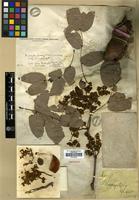
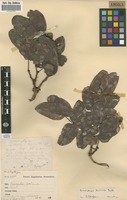
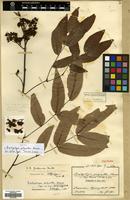
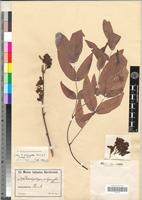
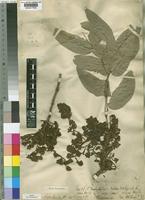
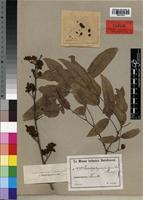
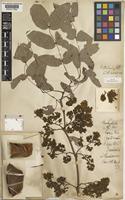
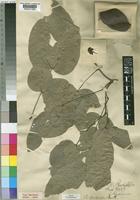
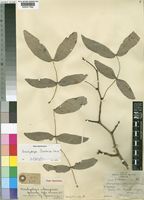
Type? of Brachystegia floribunda Benth. [family LEGUMINOSAE]
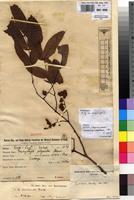
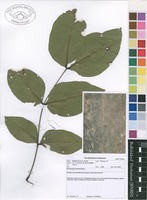
Isotype of Brachystegia polyantha Harms [family FABACEAE]
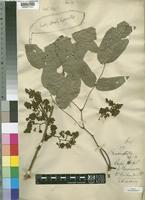
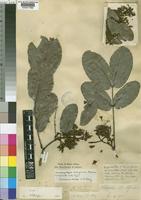
Brachystegia floribunda Benth. [family LEGUMINOSAE-CAESALPINIOIDEAE]
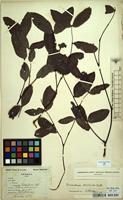
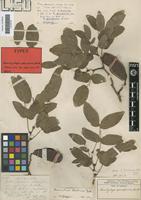
Filed as Brachystegia floribunda Benth. [family LEGUMINOSAE-CAESALPINIACEAE]
Filed as Brachystegia floribunda Benth. [family FABACEAE]
Filed as Brachystegia floribunda Benth. [family CAESALPINIACEAE]
Brachystegia eurycoma Harms [family LEGUMINOSAE-CAESALPINIOIDEAE]
Type of Brachystegia speciformis Benth. [family LEGUMINOSAE-CAES]
Isotype of Brachystegia polyantha Harms [family LEGUMINOSAE]
Type of Brachystegia floribunda Benth [family FABACEAE-CAESALPINIOIDEAE]
Type of Brachystegia floribunda Benth. [family LEGUMINOSAE-CAESALPINIOIDEAE]
Brachystegia lujae De Wild. [family LEGUMINOSAE-CAESALPINIOIDEAE]
Isotype of Brachystegia polyantha Harms [family CAESALPINIACEAE]
Brachystegia floribunda Benth. [family LEGUMINOSAE-CAESALPINIOIDEAE]
Type of Brachystegia floribunda Benth. [family LEGUMINOSAE-CAESALPINIOIDEAE]
Type of Brachystegia nchangensis Greenway [family LEGUMINOSAE-CAESALPINIOIDEAE]
Previous
Next

Name

Identification
Brachystegia floribunda Benth. [family LEGUMINOSAE-CAESALPINIACEAE ] (stored under name); Verified by Hoyle A.C., 1950
Related name
  • Brachystegia lujae
  • Brachystegia unrecorded
  • Brachystegia floribunda
  • Brachystegia speciformis
  • Brachystegia polyantha
  • Brachystegia spiciformis
  • Brachystegia eurycoma
  • Brachystegia nchangensis

Flora

Entry for BRACHYSTEGIA floribunda Benth. [family LEGUMINOSAE-CAESALPINIOIDEAE]
Herbarium
Royal Botanic Gardens, Kew (K)
Collection
Flora of Tropical East Africa
Resource Type
Reference Sources
Entry From
Flora of Tropical East Africa, page 1, (1967) Author: J. P. M. Brenan
Names
BRACHYSTEGIA floribunda Benth. [family LEGUMINOSAE-CAESALPINIOIDEAE], in Hook., Ic. Pl. 14: 43 (1881); Burtt Davy & Hutch, in K.B. 1923: 157 (1923); C. H. N. Jackson in Journ. S. Afr. Bot. 6: 38 (1940); B. D. Burtt in Journ. Ecol. 30: 78, 141, t. 4 (1942); T.T.C.L.: 92 (1949); Hoyle in F.C.B. 3: 465, fig. 39/B (1952); Hoyle & White in F.F.N.R.: 107, fig. 22/A, t. 1/J (1962). Type: Malawi, Shire Highlands, Zomba, Buchanan 10 (K, lecto. !, E, isolecto.!)
BRACHYSTEGIA polyantha Harms [family LEGUMINOSAE-CAESALPINIOIDEAE], in E.J. 30: 319 (1901); Burtt Davy & Hutch, in K.B. 1923: 157 (1923); L.T.A.: 731 (1930). Type: Tanganyika, Rungwe District, Kiwira valley, Goetze 1478 (B, holo. !, E, iso. !, K, photo. !)
Information
Tree (4–)6–12(–15) m. high; bark at first smooth, whitish or silvery-grey, becoming rather rough and darker (when burnt?), slowly shedding in irregular scales or completely to expose a pale grey finely muricate surface; crown at first narrow, erect-branched, finally spreading and irregularly rounded; mature foliage usually glaucous, usually bunched; leaves pendulous, fluttering in the slightest breeze. Branchlets usually soon rusty. Stipules free, linear to falcate-subfoliaceous, 0.5–2 cm. long, usually fugacious; auricle 0. Leaves glabrous, with (2–)3–4 widely spaced pairs of leaflets, the distal pair usually the largest; petiole (1.5–)2–5(–7) cm. long, slender; rhachis (2.5–)3–8(–12) cm. long, slender, not (or very obscurely) channelled, without stipels or expansions; leaflets ovate or rhombic to falcate, (2–)3–8(–10) × (1–)2–3.5(–5) cm., obtuse to acute or acuminate, usually very oblique and rounded- or subcordate-cuneate at base; midrib subcentral; basal fanwise nerves (3–)4–5(–6); surfaces mat, concolorous, both equally reticulate with age. Panicles usually conspicuous, often clustered, mainly on older wood or leafless branchlets (more rarely also terminal and then smaller), up to 10 × 8 cm., pubescent to tomentose with brown or rusty hairs. Flowers greenish-white; bracteoles 4–6(–8) × 2.5–4(–5) mm. Tepals 5(–7), usually all sepaloid but usually narrow and then scarcely imbricate; outer 5(–7), up to 3 × 1 mm., free, shortly ciliate; inner 0 or 1–2, narrow. Stamens ± 10, usually free, filaments 8–10 mm. long. Ovary 2.5–3 × 1 mm., ± densely crispate-setose; style 7–8 mm. long, stigma small. Pod thinly woody, up to 12.5 × 4 cm., pendulous, smooth, blue-black to brownish-purple, ± pruinose over a mat, minutely papillose surface; sutural wings spreading, each 3–4 mm. wide. Fig. 35/1, p. 160.
Range
DISTR. T4, 7, 8
Altitude range
locally dominant or co-dominant between 700 and 2075 m., often over large areas on high plateaux, mainly above 1200 m. in SW. Tanganyika.
Distribution
TANGANYIKA Kigoma District Mahali Mts., Kabesi valley, fl. 31 Aug. 1958, Jefford, Juniper & Newbould 1973 !TANGANYIKA Mbeya District Mbozi plateau, near Vawa, fl. 28 Sept. 1936, B. D. Burtt 5756 ! & Mbeya Mt., Mbeya-Chunya road, fr. 8 July 1949, Hoyle & Greenway 1077 !
Distribution (external)
; Congo Republic
Mozambique
Malawi
Zambia
Angola
Notes
VARIATION. Normal fertile material varies little except in width and size of leaflets, but those on sterile branchlets are often gradually acuminate and conspicuously falcate. Confusion with B. bussei is then probable, especially because the usually glaucous leaflets of B. floribunda can evidently turn green for a while at maturity, or even fail to become glaucous in moister areas. Immature sterile material of B. floribunda and the related B. manga is often very difficult to distinguish, notably if it comes from young vigorous trees or even older ones derived from coppice. Such an origin, rather than hybridity, may well explain intermediate forms from Mpanda and Kigoma Districts of Tanganyika.Descriptions of the bark of B. floribunda vary widely. There is evidence that intense fire may cause the outer bark to be sloughed off over the whole bole, but that where fire is absent or slight, the outer bark may persist smooth and pale much longer. Moderate fire and slow shedding of bark can probably be regarded as “normal”.Hybrids of B. floribunda seem very rare. There are only two examples available (both outside the Flora area) of apparent crossing with 1, B. spiciformis, although the species are widely associated. In two localities in southern Tanganyika, hybrids with 5, B. microphylla seem obvious and a triple hybrid is also suspected (see 6 × 5 below B. microphylla).

Related Materials

  • Terms and Conditions
  • Privacy Policy
  • Cookie Policy
  • Cookie Settings
  • Accessibility
  • Help
  • Contact Us
  • Facebook
  • Twitter
ITHAKA

JSTOR is part of ITHAKA, a not-for-profit organization helping the academic community use digital technologies to preserve the scholarly record and to advance research and teaching in sustainable ways.

©2000-2026 ITHAKA. All Rights Reserved. JSTOR®, the JSTOR logo, JPASS®, Aluka®, and ITHAKA® are registered trademarks of ITHAKA.

╳