JSTOR Global Plants Home
  • Home
  • Browse
  • About
  • Access
  • Account
    • Saved Items
    • Profile
  • Log in

Global Plants

Skip to Main Content
  • JSTOR Global Plants Home
  • Global Plants

    • Browse
    • About
    • Access
    • Account
      • Saved Items
      • Profile
Log in
  • Browse
  • About
  • Access
  • Account
    • Saved Items
    • Profile
Advanced Search

Compilation
Brachystegia angustistipulata

6 Images see all

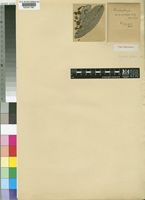
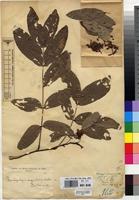
Type of Brachystegia angustistipulata De Wild. [family LEGUMINOSAE-CAESALPINIOIDEAE]
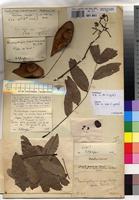
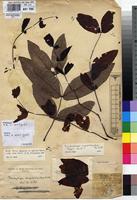
Type of Brachystegia angustistipulata De Wild. [family FABACEAE]
Holotype of Brachystegia longifoliolata De Wild. [family FABACEAE]
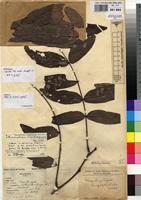
Type of Brachystegia longifoliolata De Wild. [family FABACEAE]
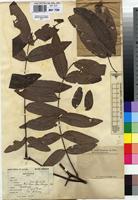
Type of Brachystegia angustistipulata De Wild. [family FABACEAE]
Previous
Next

Name

Identification
Brachystegia longifoliolata De Wild. [family FABACEAE ] Verified by Not on sheet, Brachystegia angustistipulata De Wild. [family FABACEAE ] (stored under name); Verified by Not on sheet,
Related name
  • Brachystegia longifolia
  • Brachystegia angustistipulata
  • Brachystegia longifoliolata

Flora

Entry for BRACHYSTEGIA angustistipulata De Wild [family LEGUMINOSAE-CAESALPINIOIDEAE]
Herbarium
Royal Botanic Gardens, Kew (K)
Collection
Flora of Tropical East Africa
Resource Type
Reference Sources
Entry From
Flora of Tropical East Africa, page 1, (1967) Author: J. P. M. Brenan
Names
BRACHYSTEGIA angustistipulata De Wild [family LEGUMINOSAE-CAESALPINIOIDEAE], in F.R. 11: 511 (1913) & in Ann. Mus. Congo, Bot. sér. 4, 2: 43 (1913); Burtt Davy & Hutch, in K.B. 1923: 157 (1923); Hoyle in F.C.B. 3: 470 (1952). Type: Congo Republic, Katanga, Sankishia, Bequaert 165 (BR, holo.!, K, photo !)
Information
Tree 2.5–6 m. high; habit gnarled; bark finely to coarsely reticulate-fissured, grey, brownish or black; crown few-branched, flat-topped; foliage pendulous in loose bunches. Stipules shortly connate, linear, ± falcate, 1.5–2 cm. long, caducous; auricle lateral, small, or 0; intrapetiolar stipule-bases persistent, usually prominent, subtending flattened and keeled dormant buds. Leaves glabrous or shortly appressed-pilose throughout, with (4–)5–7(–9) widely-spaced pairs of leaflets, the middle pairs usually the largest; petiole (1.5–)2–5 cm. long, pulvinus prominent, dark; rhachis (13–)15–20(–25) cm. long, channelled; stipellar expansions usually obscure or absent; leaflets oblong to narrowly ovate, rarely falcate, (2–)3–11 × (1–)2–3(–4) cm., obtuse or acute to acuminate, obliquely truncate-subcordate to rounded-cuneate at base; midrib subcentral; basal fanwise nerves (2–)3–4; lateral nerves slender, rather close; surfaces closely but often obscurely reticulate. Panicles terminal and axillary, 5–10 × 4–7 cm., ± densely puberulous. Flowers rather large; bracteoles (6–)7–9(–11) × 5–6 mm. Tepals 4–6(–8), free or some connate; outer broadly imbricate, 1.5–3 × 1–3 mm., densely and usually long-ciliate; inner 0 or 1–2, linear. Stamens ± 10, free, filaments 9–11 mm. long; disc-glands usually prominent. Ovary 3.5–5 × 1–1.5 mm., margins crispate-setose. Pod woody, up to 16 × 4 cm., maturing pale brown, thin, becoming densely scurfy very early; sutural wings thin, each 6–8 mm. wide. Fig. 35/12, p. 160.
Range
DISTR. T4
Altitude range
980–1525 m.
Distribution
TANGANYIKA Kigoma District Mahali Mts., Itemba, fl. 1 Oct. 1958, Jefford, Juniper & Newbould 2801 ! & 2804 !TANGANYIKA Mpanda District 16 km. S. of Mpanda, fr. 21 Mar. 1961, Boaler 242 ! & fl. Sept. 1961, Procter 1939 ! & 1943 !
Distribution (external)
; Congo Republic
Notes
VARIATION. Rather inadequately known from few, scattered localities but obviously distinct and regularly showing a unique character-combination. Many of the flowers seen are galled and this may explain the rarity of what seems to be an ancient relic with suggestive resemblances to high-forest species. It varies little except in width and apex of leaflets but can evidently have leaves glabrous or appressed-puberulous in one population (thus Procter 571, Uvinza-Kasulu, young fruit Nov. 1956, is mixed in FHO). The usually prominent disc-glands are not shown by Rounce in EA 8/31/1 (Buha District, Kasulu), an exceptionally vigorous and otherwise rather aberrant specimen with a tendency to a staminal tube. Jackson 108 (Kasulu, Aug. 1935) is a mixture (in BM ! & K !) of flowering B. angustistipulata, with apparent coppice and also (in K !) sterile, old leaves of 11, B. glaberrima. The characters of the latter species and of 12, B. × longifolia in the region (e.g. Semsei in Herring 52 in F.H. 2484, Mpanda, Kabungu, fr. 25 July 1949), suggest probable introgression. Occasional hybrids with sp. 13, B. boehmii, seem to occur (see below).

Related Materials

  • Terms and Conditions
  • Privacy Policy
  • Cookie Policy
  • Cookie Settings
  • Accessibility
  • Help
  • Contact Us
  • Facebook
  • Twitter
ITHAKA

JSTOR is part of ITHAKA, a not-for-profit organization helping the academic community use digital technologies to preserve the scholarly record and to advance research and teaching in sustainable ways.

©2000-2026 ITHAKA. All Rights Reserved. JSTOR®, the JSTOR logo, JPASS®, Aluka®, and ITHAKA® are registered trademarks of ITHAKA.

╳