Global Plants
Skip to Main Content
Global Plants
Browse
About
Access
Account
Saved Items
Profile
Log in
Browse
About
Access
Account
Saved Items
Profile
Filter search by
Names
Names with Synonyms
Places
People
Free Text
Search
Search
Advanced Search
Compilation
Brachychiton discolor
7 Images
see all
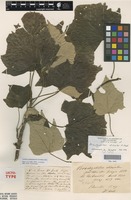
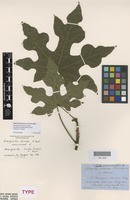
Lectotype of Brachychiton discolor F.Muell. [family MALVACEAE]
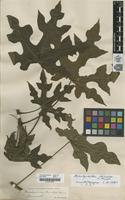
Filed as Brachychiton discolor F.Muell [family STERCULIACEAE]
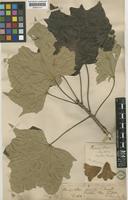
Brachychiton incanum R.Br. [family STERCULIACEAE]
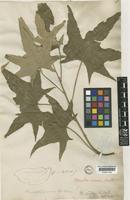
Isolectotype of Brachychiton discolor F.Muell. [family MALVACEAE]
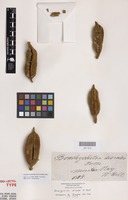
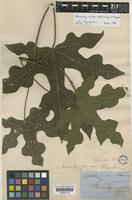
Lectotype of Brachychiton luridus C.Moore ex F.Muell. [family MALVACEAE]
Brachychiton discolor F.Muell. [family STERCULIACEAE]
Brachychiton discolor F.Muell. [family STERCULIACEAE]
Previous
Next
Name
Identification
Brachychiton incanum
R.Br.
[family
STERCULIACEAE
] (stored under name);
Sterculia acerifolia
A.Cunn.
[family
STERCULIACEAE
]
Sterculia incana
Benth.
[family
STERCULIACEAE
]
Brachychiton discolor
F.Muell.
[family
STERCULIACEAE
]
Related name
Sterculia discolor
Brachychiton luridum
Brachychiton incanum
Sterculia incana
Brachychiton platanoides
Sterculia lurida
Sterculia acerifolia
Brachychiton luridus
Brachychiton discolor
Flora
Entry for Brachychiton discolor F. Muell. [family STERCULIACEAE]
Herbarium
Royal Botanic Gardens, Kew (K)
Collection
Flora Zambesiaca
Resource Type
Reference Sources
Entry From
FZ, Vol 1, Part 2, page 517, (
1961
) Author: H. Wild
Names
Brachychiton discolor
F. Muell.
[family
STERCULIACEAE
]
Information
It has 5–7-lobed broadly cordate-ovate discolorous leaves and carmine flowers, and reaches IS m. in height.
Range
from New South Wales and Queensland, which is also cultivated in Lourenço Marques and Salisbury.
Notes
decorative trees cultivated in our area belong to an Australian genus closely related to Sterculia
Related Materials
╳