JSTOR Global Plants Home
  • Home
  • Browse
  • About
  • Access
  • Account
    • Saved Items
    • Profile
  • Log in

Global Plants

Skip to Main Content
  • JSTOR Global Plants Home
  • Global Plants

    • Browse
    • About
    • Access
    • Account
      • Saved Items
      • Profile
Log in
  • Browse
  • About
  • Access
  • Account
    • Saved Items
    • Profile
Advanced Search

Compilation
Brachiaria malacodes

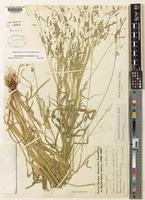
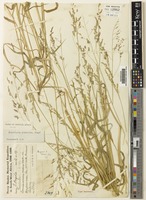
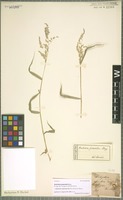
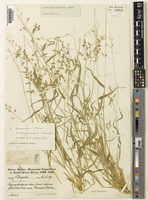
4 Images see all

Syntype of Brachiaria poaeoides Stapf [family POACEAE]
Previous
Next

Name

Identification
Brachiaria malacodes (Mez & K.Schum.) Scholz [family POACEAE ] (stored under name); Brachiaria poaeoides Stapf [family POACEAE ] Verified by Thompson, R.,
Related name
  • Panicum glomeratum
  • Brachiaria malacodes
  • Brachiaria poaeoides

Flora

Entry for Brachiaria malacodes Mez & K. Schum. Scholz [family GRAMINEAE]
Herbarium
Royal Botanic Gardens, Kew (K)
Collection
Flora Zambesiaca
Resource Type
Reference Sources
Entry From
FZ, Vol 10, Part 3, (1989) Author: W. D. Clayton
Names
Panicum malacodes Mez & K. Schum. [family GRAMINEAE], in Not. Bot. Can. Berlin 7: 70 (1917). Type as above.
Brachiaria poaeoides Stapf [family GRAMINEAE], in F.T.A. 9: 554 (1919). — Chippindall in Meredith, Grasses & Pastures of S. Afr.: 377 (1955). — Launert in Merxm., Prodr. Fl. SW. Afr. 160: 44 (1970). Type from Angola.
Brachiaria malacodes Mez & K. Schum. Scholz [family GRAMINEAE], in Willdenovvia 8: 384 (1978). Type from Angola.
Information
Annual. Culms 25–100 cm. high. Inflorescence paniculate, the primary branches bearing pedunculate racemes, these 0.5–1 cm. long. Otherwise like B. eruciformis.
Habitat
Damp and shady places.
Distribution
Zimbabwe N Binga Distr., L. Kariba, Sibilohilo Is., 17.ii.1966, Jarman 356 (K; SRGH).
Distribution (external)
Angola
Namibia
Notes
B. eruciformis occasionally has a sessile secondary racemelet at the base of the raceme. In B. malacodes this tendency is exaggerated to the point that most of the spikelets are borne on pedunculate secondary racemes. There is some intergradation particularly in Zimbabwe, and the cited specimen is closer to the intermediates than to typical members of the species.

Related Materials

  • Terms and Conditions
  • Privacy Policy
  • Cookie Policy
  • Cookie Settings
  • Accessibility
  • Help
  • Contact Us
  • Facebook
  • Twitter
ITHAKA

JSTOR is part of ITHAKA, a not-for-profit organization helping the academic community use digital technologies to preserve the scholarly record and to advance research and teaching in sustainable ways.

©2000-2026 ITHAKA. All Rights Reserved. JSTOR®, the JSTOR logo, JPASS®, Aluka®, and ITHAKA® are registered trademarks of ITHAKA.

╳