JSTOR Global Plants Home
  • Home
  • Browse
  • About
  • Access
  • Account
    • Saved Items
    • Profile
  • Log in

Global Plants

Skip to Main Content
  • JSTOR Global Plants Home
  • Global Plants

    • Browse
    • About
    • Access
    • Account
      • Saved Items
      • Profile
Log in
  • Browse
  • About
  • Access
  • Account
    • Saved Items
    • Profile
Advanced Search

Compilation
Brachiaria arrecta

10 Images see all

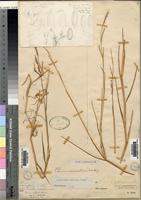
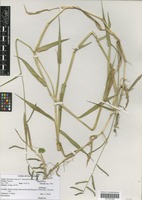
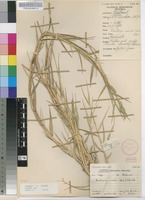
Brachiaria arrecta (T.Durand & Schinz) Stent [family POACEAE]
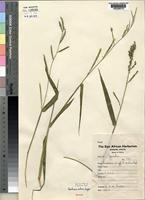
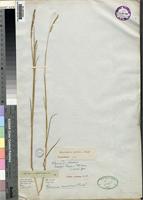
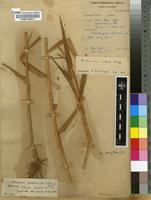
Isotype of Brachiaria radicans Napper [family POACEAE]
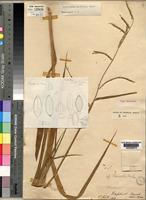
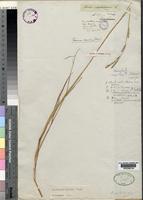
Holotype of Brachiaria latifolia Stapf [family POACEAE]
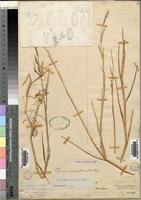
Holotype of Brachiaria arrecta (T.Durand & Schinz) Stent var. madecassa A.Camus [family POACEAE]
Isosyntype of Panicum arrectum Th. Dur. & Schinz [family POACEAE]
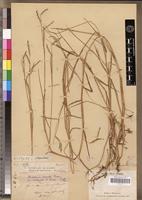
Brachiaria arrecta (T.Durand & Schinz) Stent [family POACEAE]
Filed as Brachiaria arrecta (Hack. ex T. Durand & Schinz) Stent [family POACEAE]
Filed as Brachiaria arrecta (T.Durand & Schinz) Stent [family POACEAE]
Filed as Brachiaria arrecta (Hack. ex T.Durand & Schinz) Stent [family POACEAE]
Previous
Next

Name

Identification
Brachiaria arrecta (T.Durand & Schinz) Stent [family POACEAE ] (stored under name); Verified by Lowe , J., 1983
Related name
  • Brachiaria latifolia
  • Brachiaria arrecta
  • Panicum subquadriflorum
  • Panicum arrectum
  • Brachiaria radicans
  • Panicum arrecta
  • Brachiaria mutica
  • Panicum subquadriparum
  • Panicum distachyum
Common name
  • ladikoro DA; Ward (NIGERIA, YORUBA), Burkill, H.M. 1985. The useful plants of west tropical Africa, Vol. 2
  • Tanner grass; Joe Tanner’s grass (named from the S Rhodesian farmer who brought it from Natal)., Burkill, H.M. 1985. The useful plants of west tropical Africa, Vol. 2

Flora

Entry for BRACHIARIA arrecta (Th. Dur. & Schinz) Stent [family POACEAE]
Herbarium
Royal Botanic Gardens, Kew (K)
Collection
Flora of Tropical East Africa
Resource Type
Reference Sources
Entry From
Flora of Tropical East Africa, page 451, (1982) Author: W. D. CLAYTON and S.A. RENVOIZE
Names
BRACHIARIA arrecta (Th. Dur. & Schinz) Stent [family POACEAE], in Bothalia 1: 263 (1924). Types: South Africa, Assegai Bosch to Botram, Drège (K, isosyn.!) & Kei R., Drège (K, isosyn.!)
Panicum arrectum Th. Dur. & Schinz [family POACEAE], Consp. Fl. Afr. 5: 741 (1894)
Brachiaria latifolia Stapf [family POACEAE], in F.T.A. 9: 526 (1919); Ann. list Nyasaland grasses: 31 (1958). Type: Malawi, Shire R., Kirk (K, holo!)
Panicum multifolium Peter [family POACEAE], F.D.O.-A. 1, Anh.: 29, fig. 9/2 (1930). Types: Tanzania, Tanga-Tangata, Peter 14509 & Amboni-Moa, Peter 23915 (both B, syn.|)
Brachiaria radicans Napper [family POACEAE], in Kirkia 3: 125 (1963); G.T.: 67 (1965). Type: Uganda, Entebbe, Harker 727 (EA, holo., K, iso.!)
Information
Sprawling perennial; culms 50–130 cm. high, prostrate and rooting at the nodes below. Leaf-blades 5–25 cm. long, 5–15 mm. wide. Inflorescence of 4–15 racemes on an axis 5–25 cm. long; racemes 1–10 cm. long, bearing the spikelets singly in 2 regular rows on a narrow (0.5–1.5 mm. wide) winged rhachis with scabrid margins. Spikelets elliptic, 3–4.3 mm. long, glabrous, acute; lower glume 1/3–1/2 as long as the spikelet; upper glume not separated from the lower by an internode; upper lemma rugulose, obtuse, ± an obscure mucro.
Range
DISTR. U1–4; K4, 5; T1–4 tropical and South Africa; introduced to tropical America
Altitude range
600–1800 m.
Distribution
KENYA Fort Hall/Kiambu District Thika, 12 May 1964, Tateoka 3058KENYA Kisumu, Jan. 1957, WhiteheadTANZANIA Maswa/Musoma District Serengeti National Park, 14 Jan. 1972, Mbano 5525!TANZANIA Masai District Mto wa Mbu, 29 Jan. 1959, Vesey-FitzGerald 2214!TANZANIA Mbulu District Mto wa Mkundu, Jan. 1965, Greenway & Kanuri 12037!UGANDA Bunyoro District near Bugoma Forest, May 1943, Eggeling 5290!UGANDA Ankole District Ndeizha, 25 Apr. 1941, A.S. Thomas 3834!UGANDA Busoga District Lumbuye Swamp Crossing, 15 May 1953, G.H.S. Wood 965!
Notes
B. mutica often has single spikelets in the upper part of its raceme, and B. arrecta may represent no more than an extreme expression of this tendency; its claim to separate recognition is arguable.It has been cultivated as a forage crop under the name Tanner grass.

Related Materials

  • Terms and Conditions
  • Privacy Policy
  • Cookie Policy
  • Cookie Settings
  • Accessibility
  • Help
  • Contact Us
  • Facebook
  • Twitter
ITHAKA

JSTOR is part of ITHAKA, a not-for-profit organization helping the academic community use digital technologies to preserve the scholarly record and to advance research and teaching in sustainable ways.

©2000-2026 ITHAKA. All Rights Reserved. JSTOR®, the JSTOR logo, JPASS®, Aluka®, and ITHAKA® are registered trademarks of ITHAKA.

╳