JSTOR Global Plants Home
  • Home
  • Browse
  • About
  • Access
  • Account
    • Saved Items
    • Profile
  • Log in

Global Plants

Skip to Main Content
  • JSTOR Global Plants Home
  • Global Plants

    • Browse
    • About
    • Access
    • Account
      • Saved Items
      • Profile
Log in
  • Browse
  • About
  • Access
  • Account
    • Saved Items
    • Profile
Advanced Search

Compilation
Bosqueia phoberos

5 Images see all

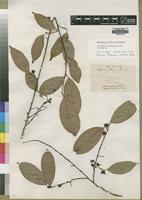
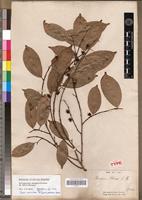
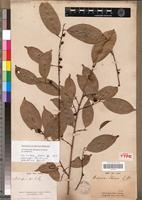
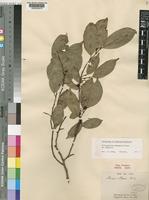
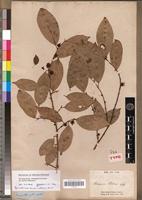
Holotype of Bosqueia phoberos Baill. [family MORACEAE]
Type of Bosqueia phoberos Hutch. [family MORACEAE]
Isotype of Bosqueia phoberos Baill. [family MORACEAE]
Previous
Next

Name

Identification
Isotype of Bosqueia phoberos Baill. [family MORACEAE ] Trilepisium madagascariense DC. [family MORACEAE ] (stored under name); Verified by Berg,C.C.,
Related name
  • Trilepisium madagascariense
  • Bosqueia phoberos

Flora

Entry for BOSQUEIA Phoberos Baill. [family MORACEAE]
Herbarium
Royal Botanic Gardens, Kew (K)
Collection
Flora of Tropical Africa
Resource Type
Reference Sources
Entry From
Flora of Tropical Africa, Vol 6, Part 2, page 17, (1916) Author: (By J. HUTCHINSON AND A. B. Rendle)
Names
BOSQUEIA Phoberos Baill. [family MORACEAE], Adansonia, viii. 72, t. iv. —Engl. Monogr. Morac. Afr. 36; Rendle in Journ. Linn. Soc. xl. 206.
BOSQUEIA cerasiflora Volk. ex Engl. [family MORACEAE], l.c. and in Engl. Jahrb. li. 439, fig. 5, F-H.
Information
A large tree, up to 80 ft. high; branches and branchlets terete, covered with a light grey glabrous bark. Leaves elliptic or oblong-elliptic, rounded or obtuse at the base, shortly and very obtusely acuminate, 2 1/4–4 in. long, 1–2 in. broad, entire, chartaceous, shining on the upper surface, glabrous; midrib prominent on both surfaces, gradually tapered to the apex; lateral nerves 5–6 on each side of the midrib, diverging at an angle of about 65°, looped some distance from the margin, slender, distinct on both surfaces; veins very lax and indistinct; petiole 4–5 lin. long, concave on the upper surface, glabrous; stipules caducous, the terminal one enclosing the young bud, lanceolate, 3–4 lin. long, glabrous. Receptacles axillary, solitary, shortly pedunculate; bract at the base of the peduncle cupular, enclosing the head of flowers when young, soon falling away, about 2 lin. long. coriaceous, glabrous; peduncle 1–1 1/2 lin. long, glabrous. Involucre fleshy at the base with the ovary immersed in it, with membranous toothed limb, glabrous. Male flowers numerous. Filaments slender, filiform, about 2 lin. long, glabrous; anthers very small, creamy white, purple around the styles, elliptic, obtuse, scarcely 1/3 lin. long. Bracts surrounding the style connate into a tube nearly as long as the stamens, laciniately toothed on the margin, submembranous, glabrous. Style exserted, stout, deeply 2-lobed or rarely 3-lobed; lobes about 1 3/4 lin. long. Fruit pedunculate, obliquely ellipsoid, 2/3 in. long.
Distribution
Zanzibar Mozamb. Dist. Boivin, Lyne, 96!German East Africa Mozamb. Dist. Shira, Volkens, 1935!Portuguese East Africa Mozamb. Dist. Gazaland; Mount Maruma, 3500 ft. Swynnerton, 687!Uganda Nile Land Kirgema, Dümmer, 197!British East Africa Nile Land Mombasa, Bovin.

Related Materials

  • Terms and Conditions
  • Privacy Policy
  • Cookie Policy
  • Cookie Settings
  • Accessibility
  • Help
  • Contact Us
  • Facebook
  • Twitter
ITHAKA

JSTOR is part of ITHAKA, a not-for-profit organization helping the academic community use digital technologies to preserve the scholarly record and to advance research and teaching in sustainable ways.

©2000-2026 ITHAKA. All Rights Reserved. JSTOR®, the JSTOR logo, JPASS®, Aluka®, and ITHAKA® are registered trademarks of ITHAKA.

╳