JSTOR Global Plants Home
  • Home
  • Browse
  • About
  • Access
  • Account
    • Saved Items
    • Profile
  • Log in

Global Plants

Skip to Main Content
  • JSTOR Global Plants Home
  • Global Plants

    • Browse
    • About
    • Access
    • Account
      • Saved Items
      • Profile
Log in
  • Browse
  • About
  • Access
  • Account
    • Saved Items
    • Profile
Advanced Search

Compilation
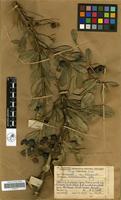
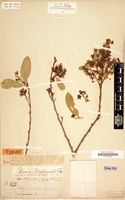
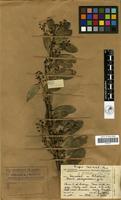
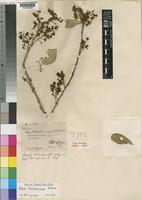
Boscia hildebrandtii

4 Images see all

Filed as Boscia mossambicensis Klotzsch [family CAPPARACEAE]
Type of Boscia hildebrandtii Gilg [family CAPPARACEAE]
Filed as Boscia mossambicensis Klotzsch [family CAPPARACEAE]
Boscia mossambicensis Klotzsch [family CAPPARACEAE]
Previous
Next

Name

Identification
Boscia hildebrandtii Gilg [family CAPPARACEAE ] (stored under name); Verified by Not on sheet.,
Related name
  • Boscia hildebrandtii
  • Boscia mossambicensis
  • Capparis unrecorded

Flora

Entry for BOSCIA mossambicensis Klotzsch [family CAPPARACEAE]
Herbarium
Royal Botanic Gardens, Kew (K)
Collection
Flora of Tropical East Africa
Resource Type
Reference Sources
Entry From
Flora of Tropical East Africa, page 1, (1964) Author: J. ELFFERS, R. A. GRAHAM AND G. P. DEWOLF
Names
BOSCIA mossambicensis Klotzsch [family CAPPARACEAE], in Peters, Reise Mossamb. Bot. 1: 164 (1861); Gilg in P.O.A. C: 185 (1895); Gilg & Bened. in E.J. 53: 207 (1915); Wild in F.Z. 1: 230 (1960); K.T.S.: 113 (1961); F.F.N.R.: 60 (1962). Type: Mozambique, Tete, Boror, Peters (B, holo.!)
BOSCIA angustifolia [family CAPPARACEAE], sensu Oliv. in F.T.A. 1: 92 (1868), pro parte, excl. syn., non A. Rich.
BOSCIA grandiflora Gilg [family CAPPARACEAE], in P.O.A. C: 186 (1895); Gilg & Bened. in E.J. 53: 207 (1915); Gilg in V.E. 3(1): 241, t. 154 (1915); T.T.C.L.: 108 (1949). Types: Kenya/Tanganyika,‘ Masailand’, Fischer 72 (B, syn.!) & Tanganyika, Dodoma District, Ipala, Stuhlmann 350 (B, syn.!)
BOSCIA hildebrandtii Gilg [family CAPPARACEAE], in P.O.A. C: 186 (1895); Gilg & Bened. in E.J. 53: 207 (1915). Type: Kenya, Kitui District, Ukamba, Hildebrandt 2816 (B, holo., K, iso.!)
BOSCIA carsonii Bak. [family CAPPARACEAE], in K.B. 1895: 288 (1895); Gilg & Bened. in E.J. 53: 208 (1915); T.T.C.L.: 108 (1949); Hauman & Wilczek in F.C.B. 2: 507 (1951). Type: Northern Rhodesia, Mweru Plateau, Carson 37 (K, holo. !)
BOSCIA elegans Gilg [family CAPPARACEAE], in Ann. Ist. Bot. Roma 6: 90 (1896); Gilg & Bened. in E.J. 53: 207 (1915). Type: Ethiopia, Ogaden, Riva 18 (B, holo.!)
BOSCIA pachyandra Gilg [family CAPPARACEAE], in E.J. 30: 310 (1901); Gilg & Bened. in E.J. 53: 208 (1915); Gilg in V.E. 3(1): 241 (1915); T.T.C.L.: 108 (1949). Type: Tanganyika, Mbeya/Njombe District, R. Chimala, Goetze 1023 (BM, K, iso.!)
BOSCIA zimmereri Gilg & Winkler [family CAPPARACEAE], in E.J. 53: 207 (1915); T.T.C.L.: 108 (1949). Type: Tanganyika, Pare District, between Makania and Same, Winkler 3800 (B, holo.!)
BOSCIA uhligii Gilg & Bened. [family CAPPARACEAE], in E.J. 53: 207(1915); T.T.C.L.: 108(1949). Type: Tanganyika, Pare Mts., near Kisiwani, Uhlig 804 (B, holo.!)
BOSCIA viridiflava Gilg & Bened. [family CAPPARACEAE], in E.J. 53: 207 (1915); T.T.C.L.: 108 (1949). Type: Tanganyika, Tabora District, Ikungu, Holtz 1434 (B, holo. !)
BOSCIA holtzii Gilg & Bened. [family CAPPARACEAE], in E.J. 53: 208 (1915); T.T.C.L.: 108 (1949). Type: Tanganyika, Dodoma District, between Kisima ya Watuturu and Mihama, Holtz 1435 (B, holo.!)
BOSCIA gymnosporiifolia Chiov. [family CAPPARACEAE], Result. Sci. Miss. Stefan.-Paoli Somal. Ital. 1: 18, t. 2B (1916). Types: Somali Republic (S.), Jubaland, near Hididle, Paoli 619 (FI, syn. !) & 663 (FI, syn. !)
Information
Dense twiggy evergreen shrub or small tree, up to 10 m. tall, often with a rather flat crown. Twigs glabrous. Leaves alternate and clearly spaced on old and new twigs or rarely fascicled (outside E. Africa), petiolate; blade narrowly elliptic to oblanceolate or more rarely obovate, commonly ± 5.5 cm. long, l.2–l.8(–2.5) cm. wide, usually acute and sharply mucronate or sometimes rounded and retuse, narrowed basally but often rounded at the very base, minutely callose or smooth on the margin, leathery, pale green, glabrous, with the midrib markedly depressed above and prominent, pale yellowish-green beneath, and the lateral nerves varyingly prominent; petiole 2–5 mm. long. Inflorescence an axillary many-flowered raceme, 4–7 cm. long; bracts 4–5 mm. long; pedicels rigidly spreading, 6–12 mm. long. Sepals ovate or ovate-elliptic, 4.5–6 mm. long, fleshy, green or purplish, glabrous to thinly pubescent outside, but with a puberulous margin; receptacle rim not prominent. Stamens 16–26; filaments (4–)5–7 mm. long, exceeding or equalling the young gynophore, yellowish-green; anthers 1–1.75 mm. long, yellow or cream. Ovary ovoid or ellipsoid, green; stigma broad, sessile or nearly so, cream. Fruits spheroid, ± 2 cm. in diameter, smoothly verruculose, glabrous and rather shiny. Fig. 9/4, 5, p. 54.
Range
DISTR. K1, 4, 6, 7; T1, 3–7 , Northern and Southern Rhodesia to the Transvaal and Congo Republic (Katanga); also Ethiopia and Somali Republic
Altitude range
630–1500 m.
Distribution
KENYA Meru District Isiolo, 19 Feb. 1953, Gillett 15137 !;KENYA Kitui District Ikutha, 22 Jan. 1942, Bally 1603 !;KENYA Masai District near Sokoto Drift, between Bissel and Namanga, 1 Mar. 1940, Bally 540 !TANGANYIKA Nzega District about 37 km. from Nzega on the Kahama road, 26 July 1950, Bullock 3022 !;TANGANYIKA Singida District Mkalama, on the Shinyanga to Singida road, 26 July 1931, B. D. Burtt 3381 !;TANGANYIKA Iringa District about 90 km. N. of Iringa in valley of Great Ruaha R., 16 July 1956, Milne-Redhead & Taylor 11225 !
Distribution (external)
Mozambique
Notes
VARIATION. B. mossambicensis is a species of considerable variation in leaf shape. The above description applies closely to material that has been consulted from our area, but in countries south of Tanganyika the leaves tend to be not only considerably broader but markedly broadest in the upper half, thus being far more obovate than elliptic.

Related Materials

  • Terms and Conditions
  • Privacy Policy
  • Cookie Policy
  • Cookie Settings
  • Accessibility
  • Help
  • Contact Us
  • Facebook
  • Twitter
ITHAKA

JSTOR is part of ITHAKA, a not-for-profit organization helping the academic community use digital technologies to preserve the scholarly record and to advance research and teaching in sustainable ways.

©2000-2026 ITHAKA. All Rights Reserved. JSTOR®, the JSTOR logo, JPASS®, Aluka®, and ITHAKA® are registered trademarks of ITHAKA.

╳