JSTOR Global Plants Home
  • Home
  • Browse
  • About
  • Access
  • Account
    • Saved Items
    • Profile
  • Log in

Global Plants

Skip to Main Content
  • JSTOR Global Plants Home
  • Global Plants

    • Browse
    • About
    • Access
    • Account
      • Saved Items
      • Profile
Log in
  • Browse
  • About
  • Access
  • Account
    • Saved Items
    • Profile
Advanced Search

Compilation
Boscia cauliflora

10 Images see all

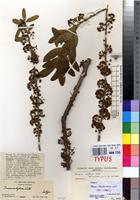
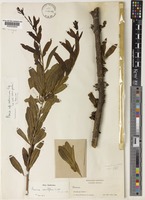
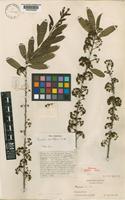
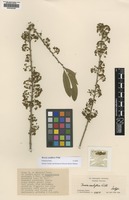
Isotype of Boscia cauliflora Wild [family CAPPARACEAE]
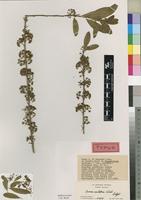
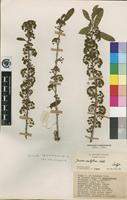
Isotype of Boscia cauliflora Wild [family CAPPARIDACEAE]
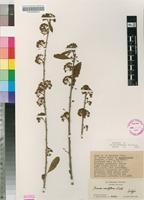
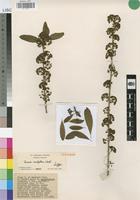
Isotype of Boscia cauliflora Wild [family CAPPARACEAE]
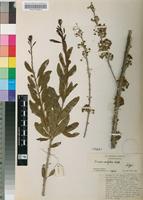
Boscia cauliflora Wild [family CAPPARACEAE]
Isotype of Boscia cauliflora Wild [family CAPPARACEAE]
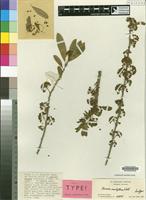
Holotype of Boscia cauliflora Wild [family CAPPARACEAE]
Isotype of Boscia cauliflora Wild [family CAPPARACEAE]
Previous
Next

Name

Identification
Isotype of Boscia cauliflora Wild [family CAPPARACEAE ] (stored under name); Verified by Not on sheet,
Related name
  • Boscia unrecorded
  • Boscia cauliflora

Flora

Entry for Boscia cauliflora Wild [family CAPPARIDACEAE]
Herbarium
Royal Botanic Gardens, Kew (K)
Collection
Flora Zambesiaca
Resource Type
Reference Sources
Entry From
FZ, Vol 1, Part 1, page 194, (1960) Author: H. Wild
Names
Boscia cauliflora Wild [family CAPPARIDACEAE], in Bol. Soc. Brot., Sér. 2, 32: 40 (1958). Type: N. Rhodesia, Mwinilunga, Milne-Redhead 4454 (B; BM; BR; COI; K, holotype; LISC; P; PRE; SRGH).
Information
Small tree up to 5 m. tall with the branches pendulous; young branches pubescent but soon glabrescent; bark grey-brown. Leaf-lamina 3–6.5 x 0.8–1.7 cm., oblanceolate, rounded or acute at the apex and apiculate or mucronate, cuneate at the base, minutely and sparsely puberulous on both sides at least when young, midrib more densely so, margin slightly revolute, nerves slightly raised on both sides, venation reticulate; petiole up to 1 cm. long, pubescent. Inflorescence of short, dense, axillary racemes, usually borne on the second year wood below the young leaves, sometimes on branches up to 6 years old; peduncles up to 7 mm. long, pubescent; bracteoles 2 mm. long, filamentous, pubescent, trifid; pedicels up to 1 cm. long, pubescent. Sepals greenish, c. 4 x 1.5 mm., lanceolate, subacute at the apex, pubescent on both sides, densely ciliate at the margins; receptacle 3 mm. in diam., concave, fimbriate. Stamens 6; filaments 4mm. long, glabrous. Gynophore up to 1.5 mm. long, glabrous; ovary ovoid, glabrous; ovules 8–10 on 2 placentas. Fruit c. 1.3 cm. in diam., globose, brownish. Seeds 1–8, up to 8 mm. in diam., pale brown, subglobose, strongly rugose.
Habitat
Usually found on termite mounds in Brachystegia woodland and apparently deciduous for about 3 weeks only, towards the end of December.
Range
So far known only from the Western Province of N. Rhodesia between Bwana Mkubwa and Mwinilunga but very likely occurring in neighbouring parts of Angola.
Distribution
Zambia W Mwinilunga, Matonchi Farm, 6.ii.1938, Milne-Redhead 4454 (B; BM; BR; COI; K; LISC; P; PRE; SRGH).
Notes
This species is closely related to B. angustifolia A. Rich. of W. and NE. Africa, but this latter species has a much denser reticulation of its veins similar to that of B. corymbosa Gilg.

Related Materials

  • Terms and Conditions
  • Privacy Policy
  • Cookie Policy
  • Cookie Settings
  • Accessibility
  • Help
  • Contact Us
  • Facebook
  • Twitter
ITHAKA

JSTOR is part of ITHAKA, a not-for-profit organization helping the academic community use digital technologies to preserve the scholarly record and to advance research and teaching in sustainable ways.

©2000-2026 ITHAKA. All Rights Reserved. JSTOR®, the JSTOR logo, JPASS®, Aluka®, and ITHAKA® are registered trademarks of ITHAKA.

╳