JSTOR Global Plants Home
  • Home
  • Browse
  • About
  • Access
  • Account
    • Saved Items
    • Profile
  • Log in

Global Plants

Skip to Main Content
  • JSTOR Global Plants Home
  • Global Plants

    • Browse
    • About
    • Access
    • Account
      • Saved Items
      • Profile
Log in
  • Browse
  • About
  • Access
  • Account
    • Saved Items
    • Profile
Advanced Search

Compilation
Borreria repens

8 Images see all

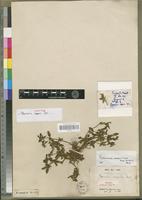
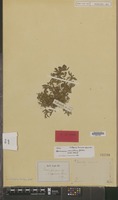
Isotype of Borreria repens DC [family RUBIACEAE]
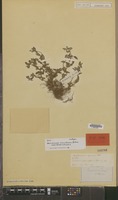
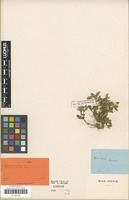
Isotype of Borreria repens DC. [family RUBIACEAE]
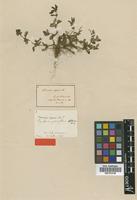
Type of Borreria repens DC. [family RUBIACEAE]
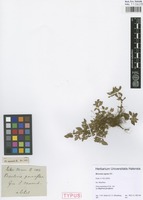
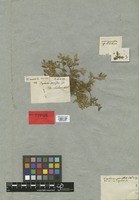
Isotype of Borreria repens DC. [family RUBIACEAE]
Type of Borreria repens DC. [family RUBIACEAE]
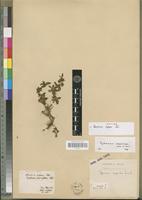
Holotype of Borreria repens DC. [family RUBIACEAE]
Isotype of Borreria repens DC [family RUBIACEAE]
Previous
Next

Name

Identification
Borreria repens DC. [family RUBIACEAE ] (stored under name); Verified by Not on sheet,
Related name
  • Borreria repens
  • Spermacoce mauritiana

Flora

Entry for Spermacoce mauritiana Osia Gideon [family RUBIACEAE]
Herbarium
Royal Botanic Gardens, Kew (K)
Collection
Flora Zambesiaca
Resource Type
Reference Sources
Entry From
FZ, Vol 5, Part 1, (1989) Author: B. Verdcourt
Names
Spermacoce ocymoides [family RUBIACEAE], sensu auctt. mult. e.g. Verdc. in F.T.E.A., Rubiaceae 1: 361. fig. 50/19 (1976) pro parte non Burm.f.
Tardavel ocymoides [family RUBIACEAE], sensu Hiern, Cat. Afr. Pl. Welw. 1: 504 (1898) non (Burm.f.) Hiern sensu stricto.
Spermacoce mauritiana Osia Gideon [family RUBIACEAE], in Kew Bull. 37: 547 (1983). TAB.39, fig. 14. Type from Mauritius.
Borreria repens DC. [family RUBIACEAE], Prodr. 4: 544 (1830). Type from Mauritius.
Information
A weak erect, decumbent or procumbent annual herb, usually ± well-branched, 3–40 cm. tall, with fine fibrous roots; stems with sparse to fairly dense crisped hairs on the ± wing-like prominent angles. Leaf blades 0.4–3.8 x 0.25–1.8 cm., elliptic to elliptic-lanceolate, rounded to ± acute at the apex, concavely narrowed into the petiole at the base, glabrous on both surfaces save for short marginal hairs or ± pubescent on the main nerve beneath; petiole 0–8 mm. long, with scattered hairs; stipules with base 2 mm. long, bearing c. 7 fimbriae 1–3 mm. long. Flowers in small few-flowered clusters at many of the nodes, attaining 3–6 mm. in diam. in the fruiting state; stipule-like bracteoles with fimbriae 1.8–2 mm. long. Calyx tube transversely oblong, 0.5 mm. long; lobes 2(4), 0.6–0.8 mm. long, ciliate. Corolla white; tube 0.3 mm. long; lobes 0.35 x 0.3–0.4 mm., triangular, with a few short hairs inside. Anthers situated just above the sinuses of the corolla lobes. Style c. 0.2 mm. long; stigma 0.2 mm. wide. Fruit 1 x 0.8 x 0.5–0.7 mm., oblong, compressed, finely transversely wrinkled and very shortly pubescent. Seeds chestnut-brown, 0.7–0.8 x 0.4 x 0.3–0.35 mm., oblong-ellipsoid, strongly reticulate with raised ribs, the foveae elongated in the direction of the short axis.
Habitat
Lake shores and surrounding bushland also roadsides and paths at rain-forest edges, tea-plantations, etc.
Range
Senegal to Cameroon, Fernando Po, Principe, St. Tomé, Annobon, Cabinda, Congo (Brazzaville), Uganda & Tanzania S. America to Argentina.
Altitude range
460–1560 m.
1560
460
Distribution
Malawi N 12.8 km. S. of main Nkhata Bay-Mzuzu Road, Chinteche Road, fl. & fr. 4.iv.1971, Pawek 4576 (K; MAL).Zambia W Kitwe, by R. Kafue, Jenning’s Poultry Farm, fl. & fr. 9.iii.1967, Anton-Smith 100 (K; SRGH).
Distribution (external)
Madagascar
Mauritius
Asia
Central America
West Indies
Notes
I (F.T.E.A. Rubiaceae 1: 361) formerly followed Bremekamp (in Pulle, Fl. Suriname 4: 285 (1935)) et auctt. in considering Spermacoce ocymoides Burm.f. (Borreria ocymoides (Burm.f.) DC.) a widespread species but Fosberg and Osia Gideon have convinced me that several distinct species are involved.

Related Materials

  • Terms and Conditions
  • Privacy Policy
  • Cookie Policy
  • Cookie Settings
  • Accessibility
  • Help
  • Contact Us
  • Facebook
  • Twitter
ITHAKA

JSTOR is part of ITHAKA, a not-for-profit organization helping the academic community use digital technologies to preserve the scholarly record and to advance research and teaching in sustainable ways.

©2000-2026 ITHAKA. All Rights Reserved. JSTOR®, the JSTOR logo, JPASS®, Aluka®, and ITHAKA® are registered trademarks of ITHAKA.

╳