JSTOR Global Plants Home
  • Home
  • Browse
  • About
  • Access
  • Account
    • Saved Items
    • Profile
  • Log in

Global Plants

Skip to Main Content
  • JSTOR Global Plants Home
  • Global Plants

    • Browse
    • About
    • Access
    • Account
      • Saved Items
      • Profile
Log in
  • Browse
  • About
  • Access
  • Account
    • Saved Items
    • Profile
Advanced Search

Compilation
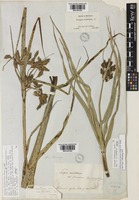
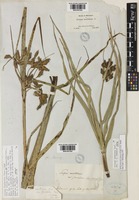
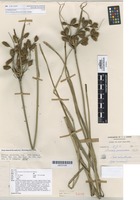
Bolboschoenus fluviatilis

3 Images see all

Bolboschoenus fluviatilis (Torr.) Soják [family CYPERACEAE]
Type of Scirpus maritimus L. var. fluviatilis Torr. [family CYPERACEAE]
Isotype of Bolboschoenus fluviatilis (Torr.) Sojak [family CYPERACEAE]
Previous
Next

Name

Identification
Isotype of Bolboschoenus fluviatilis (Torr.) Sojak [family CYPERACEAE ] (stored under name); Verified by Nom. rev., 1994
Related name
  • Bolboschoenus fluviatilis
Common name
  • River bulrush, Flora of North America Vol. 23
  • bolboschoenus fluviatile, Flora of North America Vol. 23
  • scirpe fluviatile, Flora of North America Vol. 23

Flora

Entry for Bolboschoenus fluviatilis (Torrey) Soják [family CYPERACEAE]
Herbarium
Flora of North America (FNA)
Collection
Flora of North America
Resource Type
Reference Sources
Entry From
Flora of North America, Vol 23,
Names
Bolboschoenus fluviatilis (Torrey) Soják [family CYPERACEAE], Cas. Nár. Mus., Odd. Prír., 141: 62. 1972
Scirpus maritimus Linnaeus var. fluviatilis Torrey [family CYPERACEAE], Ann. Lyceum Nat. Hist. New York, 3: 324. 1836
Scirpus fluviatilis (Torrey) A. Gray [family CYPERACEAE]
Schoenoplectus fluviatilis (Torrey) M. T. Strong [family CYPERACEAE]
Treatment Author(s)
S. Galen Smith
Information
Culms 100–200 cm × 5–15 mm. Leaves: sheaths reaching to middle of culm or higher, fronts convex (to concave) and papery at mouth, veins reaching apex, very rarely diverging leaving triangular, veinless, membranous area; widest blade 7–22 mm wide. Inflorescences subumbellate, with all or most spikelets solitary or in clusters of 2–3(–8) on 4–12 rays, rays not exceeding 10 cm; involucral bracts that surpass inflorescences 3–6, widest bract 4–15 mm wide. Spikelets 10–40, ovoid to lanceoloid, 10–25 × 6–10 mm, base cuneate to rounded; scales often loosely imbricate, orange-brown to stramineous, usually obscurely lineolate-spotted, 7–10 × 3–4 mm, membranous and translucent, apex 2-fid 0.5–1 mm deep, awns fairly stout, 2–3 × 0.5 mm wide at base. Flowers: perianth bristles tightly attached to shed achene, pale brown, very stout, equaling achene; anthers yellow, 4 mm; styles 3-fid. Achenes grayish or dark brown, often in patches, obovoid to obpyriform, all nearly equilaterally markedly trigonous to slightly compressed, angles equally rounded, 3.8–5.5 × 2–2.9 mm, apex rounded, beak 0.2–0.8 mm, surface rather dull, exocarp cells usually not evident at 20X; in cross section exocarp much thinner than mesocarp and its cells very small, isodiametric; achene specific gravity greater than water. 2n = 94.
Phenology Fruiting
summer
jun
jul
aug
Altitude range
0–2100 m;
Distribution
Asia (Japan)AustraliaPacific Islands (New Zealand).USA Ala.USA Ariz.USA Calif.USA Colo.USA Conn.USA Del.USA IdahoUSA Ill.USA Ind.USA IowaUSA Kans.USA MaineUSA Md.USA Mass.USA Mich.USA Minn.USA Mo.USA Mont.USA Nebr.USA N.H.USA N.J.USA N.Y.USA N.Dak.USA OhioUSA Oreg.USA Pa.USA S.Dak.USA Tenn.USA UtahUSA Vt.USA Va.USA Wash.USA Wis.Canada Alta.Canada B.C.Canada Man.Canada N.B.Canada Ont.Canada Que.Canada Sask.
Discussion
Bolboschoenus fluviatilis frequently forms dense, monospecific, often entirely vegetative stands, and it is more common than recorded because vegetative colonies are often overlooked (E. W. Chester and B. E. Wofford 1992). The only record for Alabama is an 1870 collection from the East Fowl River in the Mobile Delta, where the species has not been collected since. It was intentionally introduced into New Hampshire (D. J. Padgett and G. E. Crow 1993). The report from New Mexico by M. L. Fernald (1950) cannot be confirmed because no specimen is known.
Putative hybrids with Bolboschoenus maritimus occur in California. Bolboschoenus novae-angliae probably originated from B. fluviatilis × B. robustus (J. Browning et al. 1995). Introgression from B. maritimus and/or B. robustus is suggested by the larger exocarp cells (evident in surface view) in some North American plants. The Eurasian B. yagara (Ohwi) Y. C. Yang & M. Zhan differs from B. fluviatilis in its narrower leaves and smaller achenes.

Related Materials

  • Terms and Conditions
  • Privacy Policy
  • Cookie Policy
  • Cookie Settings
  • Accessibility
  • Help
  • Contact Us
  • Facebook
  • Twitter
ITHAKA

JSTOR is part of ITHAKA, a not-for-profit organization helping the academic community use digital technologies to preserve the scholarly record and to advance research and teaching in sustainable ways.

©2000-2026 ITHAKA. All Rights Reserved. JSTOR®, the JSTOR logo, JPASS®, Aluka®, and ITHAKA® are registered trademarks of ITHAKA.

╳