JSTOR Global Plants Home
  • Home
  • Browse
  • About
  • Access
  • Account
    • Saved Items
    • Profile
  • Log in

Global Plants

Skip to Main Content
  • JSTOR Global Plants Home
  • Global Plants

    • Browse
    • About
    • Access
    • Account
      • Saved Items
      • Profile
Log in
  • Browse
  • About
  • Access
  • Account
    • Saved Items
    • Profile
Advanced Search

Compilation
Boerhavia pentandra

8 Images see all

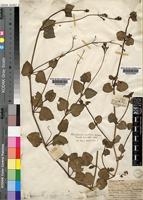
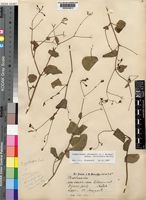
Type of Boerhavia pentandra Burch. [family NYCTAGINACEAE]
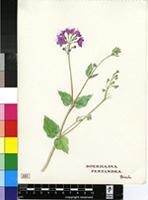
Boerhavia pentandra Burch.
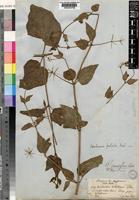
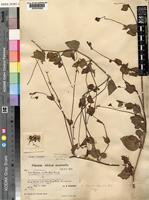
Commicarpus grandiflorus unrecorded [family NYCTAGINACEAE]
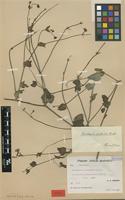
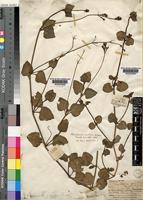
Type of Boerhavia transvaalensis Gand. [family NYCTAGINACEAE]
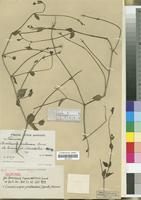
Commicarpus chinensis (L.) Heimerl subsp. natalensis Meikle [family NYCTAGINACEAE]
Type of Boerhavia transvaalensis Gand. [family NYCTAGINACEAE]
Type of Boerhavia pentandra Burch. [family NYCTAGINACEAE]
Isotype of Boerhavia transvaalensis Gand. [family NYCTAGINACEAE]
Previous
Next

Name

Identification
Boerhavia pentandra Burch. [family NYCTAGINACEAE ]
Related name
  • Boerhavia pentandra

Flora

Entry for COMMICARPUS pentandrus (Burch.) Heimerl [family NYCTAGINACEAE]
Herbarium
Royal Botanic Gardens, Kew (K)
Collection
Flora of Tropical East Africa
Resource Type
Reference Sources
Entry From
Flora of Tropical East Africa, page 1, (1996) Author: CHRISTOPHER WHITEHOUSE
Names
COMMICARPUS pentandrus (Burch.) Heimerl [family NYCTAGINACEAE], in E. & P. Pf., ed. 2, 16c: 117 (1934); Meikle in Notes Roy. Bot. Gard. Edin. 36: 241, fig. 2B (1978); Troupin, Fl. Rwanda 1: 206 (1978). Type: South Africa, along the Vaal R., Griqualand West, Burchell 1765 (K, holo.!)
Boerhavia pentandra Burch. [family NYCTAGINACEAE], Travels 1: 432 (1822); Baker & C.H. Wright in F.T.A. 6(1): 7 (1909), pro parte
Boerhavia burchellii Choisy [family NYCTAGINACEAE], in DC., Prodr. 13(2): 455 (1849), nom. superfl. Based on B. pentandra Burch.
Boerhavia grandiflora [family NYCTAGINACEAE], [sensu Oliv. in Trans. Linn. Soc. 29: 142 (1875), non A. Rich.]
Boerhavia transvaalensis Gand. [family NYCTAGINACEAE], in Bull. Soc. Bot. Fr. 66: 221 (1919). Type: South Africa, Transvaal, Marabastad, Schlechter 4339 (LY, holo., K, iso.!)
Information
Prostrate, scrambling or ascending herb with stems up to 2 m., glabrous to rarely pilose on new growth. Leaves ovate, up to 7 cm. long, 4 cm. wide, the base cordate, truncate or cuneate, apex acute to apiculate, margins sinuate; petiole up to 2 cm. long. Inflorescence verticellate or, in East Africa, a simple umbel with 2–6 flowers; peduncle up to 3.5 cm. long; pedicels up to 1.5 cm. long. Flowers infundibuliform, (9–)10–19 mm. long, 5–15 mm. wide; upper perianth pink to purple, with green base and stripes, 8–17 mm. long. Stamens 4–6, exserted. Style exserted. Anthocarps clavate, 8–10 mm. long, 2–4 mm. wide, with a ± 5 thick stalked glands at the apex and a few scattered sessile glands below. Fig. 3/4–5.
Range
DISTR. T 1, 2, 5–7
Altitude range
500–1450 m.
Distribution
TANZANIA Mpwapwa District 14 km. on Mpwapwa–Kongwa track, 11 Apr. 1988, Bidgood, Mwasumbi & Vollesen 1014!;TANZANIA Kilosa District 3–10 km. on Malolo–Kisanga track, 3 Apr. 1988, Bidgood, Mwasumbi & Vollesen 884!;TANZANIA Iringa District Ruaha National Park, Mwayangi, Ruaha R. camp, 17 May 1987, Lovett, Hanby & Bygott 2151!
Distribution (external)
; Botswana
Zimbabwe
Mozambique
Namibia
South Africa
Notes
The East African collections differ from the southern African populations in having a simple umbel and generally longer indumentum. They have been identified previously as C. grandiflorus or C. greenwayi but the anthocarps differ significantly from both these species. Specimens of C. grandiflorus in Ethiopia approach the East African form of C. pentandrus; this includes the type specimen Schimper 1719, which lacks flowers and anthocarps. In East Africa though C. grandiflorus tends to have smaller flowers, 6–9 mm. long, than C. pentandrus and the plants are much more viscous.

Related Materials

  • Terms and Conditions
  • Privacy Policy
  • Cookie Policy
  • Cookie Settings
  • Accessibility
  • Help
  • Contact Us
  • Facebook
  • Twitter
ITHAKA

JSTOR is part of ITHAKA, a not-for-profit organization helping the academic community use digital technologies to preserve the scholarly record and to advance research and teaching in sustainable ways.

©2000-2026 ITHAKA. All Rights Reserved. JSTOR®, the JSTOR logo, JPASS®, Aluka®, and ITHAKA® are registered trademarks of ITHAKA.

╳