JSTOR Global Plants Home
  • Home
  • Browse
  • About
  • Access
  • Account
    • Saved Items
    • Profile
  • Log in

Global Plants

Skip to Main Content
  • JSTOR Global Plants Home
  • Global Plants

    • Browse
    • About
    • Access
    • Account
      • Saved Items
      • Profile
Log in
  • Browse
  • About
  • Access
  • Account
    • Saved Items
    • Profile
Advanced Search

Compilation
Boerhavia adscendens

12 Images see all

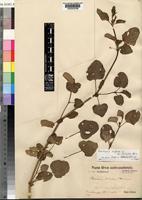
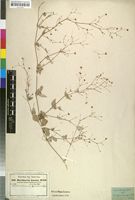
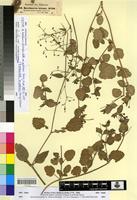
Boerhavia diffusa unrecorded var. hirsuta Heimerl [family NYCTAGINACEAE]
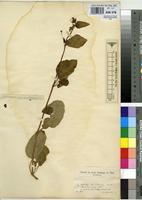
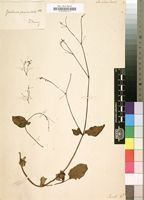
Type? of Boerhavia adscendens [family NYCTAGINACEAE]
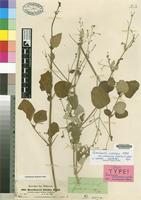
Isotype of Boerhavia adscendens Willd. var. pubescens Choisy [family NYCTAGINACEAE]
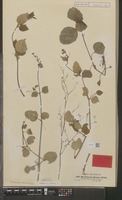
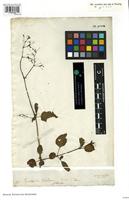
Type of Boerhavia adscendens Willd. var. pubescens Choiry [family NYCTAGINACEAE]
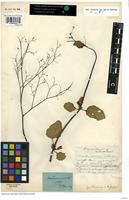
Isotype of Boerhavia adscendens var. pubescens Choisy [family NYCTAGINACEAE]
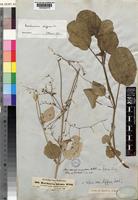
Isotype of Boerhavia adscendens Willd. var. pubescens Choisy [family NYCTAGINACEAE]
Filed as Boerhavia diffusa L. [family NYCTAGINACEAE]
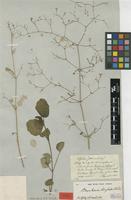
Isotype of Boerhavia adscendens Willd. var. pubescens Choisy [family NYCTAGINACEAE]
Type? of Boerhavia adscendens [family NYCTAGINACEAE]
Filed as Boerhavia diffusa L. [family NYCTAGINACEAE]
Type of Boerhavia adscendens Willd. var. pubescens Choisy [family NYCTAGINACEAE]
Previous
Next

Name

Identification
Boerhavia adscendens Not on sheet. [family NYCTAGINACEAE ] (stored under name); Verified by Not on sheet.,
Related name
  • Boerhavia schinzii
  • Boerhavia coccinea
  • Boerhavia diffusa
  • Boerhavia hirsuta
  • Boerhavia repens
  • Boerhavia paniculata
  • Boerhavia adscendens

Flora

Entry for BOERHAVIA diffusa L. [family NYCTAGINACEAE]
Herbarium
Royal Botanic Gardens, Kew (K)
Collection
Flora of Tropical East Africa
Resource Type
Reference Sources
Entry From
Flora of Tropical East Africa, page 1, (1996) Author: CHRISTOPHER WHITEHOUSE
Names
BOERHAVIA diffusa L. [family NYCTAGINACEAE], Sp. Pl.: 3 (1753); Meikle in F.W.T.A., ed. 2, 1: 178 (1954); Codd in Bothalia 9: 115 (1966), pro parte; Hepper, W. Afr. Herb. Isert & Thonning: 80 (1976); Troupin, Fl. Rwanda 1: 208, fig. 44/5 (1978); Vollesen in Opera Bot. 59: 23 (1980); Banda & B. Morris, Common Weeds Malawi: 28 (1986); Stannard in F.Z. 9(1): 21 (1988); Thulin, Fl. Somalia 1: 171 (1993); U.K.W.F., ed. 2: 83 (1994); Bromilow, Problem Pl. S. Afr: 226 (1995); Heine & Legère, Swahili Pl.: 174 (1995). Type not fixed
BOERHAVIA africana Lour. [family NYCTAGINACEAE], Fl. Cochinch. 1: 16 (1790). Type: Mozambique, Loureiro (no specimen found at P or BM)
BOERHAVIA paniculata Rich. [family NYCTAGINACEAE], Actes Soc. Hist. Nat. Paris 1: 105 (1792); P.O.A. C: 174 (1895). Type: Cayenne, Le Blond (P, holo.)
BOERHAVIA adscendens Willd. [family NYCTAGINACEAE], Sp. Pl., ed. 4, 1: 19 (1797); Baker & C.H. Wright in F.T.A. 6(1): 4 (1909); T. Cooke in Fl. Cap. 5(1): 395 (1910). Type: Ghana or Benin [Guinea], Isert in Herb. Willdenow 768 (B-W, holo., microfiche!)
BOERHAVIA repens (L.) Hook.f. var. diffusa [family NYCTAGINACEAE], ,Fl. Brit. Ind. 4: 709 (1885); Baker & C.H. Wright in F.T.A. 6(1): 5 (1909); T. Cooke in Fl. Cap. 5(1): 394 (1910), pro parte Commicarpus africanus (Lour.) Dandy in F.P.S. 1: 152, fig. 91 (1950), excl. descr.
Information
Annual or perennial, prostrate, ascending or erect herb up to 1 m., sometimes with a thick taproot. Stems fleshy, becoming woody towards the base, green, sometimes tinged purple, branching mainly from the base, the nodes swollen, glabrescent to puberulous with long septate hairs especially around the nodes. Leaves broadly ovate to lanceolate, up to 6×5 cm., green, paler beneath, the base truncate to cuneate, the apex rounded to acute, with long septate hairs on the sinuate margins and veins beneath. Inflorescence a large diffuse terminal panicle up to 35 cm., the individual cymes (1–)3–5(–7)-flowered; branches glabrous to glabrescent. Perianth 1.5–2.5 mm. long; upper portion pink to purple, 1–1.5 mm. long. Anthers 1(–3), slightly exserted. Ovary ± 0.5 mm.; style slightly exserted. Anthocarp obovoid, 3–4×1–1.5 mm., 5-ribbed, rounded at the apex, glandular-pubescent. Fig. 1/1–4.
Range
DISTR. U 1–4; K 3–5, 7; T 1–4, 6–8; Z pantropical weed
Altitude range
0–1800 m.
Distribution
UGANDA W. Nile District Arua, May 1938, Hazel 538!;KENYA Fort Hall District behind Blue Posts Hotel, 5 Apr. 1968, Faden 68/061!;TANZANIA Moshi District Lyamungu Coffee Research Station, 5 Feb. 1955, Huxley 33!;UGANDA Busoga District Lake Victoria, Lolui I., 7 May 1965, G. Jackson 97565!;UGANDA Mengo District Entebbe, near Lake Victoria, Dec. 1930, Walba in Snowden 1858!KENYA Kilifi District Rabai, 20 Feb. 1959, Moomaw 1417!;KENYA Tana River District Karawa [Kurawa], 23 Sept. 1961, Polhill & Paulo 534!TANZANIA Lushoto District Korogwe, 27 Nov. 1962, Archbold 22!;TANZANIA Iringa District Msembe, Ruaha National Park Headquarters, Greenway & Kanuri 13926!
Notes
The leaves are sometimes used as a vegetable.LINN 9.3 was originally designated as the lectotype but this is unacceptable as it was probably added to Linnaeus’s herbarium after 1753 (Nicolson et al. in Reg. Veg. 119: 196 (1988)). The original elements that could have been chosen all appear to fit what is now generally understood to be the B. coccinea complex. To maintain the current usage of the name a suitable type needs to be conserved.Merrill (in Trans. Amer. Phil. Soc. 24(2): 150 (1935)) matched up Loureiro’s B. africana with B. plumbaginea from the F.T.A. account of the Boerhavia s from Mozambique. Meikle (in Roy. Bot. Gard. Edin. 36: 246 (1978)) d that Commicarpus africanus “is certainly not a Commicarpus, but may well be a Boerhavia ”. In the F.Z. account, Loureiro’s description “Flos purpureus, racemis magnis, dichotomis, terminalibus... Stamen 1” matches B. diffusa most closely among the species known from this region.

Related Materials

  • Terms and Conditions
  • Privacy Policy
  • Cookie Policy
  • Cookie Settings
  • Accessibility
  • Help
  • Contact Us
  • Facebook
  • Twitter
ITHAKA

JSTOR is part of ITHAKA, a not-for-profit organization helping the academic community use digital technologies to preserve the scholarly record and to advance research and teaching in sustainable ways.

©2000-2026 ITHAKA. All Rights Reserved. JSTOR®, the JSTOR logo, JPASS®, Aluka®, and ITHAKA® are registered trademarks of ITHAKA.

╳