JSTOR Global Plants Home
  • Home
  • Browse
  • About
  • Access
  • Account
    • Saved Items
    • Profile
  • Log in

Global Plants

Skip to Main Content
  • JSTOR Global Plants Home
  • Global Plants

    • Browse
    • About
    • Access
    • Account
      • Saved Items
      • Profile
Log in
  • Browse
  • About
  • Access
  • Account
    • Saved Items
    • Profile
Advanced Search

Compilation
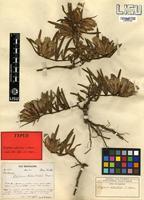
Blepharis welwitschii

5 Images see all

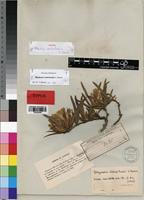
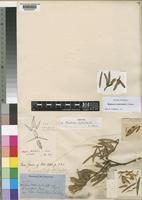
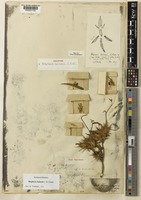
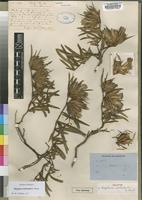
Isotype of Blepharis welwitschii S. Moore [family ACANTHACEAE]
Blepharis welwitschii S.Moore [family ACANTHACEAE]
Holotype of Blepharis bainesii C.B.Clarke [family ACANTHACEAE]
Holotype of Blepharis welwitschii S.Moore [family ACANTHACEAE]
Type of Blepharis welwitschii S. Moore [family ACANTHACEAE]
Previous
Next

Name

Identification
Blepharis welwitschii S.Moore [family ACANTHACEAE ] (stored under name); Verified by Vollesen,K.,
Related name
  • Blepharis welwitschii
  • Blepharis pratensis

Flora

Entry for Blepharis Welwitschii S. Moore [family ACANTHACEAE]
Herbarium
Royal Botanic Gardens, Kew (K)
Collection
Flora of Tropical Africa
Resource Type
Reference Sources
Entry From
Flora of Tropical Africa, page 1, (1900) Author: (By I. H. Burkill and C. B. Clarke.)
Names
Blepharis Welwitschii S. Moore [family ACANTHACEAE], in Journ. Bot. 1880, 231. —Lindau in Engl. & Prantl, Pflanzenfam. iv. 3 B. 317; Engl. Hochgebirgsfl. Trop. Afr. 390.
Information
Sterile bracts spinous on the margins; flower-bract ovate, acuminate, spinous on the margin. Corolla nearly 1 1/4 in. in length; otherwise as B. pratensis .
Distribution
Angola Lower Guinea Huilla, Welwitsch, 5031!
Notes
S. Moore says that this species is very close to B. pratensis, and it seems to differ very little except in the more spinous sterile bracts and in the markedly spinous flower-bract. The young branches are more scabrous, the leaves 2 by 1/6 in. parallel-sided, the flowers rather larger; but these differences are small.

Related Materials

  • Terms and Conditions
  • Privacy Policy
  • Cookie Policy
  • Cookie Settings
  • Accessibility
  • Help
  • Contact Us
  • Facebook
  • Twitter
ITHAKA

JSTOR is part of ITHAKA, a not-for-profit organization helping the academic community use digital technologies to preserve the scholarly record and to advance research and teaching in sustainable ways.

©2000-2026 ITHAKA. All Rights Reserved. JSTOR®, the JSTOR logo, JPASS®, Aluka®, and ITHAKA® are registered trademarks of ITHAKA.

╳