JSTOR Global Plants Home
  • Home
  • Browse
  • About
  • Access
  • Account
    • Saved Items
    • Profile
  • Log in

Global Plants

Skip to Main Content
  • JSTOR Global Plants Home
  • Global Plants

    • Browse
    • About
    • Access
    • Account
      • Saved Items
      • Profile
Log in
  • Browse
  • About
  • Access
  • Account
    • Saved Items
    • Profile
Advanced Search

Compilation
Blepharis boerhaviifolia

21 Images see all

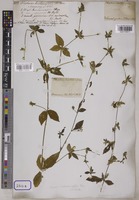
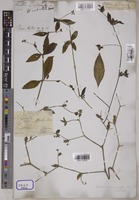
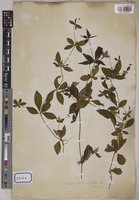
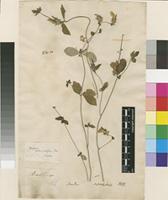
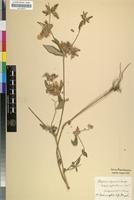
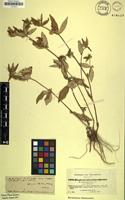
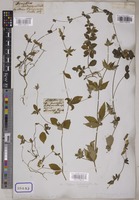
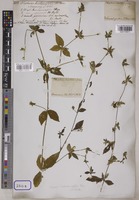
Blepharis boerhaviifolia Roth [family ACANTHACEAE]
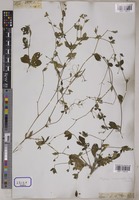
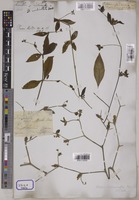
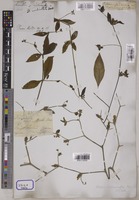
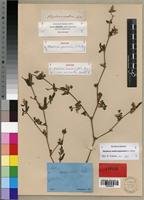
Syntype of Blepharis boerhaviifolia Pers. [family ACANTHACEAE]
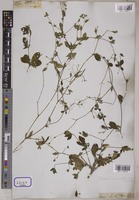
Blepharis boerhaviifolia Roth [family ACANTHACEAE]
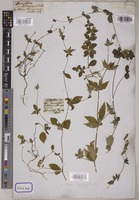
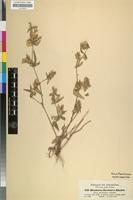
Neotype of Acanthus maderaspatensis L. [family ACANTHACEAE]
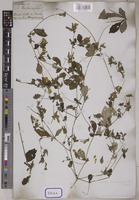
Filed as Blepharis abyssinica Hochst. ex A.Rich.; pro syn. [family ACANTHACEAE]
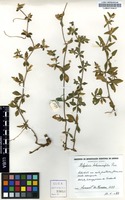
Syntype of Blepharis boerhaviifolia Pers. [family ACANTHACEAE]
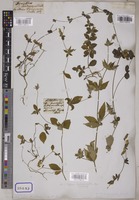
Blepharis boerhaviifolia Roth [family ACANTHACEAE]
Syntype of Blepharis abyssinica Hochst. [family ACANTHACEAE]
Blepharis boerhaviifolia Roth [family ACANTHACEAE]
Syntype of Blepharis boerhaviifolia Hochst. [family ACANTHACEAE]
Filed as Blepharis boerhaviifolia Pers. [family ACANTHACEAE]
Blepharis boerhaviifolia Roth [family ACANTHACEAE]
Filed as Blepharis abyssinica Hochst. ex A.Rich.; pro syn. [family ACANTHACEAE]
Blepharis boerhaviifolia Roth [family ACANTHACEAE]
Isotype of Blepharis boerhaviifolia var. micrantha Sond. [family ACANTHACEAE]
Previous
Next

Name

Identification
Blepharis maderaspatensis (L.) Roth [family ACANTHACEAE ] (stored under name); Verified by Data not digitized, Isotype of Blepharis boerhaviifolia [family ACANTHACEAE ] Verified by Data not digitized,
Related name
  • Blepharis abyssinica
  • Blepharis maderaspatensis
  • Blepharis boerhaviaefolia
  • Blepharis boerhaviifolia
  • Acanthus maderaspatensis

Flora

Entry for Blepharis maderaspatensis (L.) Roth [family ACANTHACEAE]
Herbarium
Royal Botanic Gardens, Kew (K)
Collection
Flora of Tropical East Africa
Resource Type
Reference Sources
Entry From
Flora of Tropical East Africa, page 1, (2008) Author: Kaj Vollesen
Names
Blepharis maderaspatensis (L.) Roth [family ACANTHACEAE], Nov. Pl. Sp. Ind. Or.: 320 (1821); Obermeyer in Ann. Transv. Mus. 19: 132 (1937); F.P.N.A. 2: 289 (1947); T.T.C.L.: 5 (1949); F.P.S. 3: 171 (1956); F.P.U.: 142 (1962); Heine in F.W.T.A. ed. 2, 2: 410 (1963); E.P.A.: 952 (1964), excl. syn. Ruellia ciliaris; Napper in K.B. 24: 323 (1970); U.K.W.F.: 579 (1974); Björnstad in Serengeti Res. Inst. Publ. No. 215: 25 (1976); Champluvier in Fl. Rwanda 3: 441 (1985); Blundell, Wild Fl. E. Afr.: 389, pl. 602 (1987); Iversen in Symb. Bot. Ups. 29(3): 160 (1991); Ruffo et al., Cat. Lushoto Herb. Tanzania: 3 (1996); Lebrun & Stork, Enum. Pl. Afr. Trop. 4: 473 (1997); Vollesen, Blepharis: 198 (2000); Friis & Vollesen in Biol. Skr. 51(2): 438 (2005); Ensermu in F.E.E. 5: 363 (2006); Thulin in Fl. Somalia 3: 384 (2006). Type: India (LINN, holo.; K, microfiche)
Acanthus maderaspatensis L. [family ACANTHACEAE], Sp. Pl. 2: 639 (1753) & Syst. Nat. (ed.12) 2: 427 (1767); Burm. f., Fl. Ind.: 139 (1768), as maderaspatanus
Blepharis boerhaviifolia Pers. [family ACANTHACEAE], Syn. Pl. 2: 180 (1806); Nees in DC., Prodr. 11: 266 (1847); Richard, Tent. Fl. Abyss. 2: 150 (1850); T. Anderson in J.L.S. 7: 34 (1863); Engler, Hochgebirgsfl. Trop. Afr.: 389 (1892); Lindau in P.O.A. C: 369 (1895); C.B. Clarke in F.T.A. 5: 96 (1899); Hiern, Cat. Welw. Pl. Afr. 4: 811 (1900); De Wild., Not. Fl. Katanga 3: 24 (1914) & Contrib. Fl. Katanga: 201 (1921) & Suppl. 4: 92 (1932). Type: as for Acanthus maderaspatensis.
Blepharis rubiifolia Schumach. [family ACANTHACEAE], Beskr. Guinea Pl.: 292 (1829). Type: Guinea, Thonning (C!, holo.)
Blepharis abyssinica Hochst. [family ACANTHACEAE], in Schimper, Iter Abyss. III.1492 (1844). Type: Ethiopia, near Axum, Schimper III.1492 (FI!, FI-W!, FT!, K!, P!, iso.)
Blepharis boerhaviifolia (L.) Nees var. maderaspatensis [family ACANTHACEAE], in DC., Prodr. 11: 267 (1847)
Blepharis togodelia Solms-Laub. [family ACANTHACEAE], in Schweinf., Beitr. Fl. Aeth.: 108 (1867); Lindau in P.O.A. C: 369 (1895). Type: Eritrea, Wadi Togodele, Ehrenberg s.n. (BR!, K!, P!, iso.)
Blepharis boerhaviifolia De Wild. & T.Durand var. nigrovenulosa [family ACANTHACEAE], in Ann. Mus. Congo, ser. 2, 1: 46 (1899); De Wild., Contrib. Fl. Katanga: 201 (1921). Type: Congo-Kinshasa, Moanda, Vanderyst s.n. (BR!, holo.)
Blepharis breviciliata Fiori [family ACANTHACEAE], in Bull. Soc. Bot. Ital. 1911: 61 (1911) & Boschi e Piante Legn. Eritrea: 346 (1912); E.P.A.: 951 (1964). Type: Eritrea, Mt Lesa, Fiori 716 (FT!, holo.; FI!, iso.)
Blepharis maderaspatensis (Hochst.) Fiori var. abyssinica [family ACANTHACEAE], Boschi e Piante Legn. Eritrea: 346 (1912); Pichi Sermolli, Miss. Stud. Lago Tana 7: 257 (1951); Napper in K.B. 24: 325 (1970); Champluvier in Fl. Rwanda 3: 442 (1985)
Blepharis maderaspatensis (Pers.) Fiori var. boerhaviifolia [family ACANTHACEAE], Boschi e Piante Legn. Eritrea: 346 (1912)
Blepharis maderaspatensis (Schumach.) Napper subsp. rubiifolia [family ACANTHACEAE], in K.B. 24: 325 (1970); Vollesen in Opera Bot. 59: 79 (1980); Champluvier in Fl. Rwanda 3: 442 (1985); Iversen in Symb. Bot. Ups. 29(3): 160 (1991)
Information
Suberect, procumbent or scrambling perennial (rarely annual) herb (rarely a suberect or trailing subshrub); stems up to 2 m long, sometimes rooting at nodes, pubescent to pilose or sparsely so or sericeous, sometimes only in a single band (rarely subglabrous). Leaves often paler beneath; lamina elliptic (rarely ovate or slightly obovate), largest 2–9(–12.5)≈0.8–3.5(–5) cm, margin entire or distantly toothed, hispid-puberulous to pubescent or sparsely so, often densest on veins (rarely subglabrous). Spikes solitary or in clusters of up to 11, dispersed whole when mature; bracts greenish to yellowish brown, sometimes with purple veins, elliptic-obovate to orbicular, subglabrous to puberulous or pubescent (rarely densely so), terminating in a recurved bristle and on each side with 4–10 retrorsely barbed and finely glochidiate bristles 1–5 mm long; lower pair 2–8 mm long, second pair 4–12 mm long, third pair 5–12(–14) mm long, inner pair 6–13(–16) mm long; bracteoles absent. Sepals coloured as bracts, puberulous or sparsely so (rarely pubescent or sparsely pilose) and ciliate; dorsal ovate-elliptic, 9–22(–25) mm long, narrowing gradually to the acute to rounded apex; ventral similar, 8–20 mm long, with two small apical teeth; lateral 5–10(–12) mm long. Corolla white or cream with purple veins, 12–27(–30) mm long of which the tube 4–8 mm, callus with one (rarely 3) inconspicuous (rarely distinct) apical flange; hairs on upper surface of limb strongly bent. Filaments 2–9 mm long, sparsely glandular (rarely hairy); appendage 0.5–1 mm long, broadly rounded; anthers 2–4 mm long. Capsule 5–7 mm long. Seed ± 4.5≈3 mm. Fig. 17, p. 110.
Range
DISTR. U 1–3; K 1–7; T 1–8; Z; P widespread in tropical Africa and through Arabia to India and Thailand
Altitude range
0–1850 m
Distribution
KENYA Laikipia District 6 km S of Suguta Marmar, 25 Oct. 1978, Gilbert et al. 5109!KENYA Tana River District 50 km S of Garsen, Kurawa, 24 Sep. 1961, Polhill & Paulo 553!KENYA Lamu District Takwa, 31 Aug. 1956, Rawlins 50!TANZANIA Mpanda District Mahali Mts, Lumbye River Mouth, 20 Sep. 1958, Jefford et al. 2520!TANZANIA Dodoma District 4 km on Kilimatinde-Manyoni road, 14 Apr. 1988, Bidgood et al. 1063!TANZANIA Mbeya District Usangu Flats, 10 km beyond Nyamakuyu, 5 Mar. 1987, Lovett et al. 1949!TANZANIA Pemba near Ole, 26 Oct. 1929, Vaughan 896!UGANDA Karamoja District Lodoketemit, July 1958, Kerfoot 310!UGANDA Acholi District Agoro, Oct. 1947, Dale 481!UGANDA Busoga District 12 km W of Kidera, 16 Oct. 1952, G.H S. Wood 414!
Notes
Napper in K.B. 24: 323 (1970) divides the East African material of this widespread, often semi-weedy species, into two subspecies and one of these into two varieties: subsp. maderaspatensis var. maderaspatensis with small (12–18 mm long) corolla and upper sepal twice as long as longest bracts occurs along the coast while var. abyssinica with large (20–27 mm long) corolla occurs inland in Uganda and W Tanzania. Subsp. rubiifolia with included or slightly exserted upper sepal and small (11–18 mm long) corolla occurs inland all over East Africa. If we also consider the Indian material the picture becomes much less clear. Most of the collections from here are intermediate between all the above taxa with a large variation in corolla length combined with an upper sepal which is usually 1/2–2/3 longer than the longest bracts. Closer examination of the East African material also shows that there are intermediate collections. Most material from T 5 & 7 – which ought to be subsp.rubiifolia – have somewhat exserted upper sepal and corolla up to 22 mm long (e.g.Bidgood et al. 1063,Greenway & Polhill11521,Lovett et al. 1949). Some specimens from upland K 4 are also intermediate between the two subspecies and between the varieties of subsp.maderaspatensis (e.g.Hucks203,Mungai et al. 291A). Examination of the material from southern tropical Africa shows a large variation in length of the upper sepal with most material ± intermediate between the two subspecies. See also Vollesen, l.c. for a detailed discussion of the variation in this species.Adamson590 from Kenya, Northern Frontier District: Melka Ioni is a trailing subshrub with very large sepals and corolla (maximum dimensions in text).Gillett12827 from Moyale has similarly large flowers and also very large inner bracts (maximum dimension in text). These collections seem to be but extreme forms.

Related Materials

  • Terms and Conditions
  • Privacy Policy
  • Cookie Policy
  • Cookie Settings
  • Accessibility
  • Help
  • Contact Us
  • Facebook
  • Twitter
ITHAKA

JSTOR is part of ITHAKA, a not-for-profit organization helping the academic community use digital technologies to preserve the scholarly record and to advance research and teaching in sustainable ways.

©2000-2026 ITHAKA. All Rights Reserved. JSTOR®, the JSTOR logo, JPASS®, Aluka®, and ITHAKA® are registered trademarks of ITHAKA.

╳