JSTOR Global Plants Home
  • Home
  • Browse
  • About
  • Access
  • Account
    • Saved Items
    • Profile
  • Log in

Global Plants

Skip to Main Content
  • JSTOR Global Plants Home
  • Global Plants

    • Browse
    • About
    • Access
    • Account
      • Saved Items
      • Profile
Log in
  • Browse
  • About
  • Access
  • Account
    • Saved Items
    • Profile
Advanced Search

Compilation
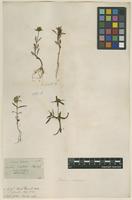
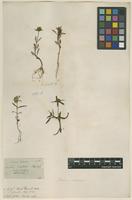
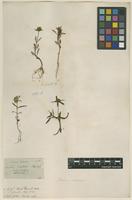
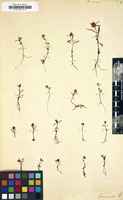
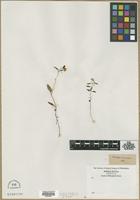
Bidens minima

5 Images see all

Filed as Bidens minima Huds. [family ASTERACEAE]
Filed as Bidens minima [family COMPOSITAE]
Filed as Bidens minima Huds. [family ASTERACEAE]
Previous
Next

Name

Identification
Bidens minima Huds. [family ASTERACEAE ] (stored under name); Verified by Not on sheet,
Related name
  • Bidens tripartita
  • Bidens minima
Common name
  • Bident penché, Flora of North America Vol. 21

Flora

Entry for Bidens cernua Linnaeus [family COMPOSITAE]
Herbarium
Flora of North America (FNA)
Collection
Flora of North America
Resource Type
Reference Sources
Entry From
Flora of North America, Vol 21,
Names
Bidens cernua Linnaeus [family COMPOSITAE], Sp. Pl., 2: 832. 1753
Bidens cernua var. elliptica Wiegand [family COMPOSITAE]
Bidens cernua var. integra Wiegand [family COMPOSITAE]
Bidens cernua var. minima (Hudson) Pursh [family COMPOSITAE]
Bidens cernua var. oligodonta Fernald & H. St. John [family COMPOSITAE]
Bidens cernua var. radiata de Candolle [family COMPOSITAE]
Bidens filamentosa Rydberg [family COMPOSITAE]
Bidens glaucescens Greene [family COMPOSITAE]
Bidens gracilenta Greene [family COMPOSITAE]
Bidens minima Hudson [family COMPOSITAE]
Bidens prionophylla Greene [family COMPOSITAE]
Treatment Author(s)
John L. Strother
Ronald R. Weedon
Information
Annuals, (2–)20–100(–400+) cm (stems sometimes rooting at proximal nodes). Leaves (rarely in 3s) sessile; blades lance-ovate or oblanceolate to lanceolate or linear, 40–100(–200+) × (2–)5–25(–45+) mm, bases cuneate to rounded, margins usually coarsely dentate to serrate, sometimes entire, sometimes ciliate, apices acute to acuminate, faces glabrous. Heads (erect or nodding at flowering, usually nodding in fruit) borne singly or in open, ± corymbiform arrays. Peduncles 10–40(–100+) mm. Calyculi of (3–)5–8(–10) spreading to reflexed, oblong to lance-linear, often ± foliaceous bractlets or bracts (3–)8–12(–25+) mm, margins usually ciliate, abaxial faces usually glabrous, bases sometimes hispidulous. Involucres ± hemispheric or broader, (3–)6–10 × (8–)12–20+ mm. Phyllaries 6–8+, ovate or lance-ovate to lanceolate, 2–10 mm. Ray florets usually 6–8, sometimes 0; laminae orange-yellow, 2–15(–18) mm. Disc florets (10–)40–100(–150+); corollas orange-yellow, 3–4 mm. Cypselae blackish or brown, usually ± flattened, sometimes ± 4-angled, ± cuneate, outer (3–)5–6+ mm, inner 4–8 mm, margins (± thickened or winged) retrorsely ciliate, apices ± truncate to convex, faces ± striate, glabrous or tuberculo-strigillose; pappi of (2–)4, ± erect, retrorsely barbed awns (1–)2–4 mm. 2n = 24, 48.
Phenology
jul-aug (summer), sep-oct (fall)
Altitude range
0–2300 m;
Distribution
EuropeAsia.USA Ala.USA AlaskaUSA Ariz.USA Ark.USA Calif.USA Colo.USA Conn.USA Del.USA D.C.USA Ga.USA IdahoUSA Ill.USA Ind.USA IowaUSA Kans.USA Ky.USA La.USA MaineUSA Mass.USA Mich.USA Minn.USA Mo.USA Mont.USA Nebr.USA Nev.USA N.H.USA N.J.USA N.Mex.USA N.Y.USA N.C.USA OhioUSA Okla.USA Oreg.USA Pa.USA R.I.USA S.Dak.USA Tenn.USA Tex.USA UtahUSA Vt.USA Va.USA Wash.USA W.Va.USA Wis.USA Wyo.Canada Alta.Canada B.C.Canada Man.Canada N.B.Canada N.W.T.Canada N.S.Canada Ont.Canada P.E.I.Canada Que.Canada Sask.Canada Yukon
Discussion
Bidens cernua is used medicinally to treat urinary-tract infections.

Related Materials

  • Terms and Conditions
  • Privacy Policy
  • Cookie Policy
  • Cookie Settings
  • Accessibility
  • Help
  • Contact Us
  • Facebook
  • Twitter
ITHAKA

JSTOR is part of ITHAKA, a not-for-profit organization helping the academic community use digital technologies to preserve the scholarly record and to advance research and teaching in sustainable ways.

©2000-2026 ITHAKA. All Rights Reserved. JSTOR®, the JSTOR logo, JPASS®, Aluka®, and ITHAKA® are registered trademarks of ITHAKA.

╳