JSTOR Global Plants Home
  • Home
  • Browse
  • About
  • Access
  • Account
    • Saved Items
    • Profile
  • Log in

Global Plants

Skip to Main Content
  • JSTOR Global Plants Home
  • Global Plants

    • Browse
    • About
    • Access
    • Account
      • Saved Items
      • Profile
Log in
  • Browse
  • About
  • Access
  • Account
    • Saved Items
    • Profile
Advanced Search

Compilation
Bidens comosa

4 Images see all

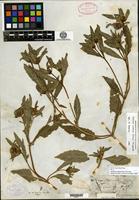
Type? of Bidens connata Muhlenberg var. comosa A. Gray [family ASTERACEAE]
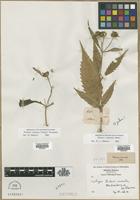
Isotype of Bidens connata Muhl. ex Willd. [family ASTERACEAE]
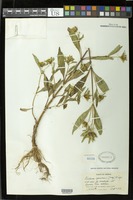
Filed as Bidens comosa (A. Gray) Wiegand [family ASTERACEAE]
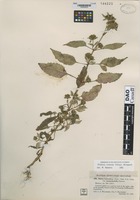
not on sheet of Bidens heterodoxa (Fernald) Fernald & H. St. John variety monardifolia Fernald [family ASTERACEAE]
Previous
Next

Name

Identification
Bidens comosa (A. Gray) Wiegand [family ASTERACEAE ] (stored under name); Verified by M. Roberts, Bidens connata Muhlenberg [family ASTERACEAE ] Verified by A. Gray, 1867
Related name
  • Bidens connata
  • Bidens comosa
Common name
  • Bident à trois divisions, Flora of North America Vol. 21

Flora

Entry for Bidens tripartita Linnaeus [family COMPOSITAE]
Herbarium
Flora of North America (FNA)
Collection
Flora of North America
Resource Type
Reference Sources
Entry From
Flora of North America, Vol 21,
Names
Bidens tripartita Linnaeus [family COMPOSITAE], Sp. Pl., 2: 831. 1753
Bidens comosa (A. Gray) Wiegand [family COMPOSITAE]
Treatment Author(s)
John L. Strother
Ronald R. Weedon
Information
Annuals, (5–)20–70(–200) cm. Leaves sessile or petioles 5–15(–35+) mm (± winged); blades ± elliptic to ovate or lanceolate, 40–80(–150+) × 15–40(–60+) mm, sometimes laciniately 1-pinnatisect with 1–4+ lobes near bases, bases cuneate, margins entire or dentate to serrate, usually ciliate, apices acute to acuminate, faces glabrous or hirtellous. Heads borne singly or in 2s or 3s. Peduncles 10–40(–80) mm. Calyculi of (2–)6–7(–10) ± spreading, oblanceolate or lanceolate to linear, ± foliaceous bractlets or bracts 7–35(–60) mm, margins (entire or serrate) sometimes sparsely ciliate, abaxial faces hispidulous near bases, distally glabrous. Involucres campanulate to hemispheric or broader, (4–)5–7(–12) × (3–)6–12(–15+) mm. Phyllaries (6–)7–8(–13), elliptic-ovate to lance-ovate, (4–)6–9(–12) mm. Ray florets usually 0, sometimes 1–5; laminae orange yellowish, 4–8 mm. Disc florets (5–)20–60(–150+); corollas pale yellow to orange, (2–)3–4 mm (gradually ampliate, anthers usually pale). Cypselae blackish to purplish or brown, ± flattened, sometimes weakly 3(–4)-angled, usually cuneate to linear, outer (3–)6–7(–10) mm, inner (4–)6–9(–11) mm, margins proximally antrorsely to patently, distally retrorsely, barbed, apices ± truncate to concave, faces ± 1-nerved, usually smooth, seldom notably tuberculate, glabrous or sparsely strigillose; pappi 0, or of (1–)3–3(–4+) ± erect to spreading, retrorsely barbed awns (0.2–)2–3(–6) mm. 2n = 48.
Phenology
aug (summer), sep-oct (fall)
Altitude range
10–1700 m;
Distribution
EuropeAsian Africaintroduced in Pacific IslandsAustralia.USA Ala.USA AlaskaUSA Calif.USA Colo.USA Conn.USA Del.USA D.C.USA Ga.USA Ill.USA Ind.USA IowaUSA Kans.USA Ky.USA La.USA MaineUSA Md.USA Mass.USA Mich.USA Minn.USA Miss.USA Mo.USA Mont.USA Nebr.USA N.H.USA N.J.USA N.Mex.USA N.Y.USA N.C.USA N.Dak.USA OhioUSA Okla.USA Oreg.USA Pa.USA R.I.USA S.C.USA S.Dak.USA Tenn.USA Tex.USA UtahUSA Vt.USA Va.USA Wash.USA W.Va.USA Wis.USA Wyo.Canada Alta.Canada B.C.Canada Man.Canada Que.
Discussion
Plants with cypsela mid-nerves strongly developed (cypselae more or less strongly 4-angled and, often, tuberculate) that are treated below as Bidens connata have been included in B. tripartita, perhaps rightly so. And some botanists have included (or advocated inclusion of) B. eatonii, B. heterodoxa, and/or B. infirma in B. tripartita, as well, perhaps rightly so.

Related Materials

  • Terms and Conditions
  • Privacy Policy
  • Cookie Policy
  • Cookie Settings
  • Accessibility
  • Help
  • Contact Us
  • Facebook
  • Twitter
ITHAKA

JSTOR is part of ITHAKA, a not-for-profit organization helping the academic community use digital technologies to preserve the scholarly record and to advance research and teaching in sustainable ways.

©2000-2026 ITHAKA. All Rights Reserved. JSTOR®, the JSTOR logo, JPASS®, Aluka®, and ITHAKA® are registered trademarks of ITHAKA.

╳