Entry From
Flora of North America, Vol 21,
Names
Berlandiera ×betonicifolia (Hooker) Small [family COMPOSITAE], Fl. S.E. U.S., 1246, 1340. 1903
Silphium betonicifolium Hooker [family COMPOSITAE], Compan. Bot. Mag., 1: 99. 1835
Berlandiera pumila (Michaux) Nuttall var. scabrella G. L. Nesom & B. L. Turner [family COMPOSITAE]
Berlandiera texana de Candolle var. betonicifolia (Hooker) Torrey & A. Gray [family COMPOSITAE]
Discussion
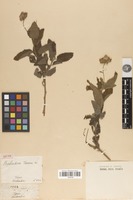
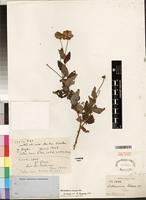
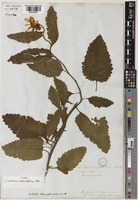
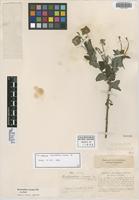
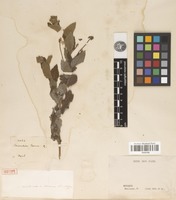
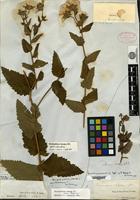
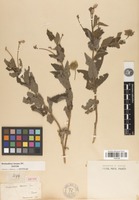
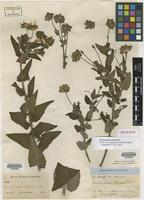
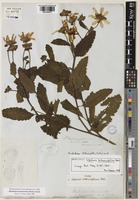
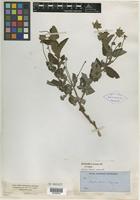
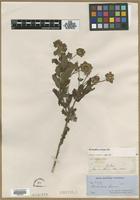
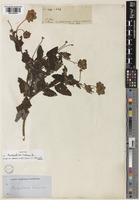
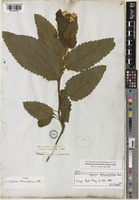
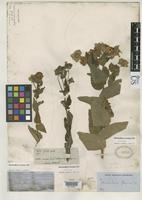
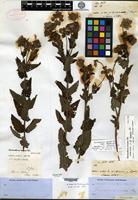
In most characters, Berlandiera ×betonicifolia is intermediate between its parents (B. pumila and B. texana) in varying degrees and combinations. Drummond’s type (K) of Silphium betonicifolium resembles B. texana, to which it was assigned as a variety by J. Torrey and A. Gray (1838–1843), who commented that other specimens fitted neither varietal description completely. Artificially produced F1 offspring between extreme forms of the parents resemble closely Drummond’s type collection. Character states of S. betonicifolium that Hooker described in contradistinction to those of B. texana include longer petioles, less woody stems, and more ovate, hirsute leaves of membranous texture; and from B. pumila by the coarser and more deeply crenate margins, and peduncles with “beautiful jointed purplish hairs.” Artificially produced crosses between F1 hybrids and B. pumila resemble most of the field-collected B. ×betonicifolia specimens [called B. pumila (green form) by G. L. Nesom and B. L. Turner (1998)] because gene flow of B. ×betonicifolia is over a much greater geographic region of overlap with B. pumila than with B. texana.