

Compilation
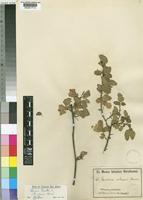
Bauhinia wituensis
1 Images see all
Name
Identification
Bauhinia wituensis Harms [family LEGUMINOSAE-CAESALPINIOIDEAE ] Verified by Brenan, J.P.M., Bauhinia tomentosa L. [family LEGUMINOSAE-CAESALPINIOIDEAE ] (stored under name); Verified by Brenan, J.P.M.,
Related name
- Bauhinia wituensis
- Bauhinia tomentosa
Flora
Entry for BAUHINIA tomentosa L. [family LEGUMINOSAE-CAESALPINIOIDEAE]
Herbarium
Royal Botanic Gardens, Kew (K)
Collection
Flora of Tropical East Africa
Resource Type
Reference Sources
Entry From
Flora of Tropical East Africa, page 1, (1967) Author: J. P. M. Brenan
Names
BAUHINIA tomentosa L. [family LEGUMINOSAE-CAESALPINIOIDEAE], Sp. Pl.: 375 (1753); L.T.A.: 654 (1930); T.S.K.: 62 (1936); T.T.C.L.: 88 (1949); Wilczek in F.C.B. 3: 271 (1952); De Wit in Reinwardtia 3: 409 (1956); Torre & Hillcoat in C.F.A. 2: 192 (1956); Roti-Michelozzi in Webbia 13: 153, figs. 3, 4 (1957); K.T.S.; 97 (1961); F.F.N.R.: 99 (1962). Type: Burmann, Thesaurus Zeylanicus, t. 18 (1737) (lecto.!, see Roti-Michelozzi, l.c.; typotype at G)
BAUHINIA tomentosa Hook. f. var. glabrata [family LEGUMINOSAE-CAESALPINIOIDEAE], in Bot. Mag., t. 5560 (1866), as “ glabra ”; Chiov., Race. Bot. Miss. Consol. Kenya: 39 (1935). Type: cultivated at Kew, origin Angola
BAUHINIA volkensii Taub. [family LEGUMINOSAE-CAESALPINIOIDEAE], in P.O.A. C: 200 (1895); L.T.A. 654 (1930); T.T.C.L.: 88 (1949). Type: ? Kenya, Teita District, NE. of Lake Chala, Volkens 1765a (B, holo. †; Volkens 1765 (sic) at BM & K !, from the same locality, may well be isotypes)
BAUHINIA wituensis Harms [family LEGUMINOSAE-CAESALPINIOIDEAE], in E.J. 26: 275 (1899); L.T.A.: 654 (1930); T.T.C.L.: 89 (1949). Type: Kenya, Lamu District, Witu, F. Thomas 132 (B, holo. †, BM, K, iso. !)
Information
Shrub or small tree 1–8 m. high. Branchlets glabrous, puberulous or ± pubescent. Leaves variable in size, 1–6.9(–10.2) cm. long, 1.2–6.5(–11) cm. wide, bilobed at apex to one-third way down or less, rarely to half way or a little more; lobes rounded; lower surface glabrous, appressed-puberulous, or ± pubescent. Racemes 1–2(–7)-flowered, lateral or terminal, occasionally aggregated. Bracteoles small and inconspicuous, not enfolding the flower-buds. Pedicels 0.7–2.7 cm. long. Flower-buds: upper part (i.e. sepals) ovate in outline, 1.2–2.6 cm. long before anthesis, glabrous or pubescent outside; hypanthium 2–6 mm. long; smooth or slightly sulcate. Petals subcircular to obovate or elliptic, (2.4–)3–5.5 cm. long, (1.5–)2–4.6 cm. wide, not or scarcely clawed, sulphur-yellow, 1–3 of them often (not always) blotched at base with dark brown or purplish. Fertile stamens 10. Stigma 2.5–3 mm. across, rather variable in appearance, terminal, peltate or with one side produced downwards; style gradually enlarged towards the stigma. Pods thinly woody, dehiscent, 6.5–13 cm. long, (1–)1.3–2 cm. wide. Seeds blackish or blackish-brown, ± elliptic, 7–9 mm. long, 5–6 mm. wide; funicle short.
Range
DISTR. K1, 3, 4, ? 6, 7; T2, 3, 6, 8 also in Ethiopia, French Somaliland, Somali Republic (S.), the Congo Republic, and extending southwards to Angola, Zambia, Rhodesia, the Transvaal and Natal; also in Asia
Altitude range
0–1520 (?–2130)m.
Distribution
KENYA Northern Frontier Province Mathews Range, 10 June 1959, Kerfoot 1059!KENYA S. Nyeri District Tana R., about 1.5 km. above Sagana road suspension bridge, 5 Feb. 1933, C. G. Rogers 403 !KENYA Teita District Wusi-Mwatate road, 18 Sept. 1953, Drummond & Hemsley 4407 !TANGANYIKA Moshi. 9 Dec. 1925, Durham !TANGANYIKA Dodoma District 22 km. N. of Great Ruaha R. on the Dodoma road, Wigg 982 !TANGANYIKA Uzaramo District Msua-Bagala, 5 Nov. 1925, Peter 31866!
Notes
on synonymy. B. tomentosa L. “var. parvifolia-hirtella Oliv. in Trans. Linn. Soc, ser. 2, 2: 332” (1887) is quoted in L.T.A.: 654 (1930) as if it were a varietal name. I do not think that either it or “var. glabra ”, both given by Oliver, were intended as formal new varieties but as brief descriptive phrases of two variants collected by Johnston on Kilimanjaro. VARIATION. B. tomentosa shows a considerable range of variation—in indumentum from glabrous to strongly pubescent, in leaf-size, in the shape, size and blotching of the petals, in the degree to which the tip of the flower-bud is acuminate and in the shape of the stigma. No clear pattern of variation is apparent, however, and I therefore recognize no named varieties.One character, however, perhaps shows in its variation a link with geography: in East Africa the racemes are generally simple and single, but especially in Mozambique and Rhodesia there is a decided tendency for them to become aggregated into little corymbose panicles with up to 20 or more flowers. Gillman 1128, from Tanganyika, Lindi District, Sudi, 12 Dec. 1942, and Schlieben 5568, also from Lindi District, Lake Lutamba, 30 Oct. 1934, show this tendency. B. tomentosa is frequently cultivated (see, for example, U.O.P.Z.: 143, where it is said that the form grown in Zanzibar has unblotched flowers).