JSTOR Global Plants Home
  • Home
  • Browse
  • About
  • Access
  • Account
    • Saved Items
    • Profile
  • Log in

Global Plants

Skip to Main Content
  • JSTOR Global Plants Home
  • Global Plants

    • Browse
    • About
    • Access
    • Account
      • Saved Items
      • Profile
Log in
  • Browse
  • About
  • Access
  • Account
    • Saved Items
    • Profile
Advanced Search

Compilation
Balsamorhiza careyana

6 Images see all

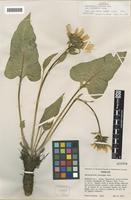
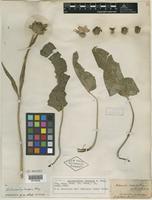
Isotype of Balsamorhiza careyana Gray var. intermedia [family ASTERACEAE]
Isotype of Balsamorhiza careyana A.Gray var. intermedia Cronquist [family ASTERACEAE]
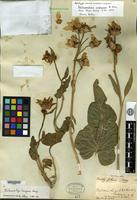
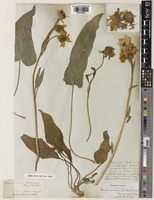
Balsamorhiza careyana A.Gray [family ASTERACEAE]
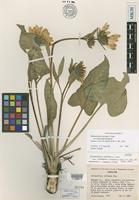
Holotype of Balsamorhiza careyana A. Gray [family ASTERACEAE]
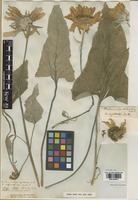
Isotype of Balsamorhiza careyana A. Gray [family ASTERACEAE]
Balsamorhiza careyana A.Gray [family ASTERACEAE]
Previous
Next

Name

Identification
Balsamorhiza careyana A. Gray [family ASTERACEAE ] (stored under name); Verified by A. Gray, 1848
Related name
  • Balsamorhiza careyana

Flora

Entry for Balsamorhiza careyana A. Gray [family COMPOSITAE]
Herbarium
Flora of North America (FNA)
Collection
Flora of North America
Resource Type
Reference Sources
Entry From
Flora of North America, Vol 21,
Names
Balsamorhiza careyana A. Gray [family COMPOSITAE], Mem. Amer. Acad. Arts, n. s., 4: 81. 1849
Balsamorhiza careyana var. intermedia Cronquist [family COMPOSITAE]
Past names
Balsamorrhiza
Treatment Author(s)
William A. Weber
Information
Plants (15–)20–60 cm. Basal leaves: blades green, rounded-deltate or deltate to triangular-deltate, 15–25 × 6–15 cm, bases cordate or hastate to truncate, margins usually entire, sometimes crenate (to dentate near bases), apices acute to attenuate, faces finely hispidulous to hirtellous (gland-dotted as well). Heads usually (2–)3+, sometimes borne singly. Involucres hemispheric to turbinate or campanulate, 12–20 mm diam. Outer phyllaries oblong to lanceolate or linear, 15–25 mm, usually surpassing inner, apices acute to attenuate. Ray laminae 20–30(–40) mm (cypselae strigose or glabrous). 2n = 38.
Phenology
mar, may (spring), jun-jul (summer)
Altitude range
500–1000 m;
Distribution
USA Oreg.USA Wash.
Discussion
Hybrids involving Balsamorhiza careyana and B. deltoidea occur near the Columbia River Gorge; intermediates are found to the east and south. In northern Oregon, plants in some populations have glabrous cypselae and some populations are mixed. The hairiness may come from B. rosea; B. rosea and B. careyana may hybridize profusely, producing mostly plants with the stature of B. careyana and with the relatively short, brick-red ray corollas of B. rosea. Hybridization also occurs, occasionally, between B. careyana and B. sagittata; B. careyana also hybridizes with any species of sect. Balsamorhiza with which it comes in contact. Plants called Balsamorhiza careyana var. intermedia usually have crenate leaf margins and glabrous cypselae.

Related Materials

  • Terms and Conditions
  • Privacy Policy
  • Cookie Policy
  • Cookie Settings
  • Accessibility
  • Help
  • Contact Us
  • Facebook
  • Twitter
ITHAKA

JSTOR is part of ITHAKA, a not-for-profit organization helping the academic community use digital technologies to preserve the scholarly record and to advance research and teaching in sustainable ways.

©2000-2026 ITHAKA. All Rights Reserved. JSTOR®, the JSTOR logo, JPASS®, Aluka®, and ITHAKA® are registered trademarks of ITHAKA.

╳