JSTOR Global Plants Home
  • Home
  • Browse
  • About
  • Access
  • Account
    • Saved Items
    • Profile
  • Log in

Global Plants

Skip to Main Content
  • JSTOR Global Plants Home
  • Global Plants

    • Browse
    • About
    • Access
    • Account
      • Saved Items
      • Profile
Log in
  • Browse
  • About
  • Access
  • Account
    • Saved Items
    • Profile
Advanced Search

Compilation
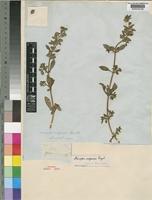
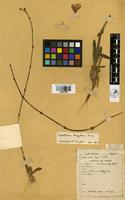
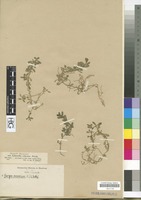
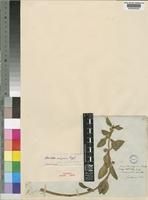
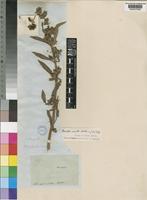
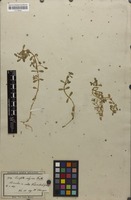
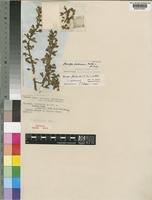
Bacopa calycina

7 Images see all

Bacopa crenata (P.Beauv.) Hepper [family SCROPHULARIACEAE]
Filed as Bacopa monnieri (L.) Wettst. [family SCROPHULARIACEAE]
Filed as Dopatrium longidens Skan [family SCROPHULARIACEAE]
Bacopa crenata (P.Beauv.) Hepper [family SCROPHULARIACEAE]
Bacopa decumbens (Fernald) F.N.Williams [family SCROPHULARIACEAE]
Filed as Bacopa monnieri (L.) Wettst. [family SCROPHULARIACEAE]
Bacopa floribunda (R.Br.) Wettst. [family SCROPHULARIACEAE]
Previous
Next

Name

Identification
Bacopa calycina Engl. [family SCROPHULARIACEAE ] Verified by Not on sheet, Dopatrium longidens Skan [family SCROPHULARIACEAE ] (stored under name); Verified by G. Taylor,
Related name
  • Bacopa crenata
  • Herpestis calycina
  • Bacopa calycina
  • Dopatrium longidens

Flora

Entry for Bacopa crenata (P.Beauv.) Hepper [family SCROPHULARIACEAE]
Herbarium
Royal Botanic Gardens, Kew (K)
Collection
Flora of Tropical East Africa
Resource Type
Reference Sources
Entry From
Flora of Tropical East Africa, page 1, (2008) Author: S.A. GHAZANFAR, F.N. HEPPER & D. PHILCOX
Names
Bacopa crenata (P.Beauv.) Hepper [family SCROPHULARIACEAE], in K.B. 14: 407 (1960) & in F.W.T.A. ed. 2, 2: 359 (1963); Philcox in F.Z.: 8(2): 49 (1990); Fischer, F.A.C. Scrophulariaceae: 28, pl. 7 (1999). Type: Nigeria, without locality, P. Beauvois s.n. (G!, holo.)
Herpestis crenata P.Beauv. [family SCROPHULARIACEAE], Fl. Oware 2: 83, t. 112 (1819)
Herpestis calycina Benth. [family SCROPHULARIACEAE], in Hook., Comp. Bot. Mag. 2: 57 (1836). Types: Senegambia, Guillemin 12 (K!, syn.); Senegal, Leprieur 214 (K!, syn.)
Bacopa calycina (Benth.) De Wild. [family SCROPHULARIACEAE], in Bull. Herb. Boiss. 1: 832 (1901)
Bacopa monniera [family SCROPHULARIACEAE], [sensu Engl. in P.O.A. C.: 357 (1895)]
Information
Ascending herb, sometimes a simple annual (see note), up to 40 cm high; stems fleshy, trailing, rooting at nodes, glabrous or nearly so. Leaves lanceolate to ovate, 1.5–4(–8) cm long, (0.2–)0.6–1.2(–2.3) cm wide, narrowed at the base into a short petiole or sessile or base amplexicaul, obtuse to acute at apex, margins crenate-serrate, glandular-punctate. Flowers solitary in most leaf axils; pedicels 1–3(–5) mm long. Bracts 2, 1.5 mm long, setaceous. Calyx glabrous, the outer lobes broadly ovate, posterior lobe largest, 8–9 mm long and 4–5 mm wide, in fruit reticulate-veined; other lobes successively smaller and narrower, lateral lobes somewhat keeled. Corolla pure white with yellow mark in the throat, slightly longer than the calyx; upper lip emarginate, lower lip equally 3-lobed; style and ovary glabrous. Capsule 3–4 mm, ovoid, glandular. Seeds ellipsoid.
Range
DISTR. K 7; T 3, 5, 6, 8; Z; P Senegal eastwards to the Sudan and southwards to Mozambique and Angola; Madagascar
Altitude range
0–1600 m
Distribution
KENYA Kwale District Mwasangombe Forest, 27 Aug. 1953, Drummond & Hemsley 4009! & Shimba Hills, 9 Feb. 1953, Drummond & Hemsley 1186! and Feb. 1968, Magogo & Glover 130!TANZANIA Lushoto District Korogwe, by Lwengera River, 27 June 1953, Drummond & Hemsley 3036!TANZANIA Uzaramo District Dar es Salaam, 4 Sept. 1969, Harris 3204!TANZANIA Singida District Iramba Plateau, 30 Apr. 1962, Polhill & Paulo 2261!TANZANIA Pemba Wesha road, 30 Sept. 1929, Vaughan 686!
Notes
USES. None recorded on specimens from our area. CONSERVATION Least Concern (LC); widespread. Typically this species has a stout ascending stem and rooting habit, but in brackish-marshy habitats it tends to be a small annual with a simple erect stem; these are ecotypes and cannot be considered as separate taxa.

Related Materials

  • Terms and Conditions
  • Privacy Policy
  • Cookie Policy
  • Cookie Settings
  • Accessibility
  • Help
  • Contact Us
  • Facebook
  • Twitter
ITHAKA

JSTOR is part of ITHAKA, a not-for-profit organization helping the academic community use digital technologies to preserve the scholarly record and to advance research and teaching in sustainable ways.

©2000-2026 ITHAKA. All Rights Reserved. JSTOR®, the JSTOR logo, JPASS®, Aluka®, and ITHAKA® are registered trademarks of ITHAKA.

╳