JSTOR Global Plants Home
  • Home
  • Browse
  • About
  • Access
  • Account
    • Saved Items
    • Profile
  • Log in

Global Plants

Skip to Main Content
  • JSTOR Global Plants Home
  • Global Plants

    • Browse
    • About
    • Access
    • Account
      • Saved Items
      • Profile
Log in
  • Browse
  • About
  • Access
  • Account
    • Saved Items
    • Profile
Advanced Search

Compilation
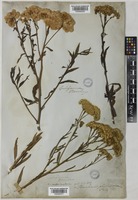
Baccharis douglasii

9 Images see all

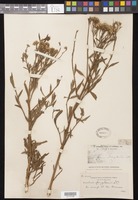
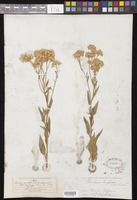
Baccharis douglasii DC. [family ASTERACEAE]
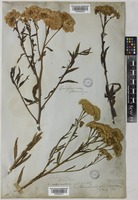
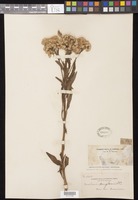
Baccharis douglasii DC. [family COMPOSITAE]
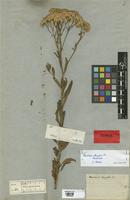
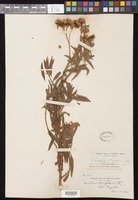
Baccharis douglasii DC. [family ASTERACEAE]
Filed as Baccharis saligna Nutt. [family ASTERACEAE]
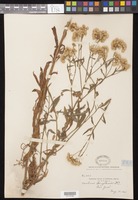
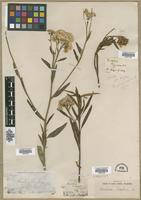
Baccharis douglasii DC. [family COMPOSITAE]
Previous
Next

Name

Identification
Baccharis douglasii DC. [family ASTERACEAE ] (stored under name); Verified by Data not digitized, Baccharis douglasii DC. [family ASTERACEAE ] Verified by Data not digitized,
Related name
  • Baccharis douglasii
  • Baccharis saligna
Common name
  • Saltmarsh baccharis, Flora of North America Vol. 20
  • Douglas’s falsewillow, Flora of North America Vol. 20

Flora

Entry for Baccharis douglasii de Candolle [family COMPOSITAE]
Herbarium
Flora of North America (FNA)
Collection
Flora of North America
Resource Type
Reference Sources
Entry From
Flora of North America, Vol 20,
Names
Baccharis douglasii de Candolle [family COMPOSITAE], in A. P. de Candolle and A. L. P. P. de Candolle, Prodr., 5: 400. 1836
Treatment Author(s)
Scott D. Sundberg†
David J. Bogler
Information
Perennials, 60–210 cm (rhizoma-tous, forming colonies). Stems erect to ascending, striate, glabrous, gland-dotted, resinous. Leaves present at flowering; short-petiolate; blades (1- or 3-nerved, larger prominently 3-nerved) lanceolate, 50–130 × 8–30 mm, bases tapered to petioles, margins entire or finely dentate, apices acute to acuminate, faces glabrous, black gland-dotted. Heads in dense, terminal, flat-topped, corymbiform arrays. Involucres hemispheric; staminate 3.5–5 mm, pistillate 3.8–4.8(–6) mm. Phyllaries narrowly lanceolate, 2–4 mm, inner series ± equal, margins yellowish, medians green to purplish, apices acuminate, erose or ciliate, faces glabrous, gland-dotted, resinous. Staminate florets 26–40; corollas 3.5–4 mm. Pistillate florets 80–150; corollas 1.7–3 mm. Cypselae 0.6–1.5 mm, 5-nerved, glandular, hispidulous distally; pappi 2.6–4(–7) mm. 2n = 18.
Phenology
jul
summer
aug
sep
fall
oct
year
summer
spring
winter
fall
nov
apr
dec
jan
jun
oct
jul
may
feb
aug
sep
mar
Altitude range
0–1200 m;
Distribution
Mexico (Baja California).USA Calif.USA Oreg.
Discussion
Occurring along the coast and in interior valleys, Baccharis douglasii is recognized by the erect, simple stems growing in patches from rhizomes, large lanceolate leaves with three veins and blackish glandular dots, heads in dense, compact, terminal, corymbiform arrays and more or less uniform inner phyllaries. G. L. Nesom (1990h) noted that it is similar to forms of the South American species Baccharis pingraea de Candolle, and that the two taxa may be conspecific.

Related Materials

  • Terms and Conditions
  • Privacy Policy
  • Cookie Policy
  • Cookie Settings
  • Accessibility
  • Help
  • Contact Us
  • Facebook
  • Twitter
ITHAKA

JSTOR is part of ITHAKA, a not-for-profit organization helping the academic community use digital technologies to preserve the scholarly record and to advance research and teaching in sustainable ways.

©2000-2026 ITHAKA. All Rights Reserved. JSTOR®, the JSTOR logo, JPASS®, Aluka®, and ITHAKA® are registered trademarks of ITHAKA.

╳