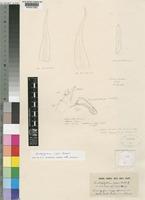
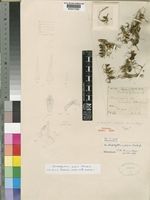
Bulbophyllum milesiiSummerh. [family ORCHIDACEAE ] (stored under name); Bulbophyllum pipioRchb.f. [family ORCHIDACEAE ] Verified by Summerhayes, V.S., Bulbophyllum pipioRchb.f. [family ORCHIDACEAE ]
Related name
Bulbophyllum pipio
Bulbophyllum milesii
Flora
Entry for BULBOPHYLLUM Pipio Reichb. f. [family ORCHIDACEAE]
Herbarium
Royal Botanic Gardens, Kew (K)
Collection
Flora of Tropical Africa
Resource Type
Reference Sources
Entry From
Flora of Tropical Africa, Vol 7, page 12, (1898) Author: (By R. A. Rolfe.)
Names
BULBOPHYLLUM PipioReichb. f. [family ORCHIDACEAE], in Linnæa, xli. 92. —Kränzl. in Mitth. Deutsch. Schutzgeb. ii. (1889) 155.
Information
Plant an inch high. Pseudobulbs conical, short, 1-leaved. Leaves lanceolate. Peduncle with many sheaths at the base, racemose above. Bracts spathaceous, aristate, 1-nerved, slightly longer than the sulphur-white flowers. Sepals triangular, cuspidate. Petals lanceolate, not half as long as the sepals. Lip unguiculate, ligulate, slightly crenulate at the sides, with an obtuse auricle at either side of the base; disc at this point thickened and sulcate. Column with two setose teeth.
Distribution
Cameroons Upper Guinea Braun.
Notes
Only known to me from the description, but evidently allied to the preceding. It flowered in the Hamburg Botanic Garden about 1877.