JSTOR Global Plants Home
  • Home
  • Browse
  • About
  • Access
  • Account
    • Saved Items
    • Profile
  • Log in

Global Plants

Skip to Main Content
  • JSTOR Global Plants Home
  • Global Plants

    • Browse
    • About
    • Access
    • Account
      • Saved Items
      • Profile
Log in
  • Browse
  • About
  • Access
  • Account
    • Saved Items
    • Profile
Advanced Search

Compilation
Boswellia neglecta

8 Images see all

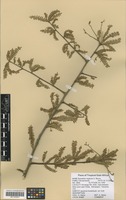
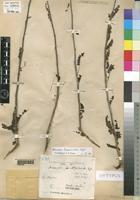
Isotype of Boswellia elegans Engl. [family BURSERACEAE]
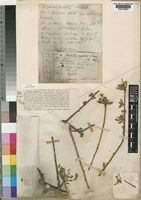
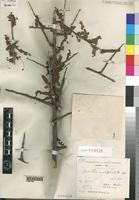
Syntype of Boswellia multifoliolata Engl. [family BURSERACEAE]
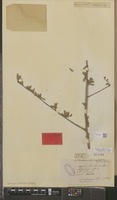
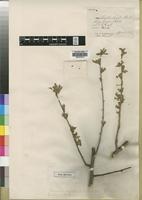
Type of Boswellia neglecta S.Moore [family BURSERACEAE]
Filed as Boswellia neglecta S. Moore [family BURSERACEAE]
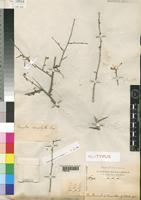
Type of Boswellia neglecta S.Moore [family BURSERACEAE]
Isotype of Boswellia neglecta S.Moore [family BURSERACEAE]
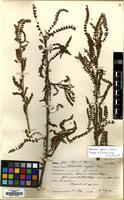
Holotype of Boswellia microphylla Chiov. [family BURSERACEAE]
Previous
Next

Name

Identification
Boswellia neglecta S.Moore [family BURSERACEAE ] (stored under name); Boswellia neglecta S.Moore [family BURSERACEAE ]
Related name
  • Boswellia microphylla
  • Boswellia elegans
  • Boswellia neglecta
  • Boswellia multifoliolata
  • Boswellia hildebrandtii

Flora

Entry for BOSWELLIA neglecta S. Moore [family BURSERACEAE]
Herbarium
Royal Botanic Gardens, Kew (K)
Collection
Flora Somalia
Resource Type
Reference Sources
Entry From
Flora Somalia, Vol 2, (1999) Author: by M. Thulin [updated by M. Thulin 2008]
Names
BOSWELLIA neglecta S. Moore [family BURSERACEAE], (1877);. type: N2, S of “Meid”, Hildebrandt 1508 (K holo.). Fig. 122.
BOSWELLIA hildebrandtii Engl. [family BURSERACEAE], (1893).
BOSWELLIA multifoliolata Engl. [family BURSERACEAE], (1897);. types: C1, “Merehan”, Robecchi-Bricchetti 680 & 681 (FT isosyn.).
BOSWELLIA microphylla Chiov. [family BURSERACEAE], (1915);. type: S1, between “Dorianle” and “Oneiatta”, Paoli 908 (FT holo.).
Information
Shrub or tree, up to 8 m tall; bark smooth to rough, grey to purplish black, not peeling; branchlets ± at right angles to main branches, slender, pubescent. Leaves narrowly oblanceolate to obovate or lanceolate in outline, often turning red when old, 2–11 cm long, including 2–16 mm long petiole, subglabrous or, more often, pubescent with ± appressed to spreading hairs up to 0.6 mm long; rhachis sometimes slightly winged; leaflets (3–)5–45(–51), entire, subsessile, ovate to oblong-elliptic or obovate, rounded to cuneate at the base, obtuse or broadly pointed at the apex, up to 13(–18) x 8(–10) mm. Flowers in few-flowered pubescent racemes or panicles up to 6(–10) cm long; bracts oblong to triangular, up to 6 x 2.5 mm; pedicels 1–8 mm long. Calyx c. 1.5 mm long, glabrous or pubescent; petals ovate, c. 2–3 mm long, glabrous or medially pubescent outside; filaments 0.8–1 mm long, ovate, abruptly narrowed near the middle into a filiform tip, papillose. Fruit 3(–4)-celled, pear-shaped to subglobose, sometimes ± winged, glabrous, 8–22(–25) x 7–11(–14) mm; stones ± cross-like, with apical and basal horns as well as lateral horns, without or with a narrow ± caducous wing.
Range
N1–3; C1, 2; S1, 2
Altitude range
130–990 m.
Distribution
SOMALIA Gillett, Hemming & Watson 22593; Kuchar 16009; Beckett & White 1784.
Distribution (external)
S and SE Ethiopia
NE Uganda
Kenya
NE Tanzania
Notes
Bay-bay, muqlay, murchen (Som.). The gum resin is used locally as incense, as well as for making containers water-proof. The bark is used for tanning. This species is taken here in a wider sense than in Fl. Eth. 3: 445 (1990) and Fl. Trop. E. Afr. (1991), where B. microphylla is recognized. In some areas it is possible to distinguish between forms with many leaflets nearest corresponding to B. hildebrandtii and B. multifoliolata and forms with few leaflets corresponding to B. microphylla, but the variation in large parts of Somalia is continuous. Also the type of B. neglecta , with about 17–21 leaflets, is intermediate.

Related Materials

  • Terms and Conditions
  • Privacy Policy
  • Cookie Policy
  • Cookie Settings
  • Accessibility
  • Help
  • Contact Us
  • Facebook
  • Twitter
ITHAKA

JSTOR is part of ITHAKA, a not-for-profit organization helping the academic community use digital technologies to preserve the scholarly record and to advance research and teaching in sustainable ways.

©2000-2026 ITHAKA. All Rights Reserved. JSTOR®, the JSTOR logo, JPASS®, Aluka®, and ITHAKA® are registered trademarks of ITHAKA.

╳