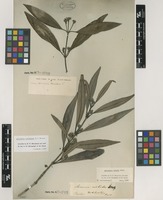
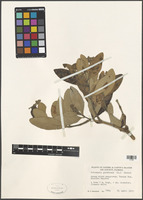
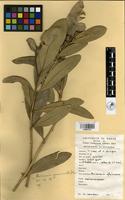
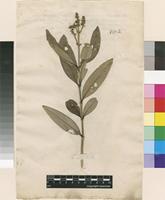
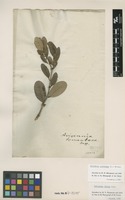
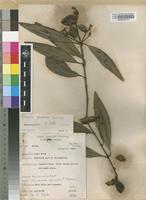
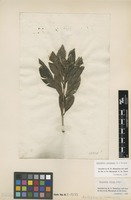
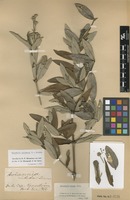
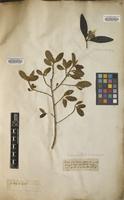
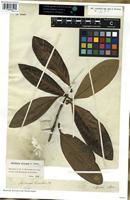
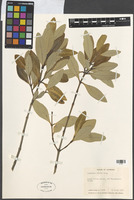
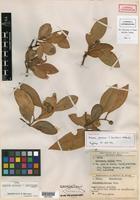
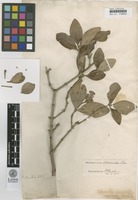
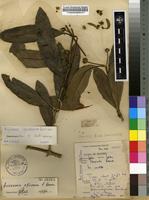
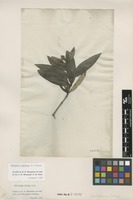
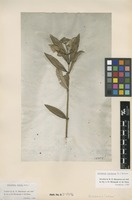
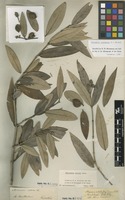
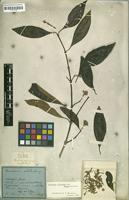
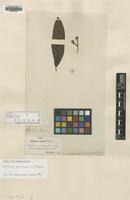
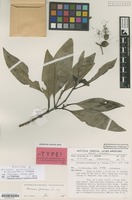
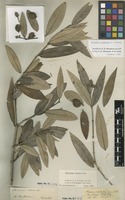
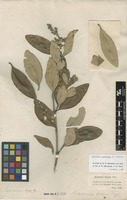
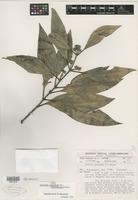
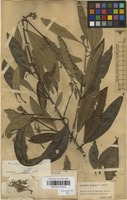
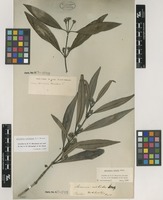
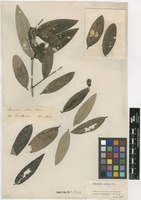
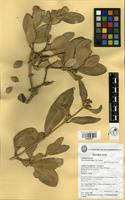
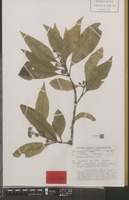
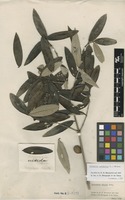
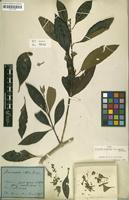
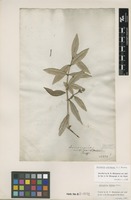
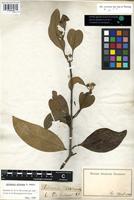
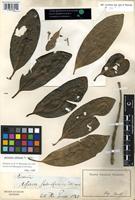
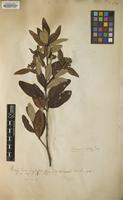
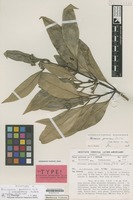
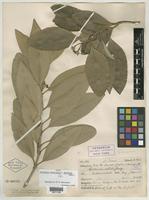
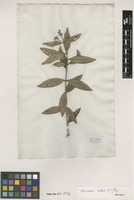
A tree to about 15–17m high, of brackish lagoons and river estuaries, common at such localities throughout the Atlantic seaboard of the whole Region, and extending to Zaïre and also on the tropical western side of the Atlantic Ocean.The sap-wood is white and the heart-wood pale brown, darkening on exposure, fairly hard and durable, and termite-proof. It lasts in uses underwater, e.g. piles and wharf construction, and is recommended in Ghana for marine work (2). It is used in boat-building on the coast (6, Sierra Leone, 13; Gabon, ribs of boats, 16). It is also used for house-building, furniture, gunstocks, etc., and it makes a good firewood and charcoal. (3, 6, 9, 10, 14, 16.) It has recently been tried in Sierra Leone as telegraph poles after treating with creosote (13).Tannin is present in the bark at about 12.5% concentration. It is used locally for tanning (6, 8, 9, 14, 16), but probably less so than formerly because of synthetic substitutes. The bark also yields a red dye used in Sierra Leone (6, 7). The powdered bark, dry and with warm water, used in Nigeria as a paste, is effective in treating various kinds of dermatitis (1). In Gabon the powdered bark is made into an ointment with palm-oil base for use against skin-itches, jiggers and fleas (15, 16). Commonly throughout Senegal a decoction of bark and leafy twigs is taken by draught and put into baths to expedite labour in child-birth and the expulsion of the afterbirth (11, 12). The leaves are used in enemas in Liberia for piles (9).A decoction of the roots is taken in draught in Senegal for troubles of the lower intestines (11, 12). The leaves are said to have quite a salty taste, and they and the roots, are used in the Niger Delta to prepare a vegetable salt (6).The fruits which consist of a single embryo and two enlarged and fleshy cotyledons have been used in Senegal in the coastal islands as a famine food. They are lethally toxic and require special and careful preparation to remove the poisonous substances (5). The toxic chemicals are not recorded, but the seeds are reported as having 84% carbohydrates and 7% proteins (4).