JSTOR Global Plants Home
  • Home
  • Browse
  • About
  • Access
  • Account
    • Saved Items
    • Profile
  • Log in

Global Plants

Skip to Main Content
  • JSTOR Global Plants Home
  • Global Plants

    • Browse
    • About
    • Access
    • Account
      • Saved Items
      • Profile
Log in
  • Browse
  • About
  • Access
  • Account
    • Saved Items
    • Profile
Advanced Search

Compilation
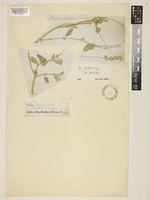
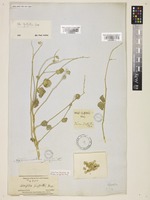
Atriplex griffithii

6 Images see all

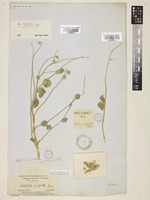
Atriplex griffithii Moq. [family AMARANTHACEAE]
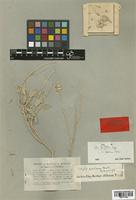
Atriplex persica Boiss. [family CHENOPODIACEAE]
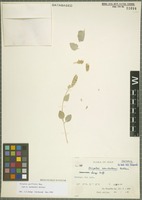
Isotype of Atriplex wendelboi Aellen [family CHENOPODIACEAE]
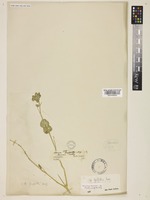
Holotype of Atriplex griffithii Moq. [family AMARANTHACEAE]
Atriplex griffithii Moq. [family AMARANTHACEAE]
Previous
Next

Name

Identification
Atriplex griffithii Moq. [family CHENOPODIACEAE ] (stored under name); Verified by Data not digitized, Atriplex persica Boiss. [family CHENOPODIACEAE ] Verified by Data not digitized,
Related name
  • Atriplex persica
  • Atriplex griffithii

Flora

Entry for ATRIPLEX griffithii Moq. [family CHENOPODIACEAE]
Herbarium
Royal Botanic Gardens, Kew (K)
Collection
Flora Somalia
Resource Type
Reference Sources
Entry From
Flora Somalia, Vol 1, (1993) Author: by I. Friis & M. G. Gilbert [updated by M. Thulin 2008]
Names
ATRIPLEX griffithii Moq. [family CHENOPODIACEAE], (1849).
Information
Subshrub to 50 cm high; all parts mealy when young, later glabrescent. Leaves alternate, rarely subopposite; petiole 1.2 mm long, leaf-blade 7–11 x 6–8 mm, base broadly cuneate (rarely some leaves with a ± hastate base) or subcordate (not usual in Flora area), tip rounded to emarginate, margin entire, lateral veins not visible. Inflorescence not clearly delimited from vegetative part, lower clusters of flowers in axils of leaf-like bracts. Flower clusters usually with many male flowers and a few female. Male perianth 5-merous, c. 1 mm in diam. Fruiting bracteoles on 0.5–1 mm pedicel, broadly ovoid, 4–6 x 4–6 mm, base cuneate, tip rounded, margin entire, often ± reflexed, veins usually obvious but sometimes central part conspicuously muricate or tuberculate, tubercles usually irregularly lobed and then veins obscured.

Related Materials

  • Terms and Conditions
  • Privacy Policy
  • Cookie Policy
  • Cookie Settings
  • Accessibility
  • Help
  • Contact Us
  • Facebook
  • Twitter
ITHAKA

JSTOR is part of ITHAKA, a not-for-profit organization helping the academic community use digital technologies to preserve the scholarly record and to advance research and teaching in sustainable ways.

©2000-2026 ITHAKA. All Rights Reserved. JSTOR®, the JSTOR logo, JPASS®, Aluka®, and ITHAKA® are registered trademarks of ITHAKA.

╳