JSTOR Global Plants Home
  • Home
  • Browse
  • About
  • Access
  • Account
    • Saved Items
    • Profile
  • Log in

Global Plants

Skip to Main Content
  • JSTOR Global Plants Home
  • Global Plants

    • Browse
    • About
    • Access
    • Account
      • Saved Items
      • Profile
Log in
  • Browse
  • About
  • Access
  • Account
    • Saved Items
    • Profile
Advanced Search

Compilation
Asystasia buettneri

8 Images see all

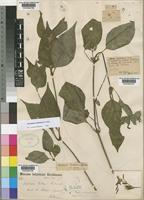
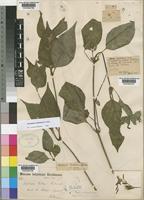
Asystasia buettneri Lindau [family ACANTHACEAE]
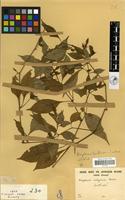
Filed as Asystasia buettneri Lindane [family ACANTHACEAE]
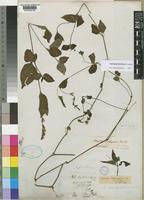
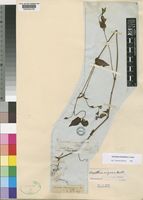
Asystasia buettneri Lindau [family ACANTHACEAE]
Filed as Asystasia buettneri Lindane [family ACANTHACEAE]
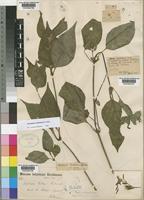
Asystasia buettneri Lindau [family ACANTHACEAE]
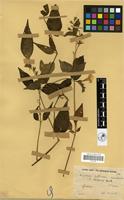
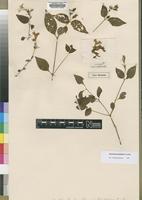
Type of Asystasia dryadum S.Moore [family ACANTHACEAE]
Previous
Next

Name

Identification
Asystasia buettneri Lindau [family ACANTHACEAE ] (stored under name); Asystasia dryadum S.Moore [family ACANTHACEAE ]
Related name
  • Asystasia buettneri
  • Asystasia calycina
  • Asystasia coromandeliana
  • Asystasia dryadum
  • Justicia unrecorded

Flora

Entry for ASYSTASIA Buettneri Lindau [family ACANTHACEAE]
Herbarium
Royal Botanic Gardens, Kew (K)
Collection
Flora of Tropical Africa
Resource Type
Reference Sources
Entry From
Flora of Tropical Africa, page 1, (1900) Author: (By I. H. Burkill and C. B. Clarke.)
Names
ASYSTASIA Buettneri Lindau [family ACANTHACEAE], in Engl. Jahrb. xx. 37. —Lindau in Engl. & Prantl, Pflanzenfam. iv. 3 B. 326.
Information
Hairy. Leaves 5 by 2 in., ovate; petiole 0– 2/3 in. long. Racemes 2 in. long, terminal, one-sided; pedicels scarcely 1/16 in. long; bracts minute. Sepals 5, 1/2 by 1/10 in., linear-oblong, with long white hairs. Corolla white; tube 3/4 in. long. Anthers minutely tailed at the base. Ovary with the style base very hairy.
Distribution
Togoland Upper Guinea Büttner, 260! 283! Kling, 191!
Notes
This is allied to the large forms of A. coromandeliana, Nees (called formerly A. calycina, Benth.), but has larger flowers and very much larger sepals.

Related Materials

  • Terms and Conditions
  • Privacy Policy
  • Cookie Policy
  • Cookie Settings
  • Accessibility
  • Help
  • Contact Us
  • Facebook
  • Twitter
ITHAKA

JSTOR is part of ITHAKA, a not-for-profit organization helping the academic community use digital technologies to preserve the scholarly record and to advance research and teaching in sustainable ways.

©2000-2026 ITHAKA. All Rights Reserved. JSTOR®, the JSTOR logo, JPASS®, Aluka®, and ITHAKA® are registered trademarks of ITHAKA.

╳