JSTOR Global Plants Home
  • Home
  • Browse
  • About
  • Access
  • Account
    • Saved Items
    • Profile
  • Log in

Global Plants

Skip to Main Content
  • JSTOR Global Plants Home
  • Global Plants

    • Browse
    • About
    • Access
    • Account
      • Saved Items
      • Profile
Log in
  • Browse
  • About
  • Access
  • Account
    • Saved Items
    • Profile
Advanced Search

Compilation
Aster tenebrosus

9 Images see all

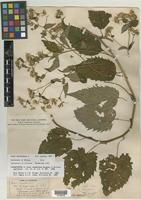
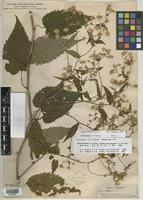
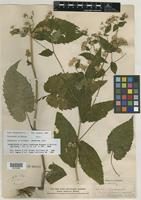
Isolectotype of Aster tenebrosus E. S. Burgess [family ASTERACEAE]
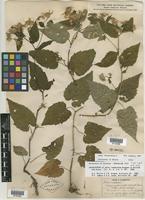
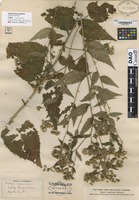
not on sheet of Aster tenebrosus E.S. Burgess [family ASTERACEAE]
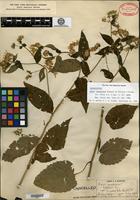
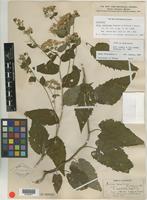
Lectotype of Aster tenebrosus E. S. Burgess [family ASTERACEAE]
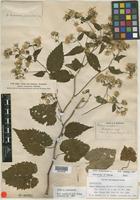
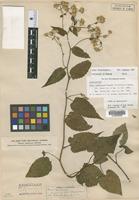
Isolectotype of Aster tenebrosus E. S. Burgess [family ASTERACEAE]
Previous
Next

Name

Identification
Aster tenebrosus E. S. Burgess [family ASTERACEAE ] (stored under name); Verified by E. S. Burgess, 1906
Related name
  • Aster tenebrosus
  • Aster divaricatus
Common name
  • White wood aster, Flora of North America Vol. 20
  • aster à rameaux étalés, Flora of North America Vol. 20

Flora

Entry for Eurybia divaricata (Linnaeus) G. L. Nesom [family ]
Herbarium
Flora of North America (FNA)
Collection
Flora of North America
Resource Type
Reference Sources
Entry From
Flora of North America, Vol 20,
Names
Eurybia divaricata (Linnaeus) G. L. Nesom [family ], Phytologia, 77: 259. 1995
Aster divaricatus Linnaeus [family COMPOSITAE], Sp. Pl., 2: 873. 1753
Aster boykinii E. S. Burgess [family COMPOSITAE]
Aster castaneus E. S. Burgess [family COMPOSITAE]
Aster corymbosus Aiton [family COMPOSITAE]
Aster corymbosus var. alatus W. P. C. Barton [family COMPOSITAE]
Aster excavatus E. S. Burgess [family COMPOSITAE]
Aster flexilis E. S. Burgess [family COMPOSITAE]
Aster stilettiformis E. S. Burgess [family COMPOSITAE]
Aster tenebrosus E. S. Burgess [family COMPOSITAE]
Biotia corymbosa de Candolle [family ]
Biotia corymbosa var. alata (W. P. C. Barton) de Candolle [family ]
Biotia macrophylla de Candolle var. divaricata (Linnaeus) de Candolle [family ]
Eurybia corymbosa (Aiton) Cassini [family ]
Treatment Author(s)
Luc Brouillet
Information
Plants 28–90(–120) cm, in ± dense clones (lacking sterile rosettes); rhizomes branched, elongate, becoming woody. Stems 1, erect, simple, flexuous, glabrate to sparsely puberulent proximally, densely puberulent distally. Leaves basal and cauline, thin, margins sharply serrate, teeth (6–15 per side) mucronulate, ciliate, apices acuminate, abaxial faces sparsely strigose or villous, particularly villous along veins, adaxial glabrescent to sparsely strigose, veins sparsely stipitate-glandular; basal and proximal withering by flowering, petiolate (petioles 20–70 mm), blades ovate, 19–65 × 17–60 mm, basal smaller than proximal, bases cordate (sinuses narrow, curved); cauline petiolate, petioles often ± winged (15–70 mm), blades ovate, 20–200 × 10–100 mm, bases cordate to rounded; distal (arrays) usually sessile, sometimes subpetiolate, blades ovate to lanceolate, 5–20 × 1–8 mm, bases rounded. Heads 4–50(–100+) in ± flat-topped corymbiform arrays. Peduncles to 1.5 cm, densely hairy, eglandular; bracts 0(–2). Involucres cylindro-campanulate, 4.2–6 mm, much shorter than pappi. Phyllaries 25–30 in 4–5 series, inner purplish distally, oblong (outer) to lanceolate or linear-lanceolate (inner), strongly unequal, bases indurate, green zones in distal 1/2 (outer) to 1/3 or along distal midveins (inner), margins narrowly scarious, densely fimbriate-ciliate, apices rounded to acute, faces sparsely hairy, sometimes sparsely stipitate-glandular; outer 0.7–1.5 mm wide, lengths seldom more than 2.5 times widths. Ray florets 5–10(–12); corollas white, 6–12 × 1.5–2.2 mm. Disc florets 12–19(–25); corollas yellow, 4.1–4.8(–5.5) mm, abruptly ampliate, tubes (2.3–2.6 mm) longer than campanulate throats (0.9–1.2 mm), lobes reflexed, lanceolate, 0.7–1.4 mm. Cypselae brown, cylindro-obovoid, slightly compressed, 2.6–3.8 mm, ribs 7–10 (tan to stramineous), faces sparsely strigillose; pappi of reddish to cream-colored (fine, barbellulate, sometimes apically ± clavate) bristles 3.7–5 mm, equaling or longer than disc corollas. 2n = 18.
Phenology
jun-aug (summer), sep-nov (fall)
Altitude range
0–1200(–1700) m;
Distribution
introduced in Europe (Netherlands).USA Ala.USA Conn.USA Del.USA D.C.USA Ga.USA Ky.USA MaineUSA Md.USA Mass.USA Mich.USA N.H.USA N.J.USA N.Y.USA N.C.USA OhioUSA Pa.USA R.I.USA S.C.USA Tenn.USA Vt.USA Va.USA W.Va.Canada Ont.Canada Que.
Discussion
Eurybia divaricata is a mainly Appalachian element of the eastern North American deciduous forest. It is often confused with Eurybia chlorolepis (see W. F. Lamboy 1992 for distinction between the two species), E. schreberi, or Symphyotrichum cordifolium. Lamboy provided a map of the species.

Related Materials

  • Terms and Conditions
  • Privacy Policy
  • Cookie Policy
  • Cookie Settings
  • Accessibility
  • Help
  • Contact Us
  • Facebook
  • Twitter
ITHAKA

JSTOR is part of ITHAKA, a not-for-profit organization helping the academic community use digital technologies to preserve the scholarly record and to advance research and teaching in sustainable ways.

©2000-2026 ITHAKA. All Rights Reserved. JSTOR®, the JSTOR logo, JPASS®, Aluka®, and ITHAKA® are registered trademarks of ITHAKA.

╳