JSTOR Global Plants Home
  • Home
  • Browse
  • About
  • Access
  • Account
    • Saved Items
    • Profile
  • Log in

Global Plants

Skip to Main Content
  • JSTOR Global Plants Home
  • Global Plants

    • Browse
    • About
    • Access
    • Account
      • Saved Items
      • Profile
Log in
  • Browse
  • About
  • Access
  • Account
    • Saved Items
    • Profile
Advanced Search

Compilation
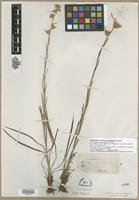
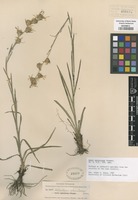
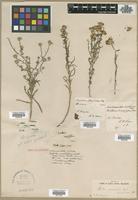
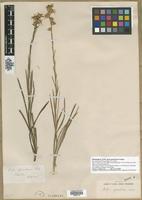
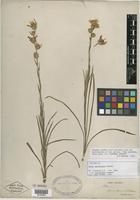
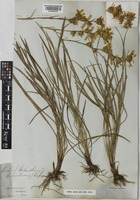
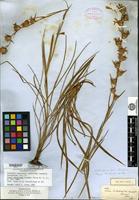
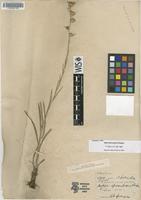
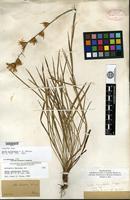
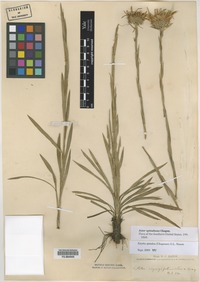
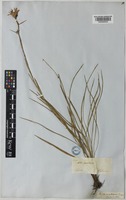
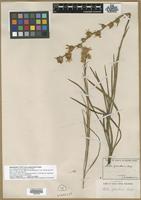
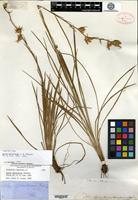
Aster spinulosus

16 Images see all

Filed as Aster spinulosus Chapm. [family ASTERACEAE]
Original material of Heleastrum spinulosum (Chapm.) Greene [family ASTERACEAE]
Type of Diplopappus spinulosus Hook. & Arn. [family COMPOSITAE]
Type? of Aster spinulosus Nutt. [family ASTERACEAE]
Type? of Aster spinulosus Chapm. [family ASTERACEAE]
Syntype of Diplopappus spinulosa Hook. & Arn. [family COMPOSITAE]
Isotype of Aster spinulosus Chapm. [family ASTERACEAE]
Type of Diplopappus spinulosus Hook. & Arn. [family COMPOSITAE]
Aster spinulosus Chapm. [family COMPOSITAE]
Type? of Aster spinulosus Chapman [family ASTERACEAE]
Type ? of Aster spinulosus Chapm. [family ASTERACEAE]
Type? of Aster spinulosus Chapman [family ASTERACEAE]
Isolectotype of Aster spinulosus Chapm. [family ASTERACEAE]
Aster spinulosus Chapm. [family COMPOSITAE]
Type? of Aster spinulosus Chapm. [family ASTERACEAE]
Type? of Aster spinulosus Chapman [family ASTERACEAE]
Previous
Next

Name

Identification
Aster spinulosus Chapman [family ASTERACEAE ] (stored under name); Verified by Chapm., 1860
Related name
  • Dieteria sessiliflora
  • Eurybia spinulosa
  • Dieteria spinulosa
  • Aster spinulosus
Common name
  • Apalachicola aster, Flora of North America Vol. 20

Flora

Entry for Eurybia spinulosa (Chapman) G. L. Nesom [family ]
Herbarium
Flora of North America (FNA)
Collection
Flora of North America
Resource Type
Reference Sources
Entry From
Flora of North America, Vol 20,
Names
Eurybia spinulosa (Chapman) G. L. Nesom [family ], Phytologia, 77: 262. 1995
Aster spinulosus Chapman [family COMPOSITAE], Fl. South. U.S., 199. 1860
Heleastrum spinulosum (Chapman) Greene [family ]
Treatment Author(s)
Luc Brouillet
Information
Plants 20–70 cm; solitary or clumped, eglandular; rhizomes short and stout or elongate and wiry, or caudices. Stems 1(–3+), erect, simple, ± villous to glabrescent. Leaves strongly basal and cauline, linear, firm, ± fleshy, margins indurate, ± revolute, entire to spinose-serrate, smooth to remotely scabridulous or ciliate, spines indurate, finely parallel-veined with evident midribs, apices acute, revolute-indurate, faces glabrescent (minute hairs bulbous at base, threadlike distally); basal and proximal cauline persistent, sessile or petiolate (narrowing between bases and blades), blades lance-linear to linear, 100–300 × (1–)2–5 mm, bases ± marcescent, sheathing, ciliate; cauline sessile, blades linear to lance-linear, 20–95 × 3–5 mm, progressively reduced distally, bases rounded- to auriculate-clasping, adaxial faces sparsely villous in distal, the distal subtending heads boat-shaped. Heads 3–16+ in spiciform to narrow, racemiform arrays. Peduncles 0 (usually) or ascending, 1–17+ mm, sparsely villosulous; bracts 0–2, ascending, lanceolate, bases not indurate, rounded (boat-shaped), margins ciliate, faces glabrous. Involucres campanulate, 6.5–9.7 mm, shorter than pappi. Phyllaries 20–40 in 4–5 series, green, often ± involute in distal 1/2–2/3 (outer) to 1/3 (inner), densely nerved (nerves not thickened), lanceolate, unequal, coriaceous, bases indurate, rounded (outer), margins entire, indurate (outer) or scarious and often purplish (inner), sparsely ciliate, apices acute to acuminate, indurate, apiculate, adaxial faces glabrous or sparsely villosulous. Ray florets 8–17; laminae pale purple to purplish white, 10–16(–20) × 1–1.8 mm. Disc florets 18–30; corollas yellow, 5.5–7.6 mm, barely ampliate, tubes much shorter than tubular-funnelform throats (1–2 mm), lobes erect, lanceolate, 0.65–1 mm. Cypselae brown to gray-brown, fusiform, ± compressed, 2–2.5 mm, ribs 7–10, faces ± strigillose; pappi of burnt-orange (coarse, sometimes apically clavellate) bristles 6–7.5 mm, as long as or slightly longer than disc corollas.
Conservation Status
of conservation concern;
Phenology
may (spring), jun-jul (summer)
Altitude range
0–50 m;
Distribution
USA Fla.
Discussion
Eurybia spinulosa is known only from the Apalachicola River drainage of the Florida panhandle; it is of conservation concern in Florida and is a facultative wetland indicator. Much of its habitat has now been lost to development (R. Kral 1983, vol. 2). Kral published a map of the species.

Related Materials

  • Terms and Conditions
  • Privacy Policy
  • Cookie Policy
  • Cookie Settings
  • Accessibility
  • Help
  • Contact Us
  • Facebook
  • Twitter
ITHAKA

JSTOR is part of ITHAKA, a not-for-profit organization helping the academic community use digital technologies to preserve the scholarly record and to advance research and teaching in sustainable ways.

©2000-2026 ITHAKA. All Rights Reserved. JSTOR®, the JSTOR logo, JPASS®, Aluka®, and ITHAKA® are registered trademarks of ITHAKA.

╳