JSTOR Global Plants Home
  • Home
  • Browse
  • About
  • Access
  • Account
    • Saved Items
    • Profile
  • Log in

Global Plants

Skip to Main Content
  • JSTOR Global Plants Home
  • Global Plants

    • Browse
    • About
    • Access
    • Account
      • Saved Items
      • Profile
Log in
  • Browse
  • About
  • Access
  • Account
    • Saved Items
    • Profile
Advanced Search

Compilation
Aster petiolatus

5 Images see all

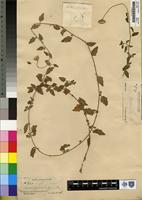
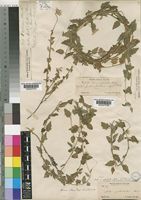
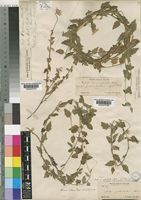
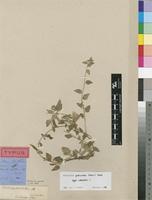
Syntype of Aster petiolatus Harv. [family ASTERACEAE]
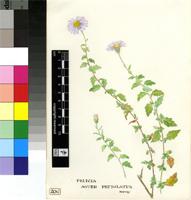
Felicia petiolata (Harv.) N.E.Br. [family COMPOSITAE]
Aster petiolatus Harv.
Type of Felicia petiolata (Harv.) N.E.Br. [family COMPOSITAE]
Type of Aster petiolatus Harv. [family ASTERACEAE]
Previous
Next

Name

Identification
Aster petiolatus Harv. [family ASTERACEAE ]
Related name
  • Aster petiolatus

Flora

Entry for ASTER petiolatus Harv. [family COMPOSITAE]
Herbarium
Royal Botanic Gardens, Kew (K)
Collection
Flora Capensis
Resource Type
Reference Sources
Entry From
Flora Capensis, Vol 3, page 44, (1894) Author: (By W. H. HARVEY).
Names
ASTER petiolatus Harv. [family COMPOSITAE], Thes. t. 154
Information
many-stemmed, procumbent or pendulous; stems very long, subsimple, pubescent; leaves alternate, sub-distant, petiolate, ovate, coarsely 3–5-toothed, membranous, veiny, dotted; pedunc. terminal, naked, 1-headed; invol. scales sub-biseriate, equal, pilose, lanceolate; ovary puberulous; pappus rough. Stems 1–2 feet or more long, slender, terete, simple, with or without a few short, lateral ramuli, ending in a naked, 1-headed peduncle. Leaves 3/4–1 inch long, 4–6 lines wide, on each side 2-toothed, with a deltoid, terminal tooth, the teeth mucronulate. An interesting species, with the general aspect of A. Cymbalariæ, but with alternate, distant leaves.
Distribution
SOUTH AFRICA District of Albert, and in Basutuland, hanging over precipitous rocks, T. Cooper! 658 and 727. (Herb. D., Hk.)

Related Materials

  • Terms and Conditions
  • Privacy Policy
  • Cookie Policy
  • Cookie Settings
  • Accessibility
  • Help
  • Contact Us
  • Facebook
  • Twitter
ITHAKA

JSTOR is part of ITHAKA, a not-for-profit organization helping the academic community use digital technologies to preserve the scholarly record and to advance research and teaching in sustainable ways.

©2000-2026 ITHAKA. All Rights Reserved. JSTOR®, the JSTOR logo, JPASS®, Aluka®, and ITHAKA® are registered trademarks of ITHAKA.

╳