JSTOR Global Plants Home
  • Home
  • Browse
  • About
  • Access
  • Account
    • Saved Items
    • Profile
  • Log in

Global Plants

Skip to Main Content
  • JSTOR Global Plants Home
  • Global Plants

    • Browse
    • About
    • Access
    • Account
      • Saved Items
      • Profile
Log in
  • Browse
  • About
  • Access
  • Account
    • Saved Items
    • Profile
Advanced Search

Compilation
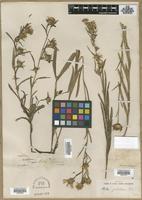
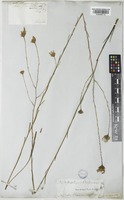
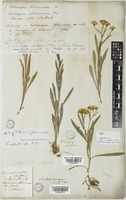
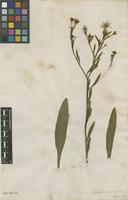
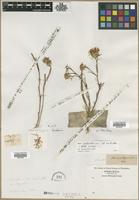
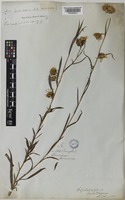
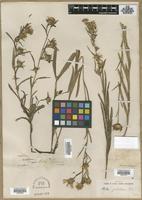
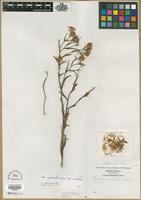
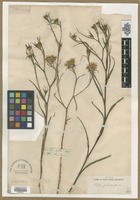
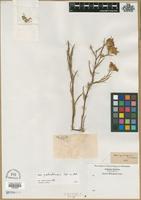
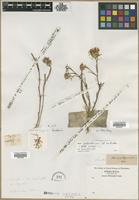
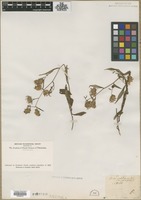
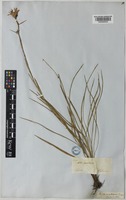
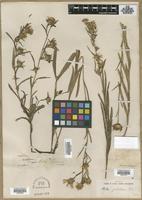
Aster paludosus

14 Images see all

Filed as Aster grandiflorus Nutt. [family NOT ON SHEET]
Aster chapmanii Torr. & A.Gray [family COMPOSITAE]
Aster ptarmicoides (Nees) Torr. & A.Gray [family COMPOSITAE]
Filed as Aster paludosus Aiton [family ASTERACEAE]
Filed as Aster sp. [family ASTERACEAE]
Aster paludosus Aiton [family COMPOSITAE]
Filed as Aster grandiflorum Nutt. [family ASTERACEAE]
Filed as Aster sp. [family ASTERACEAE]
Filed as Aster paludosus Aiton [family ASTERACEAE]
Filed as Aster sp. [family ASTERACEAE]
Filed as Aster paludosus Aiton [family ASTERACEAE]
Aster spinulosus Chapm. [family COMPOSITAE]
Filed as Aster grandiflorus Nutt. [family ASTERACEAE]
Previous
Next

Name

Identification
Aster paludosus Aiton [family ASTERACEAE ] (stored under name); Verified by Not on sheet,
Related name
  • Aster grandiflorum
  • Aster paludosus
  • Aster sp.
  • Aster grandiflorus
Common name
  • Southern swamp aster, Flora of North America Vol. 20
  • Single-stemmed bog or Southern prairie aster, Flora of North America Vol. 20

Flora

Entry for Eurybia hemispherica (Alexander) G. L. Nesom [family ]
Herbarium
Flora of North America (FNA)
Collection
Flora of North America
Resource Type
Reference Sources
Entry From
Flora of North America, Vol 20,
Names
Eurybia hemispherica (Alexander) G. L. Nesom [family ], Phytologia, 77: 260. 1995
Aster hemisphericus Alexander [family COMPOSITAE], in J. K. Small, Man. S.E. Fl., 1391, 1509. 1933
Aster gattingeri Alexander [family COMPOSITAE]
Aster paludosus Aiton subsp. hemisphericus (Alexander) Cronquist [family COMPOSITAE]
Aster paludosus var. hemisphericus (Alexander) Waterfall [family COMPOSITAE]
Aster pedionomus Alexander [family COMPOSITAE]
Aster verutifolius Alexander [family COMPOSITAE]
Heleastrum hemisphaericum (Alexander) Shinners [family ]
Treatment Author(s)
Luc Brouillet
Information
Plants 20–100 cm; in clones of scattered clumps, eglandular; rhizomes creeping, tangled, scaly, often becoming thickly woody, or thick, woody caudices. Stems 1–4, erect or ascending, often reddish, simple, straight to stict, proximally glabrous, distally ± sparsely strigillose (at least arrays). Leaves basal and cauline, blades with adaxial midvnerves raised (grooved abaxially), sometimes with 1–2 ± parallel pairs of more obscure secondary nerves (veins obscure), lance-ovate or linear-lanceolate to linear, coriaceous, margins usually entire, sometimes remotely spinulose-toothed, often revolute apically, indurate, scabrous, apices acute, acuminate or obtuse, indurate, abaxial faces glabrous or glabrate, adaxial sparsely scabridulous (hairs minuscule, basal “bulb” bearing terminal seta); basal withering by flowering, petioles marcescent, ± winged; proximal petiole bases sheathing, blades 50–175 × 3–12 mm, bases attenuate or cuneate; cauline progressively sessile and reduced distally, 25–125(–150) × 1.5–8 mm, bases clasping to subclasping. Heads 1–35+ in elongate, usually racemiform to spiciform, sometimes ± flat-topped, corymbiform arrays, branches robust, ascending. Peduncles 2–80 mm or subsessile; bracts 0–4, linear-lanceolate, 10–35 × 0.5–2 mm, mucronulate, grading into phyllaries. Involucres hemispheric, 8–12(–15) mm, shorter than pappi. Phyllaries 48–64 in 4–6 series, oblong-lanceolate or lanceolate (outer) to oblong or lanceolate-linear (inner), unequal, coriaceous (outer) to membranous (inner), bases indurate, rounded (outer), green zones slightly expanded, in 1/2–4/5 distal portions (outer), margins indurate, scabrous or scabroso-ciliate, edges and apices purplish in inner, apices ascending or squarrose to strongly reflexed, acute to acuminate, mucronulate, faces glabrous. Ray florets 15–30; corollas usually violet-purple, seldom white, (10–)13–15(–20) × 1.3–3 mm. Disc florets (40–)52–80+; corollas light yellow turning brown, 5.8–6.6 mm, ± ampliate, tubes (1.7–2.2 mm) shorter than narrowly campanulate throats (3.4–4 mm), lobes erect, lanceolate and cuspidate or acuminate, 0.7–1.2 mm. Cypselae brown, cylindro-obovoid to fusiform, slightly flattened, 2.6–3.7 mm, ribs 9–16 (stramineous to olive, crowded), faces ± densely strigillose; pappi of tawny to cinnamom (coarse, rigid, sometimes apically clavellate) bristles 6–7.5 mm, equaling disc corollas. 2n = 18, 36.
Phenology
jun-aug (summer), sep-nov (fall)
Altitude range
0–800 m;
Distribution
USA Ala.USA Ark.USA Fla.USA Ga.USA Kans.USA Ky.USA La.USA Miss.USA Mo.USA Okla.USA Tenn.USA Tex.
Discussion
Eurybia hemispherica is of conservation concern in Florida, Georgia, and Kentucky. A. Cronquist (1980) stated that this species and E. paludosa are difficult to separate but geographically distinct (see under 21. E. paludosa). The two species are often treated as infraspecific taxa of E. paludosa. Eurybia hemispherica is diploid and tetraploid, while E. paludosa has been reported only as a tetraploid. There is great morphologic variation in E. hemispherica, from slender individuals, reminiscent of E. paludosa, to very robust, distinctive plants. Arrays in E. hemispherica are usually racemiform; well-developed ones may be distally corymbiform and resemble the arrays of E. paludosa, although the proximal part remains somewhat racemiform (i.e., proximal heads borne on short, simple branches, or tufts of leaves are present). Phyllaries in E. hemispherica may be superficially similar to those of E. paludosa, but often the outer phyllaries are similar to peduncular bracts (and in fact may have been recruited from such), being more triangular, coriaceous, and parallel-veined, a feature never encoutered in E. paludosa; such phyllaries strongly resemble those of E. eryngiifolia. Other characters may help distinguish the two species. Eurybia paludosa usually has thin peduncles, hirtello-puberulent to villoso-hirsute peduncles and phyllaries, and ciliate phyllary margins along the indurate bases. In E. hemispherica, the pedicels are thin to usually robust, when present, the phyllaries are glabrous to sparsely strigillose, and the phyllary margins along the indurate bases are scabrous or scabroso-ciliate, not long-ciliate.

Related Materials

  • Terms and Conditions
  • Privacy Policy
  • Cookie Policy
  • Cookie Settings
  • Accessibility
  • Help
  • Contact Us
  • Facebook
  • Twitter
ITHAKA

JSTOR is part of ITHAKA, a not-for-profit organization helping the academic community use digital technologies to preserve the scholarly record and to advance research and teaching in sustainable ways.

©2000-2026 ITHAKA. All Rights Reserved. JSTOR®, the JSTOR logo, JPASS®, Aluka®, and ITHAKA® are registered trademarks of ITHAKA.

╳