JSTOR Global Plants Home
  • Home
  • Browse
  • About
  • Access
  • Account
    • Saved Items
    • Profile
  • Log in

Global Plants

Skip to Main Content
  • JSTOR Global Plants Home
  • Global Plants

    • Browse
    • About
    • Access
    • Account
      • Saved Items
      • Profile
Log in
  • Browse
  • About
  • Access
  • Account
    • Saved Items
    • Profile
Advanced Search

Compilation
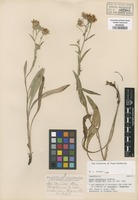
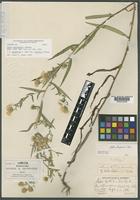
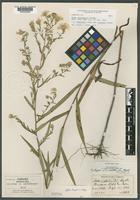
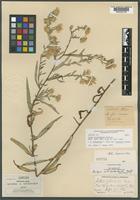
Aster osterhoutii

5 Images see all

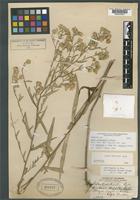
Holotype of Aster osterhoutii Rydb. [family ASTERACEAE]
Isotype of Aster osterhoutii Rydb. [family ASTERACEAE]
Paratype of Aster osterhoutii Rydb. [family ASTERACEAE]
Isotype of Aster osterhoutii Rydb. [family ASTERACEAE]
Paratype of Aster osterhoutii Rydb. [family ASTERACEAE]
Previous
Next

Name

Identification
Isotype of Aster osterhoutii Rydb. [family ASTERACEAE ] (stored under name); Verified by Not on Sheet, Aster hesperius A. Gray [family ASTERACEAE ] Verified by Almut G. Jones, 1982 Aster hesperius A. Gray [family ASTERACEAE ] Verified by Milton L. Dean, 1963 Aster coerulescens DC. [family ASTERACEAE ] Verified by Arthur Cronquist, 1940 Isotype of Aster osterhoutii Rydb. [family ASTERACEAE ] Verified by Not on Sheet,
Related name
  • Aster coerulescens
  • Aster hesperius
  • Aster osterhoutii

Flora

Entry for Symphyotrichum lanceolatum (Willdenow) G. L. Nesom var. hesperium (A. Gray) G. L. Nesom [family ]
Herbarium
Flora of North America (FNA)
Collection
Flora of North America
Resource Type
Reference Sources
Entry From
Flora of North America, Vol 20,
Names
Symphyotrichum lanceolatum (Willdenow) G. L. Nesom var. hesperium (A. Gray) G. L. Nesom [family ], Phytologia, 77: 284. 1995
Aster hesperius A. Gray [family COMPOSITAE], in A. Gray et al., Syn. Fl. N. Amer., 1(2): 192. 1884
Aster coerulescens de Candolle var. wootonii (Greene) Wiegand [family COMPOSITAE]
Aster durus Lunell [family COMPOSITAE]
Aster fluvialis Osterhout [family COMPOSITAE]
Aster hesperius var. wootonii Greene [family COMPOSITAE]
Aster lanceolatus Willdenow subsp. hesperius (A. Gray) Semple & Chmielewski [family COMPOSITAE]
Aster lautus Lunell [family COMPOSITAE]
Aster osterhoutii Rydberg [family COMPOSITAE]
Aster wootonii (Greene) Greene [family COMPOSITAE]
Symphyotrichum hesperium (A. Gray) Á. Löve and D. Löve [family ]
Treatment Author(s)
Luc Brouillet
John C. Semple
Geraldine A. Allen
Kenton L. Chambers
Scott D. Sundberg†
Information
Stems stout, glabrous or at most hairy in lines. Leaf blades linear-lanceolate or -oblanceolate, proximal cauline margins shallowly serrate, mid to distal entire. Heads 1–100+, borne singly or congested at ends of lateral branches, usually subtended by large foliaceous bracts. Involucres 4–7.2 mm. Phyllaries: outer 2.6–6.3 × 0.4–1 mm, inner 4–7.4 × 0.2–1.1 mm, outer 2/3+ length of inner. Ray florets 18–45; corollas usually pale to dark purplish blue, sometimes white, laminae 4.2–10.1 mm. Disc florets 18–52; corollas 3.3–5.7 mm, limbs 2–3.8 mm, lobes 0.5–1.1 mm. Cypselae 0.7–2.7; pappi 3.7–6.4 mm. 2n = 64.
Phenology
jul-aug (summer), sep-oct (fall)
Altitude range
10–2700 m;
Distribution
Mexico (Baja California).Mexico (Chihuahua).Mexico (Sonora).USA Ariz.USA Calif.USA Colo.USA IdahoUSA IowaUSA Kans.USA Minn.USA Mont.USA Nebr.USA Nev.USA N.Mex.USA N.Dak.USA Okla.USA Oreg.USA S.Dak.USA Tex.USA UtahUSA Wash.USA Wis.USA Wyo.Canada Alta.Canada B.C.Canada Man.Canada N.W.T.Canada Ont.Canada Que.Canada Sask.
Discussion
Variety hesperium is present at the northeastern limit of its range in Quebec only on the clays of the southern James Bay; a report of introduction in the Gatineau area is attributable to Symphyotrichum robynsianum. In north-central Ontario, it is found mainly in areas of clay deposits or in calcareous stream valleys, but not in the Clay Belt, reaching the southern James Bay. This variety has been treated mostly as a distinct species in floras. Character ranges overlap considerably with var. lanceolatum, and it is often difficult to distinguish the two entities where their distributions overlap. In areas of sympatry, the two taxa hybridize to form septaploid plants (2n = 56).

Related Materials

  • Terms and Conditions
  • Privacy Policy
  • Cookie Policy
  • Cookie Settings
  • Accessibility
  • Help
  • Contact Us
  • Facebook
  • Twitter
ITHAKA

JSTOR is part of ITHAKA, a not-for-profit organization helping the academic community use digital technologies to preserve the scholarly record and to advance research and teaching in sustainable ways.

©2000-2026 ITHAKA. All Rights Reserved. JSTOR®, the JSTOR logo, JPASS®, Aluka®, and ITHAKA® are registered trademarks of ITHAKA.

╳