JSTOR Global Plants Home
  • Home
  • Browse
  • About
  • Access
  • Account
    • Saved Items
    • Profile
  • Log in

Global Plants

Skip to Main Content
  • JSTOR Global Plants Home
  • Global Plants

    • Browse
    • About
    • Access
    • Account
      • Saved Items
      • Profile
Log in
  • Browse
  • About
  • Access
  • Account
    • Saved Items
    • Profile
Advanced Search

Compilation
Aster lindleyanus

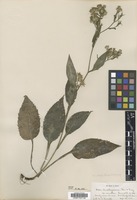
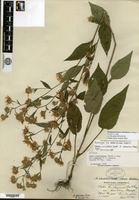
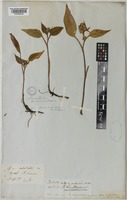
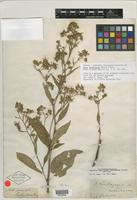
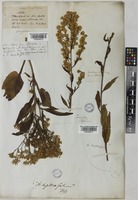
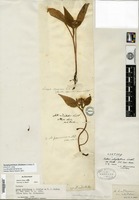
14 Images see all

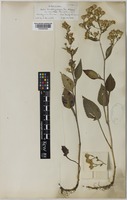
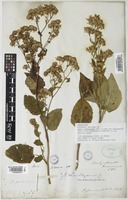
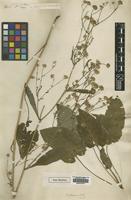
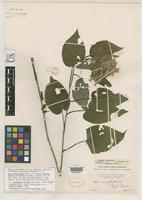
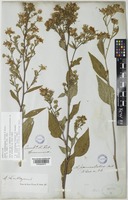
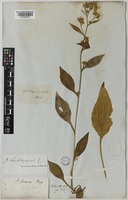
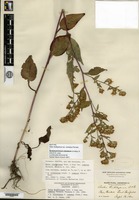
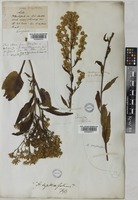
Aster lindleyanus Torr. & A.Gray var. comatus Fernald [family COMPOSITAE]
Paratype of Aster lindleyanus Torr. & Gray var. [family COMPOSITAE]
Type of Aster paniculatus Sol. [family ASTERACEAE]
Filed as Aster lindleyanus var. eximius Burgess, E.S. 1898 [family ASTERACEAE]
Type? of Aster lindleyanus Torr. & Gray var. comatus Fernald [family ASTERACEAE]
Holotype of Aster lindleyanus Torrey & A. Gray var. comatus Fernald [family ASTERACEAE]
Aster lindleyanus unrecorded var. ciliolatus (Lindl.) A.Gray [family COMPOSITAE]
Lectotype of Aster lindleyanus Torr. & A. Gray [family ASTERACEAE]
Syntype of Aster lindleyanus Torrey & Gray [family COMPOSITAE]
Aster lindleyanus Torr. & A.Gray [family COMPOSITAE]
Isotype of Aster lindleyanus Torrey & A. Gray var. comatus Fernald [family ASTERACEAE]
Aster lindleyanus Torr. & A.Gray [family COMPOSITAE]
Isotype of Aster ciliolatus Lindley [family ASTERACEAE]
Previous
Next

Name

Identification
Aster lindleyanus Torr. & A.Gray [family ASTERACEAE ] (stored under name); Aster paniculatus Sol. [family ASTERACEAE ]
Related name
  • Aster paniculatus
  • Aster lindleyanus
Common name
  • Lindley’s or fringed blue aster, Flora of North America Vol. 20
  • aster ciliolé, Flora of North America Vol. 20

Flora

Entry for Symphyotrichum ciliolatum (Lindley) Á. Löve & D. Löve [family ]
Herbarium
Flora of North America (FNA)
Collection
Flora of North America
Resource Type
Reference Sources
Entry From
Flora of North America, Vol 20,
Names
Symphyotrichum ciliolatum (Lindley) Á. Löve & D. Löve [family ], Taxon, 31: 359. 1982
Aster ciliolatus Lindley [family COMPOSITAE], in W. J. Hooker, Fl. Bor.-Amer., 2: 9. 1834
Aster ciliolatus var. comatus (Fernald) A. G. Jones [family COMPOSITAE]
Aster lindleyanus Torrey & A. Gray [family COMPOSITAE]
Aster wilsonii Rydberg [family COMPOSITAE]
Treatment Author(s)
Luc Brouillet
John C. Semple
Geraldine A. Allen
Kenton L. Chambers
Scott D. Sundberg†
Information
Perennials, (10–)20–120 cm, colonial or cespitose; usually long-rhizomatous, sometimes with branched caudices. Stems 1–3+, erect (straight to ± flexuous), glabrate to sparsely hirsute or strigillose, especially distally. Leaves thin, margins coarsely, sharply serrate to crenate-serrate or serrulate, ciliate to scabrous, apices acute or acuminate, mucronulate, abaxial faces glabrate to sparsely hirsute, midveins usually densely hirsute, sometimes glabrous, adaxial glabrous or glabrate to scabrellous; basal usually withering by flowering (sometimes persistent on small plants), long-petiolate (petioles slightly winged, sheathing, ciliate), blades ovate, (24–)40–120(–270) × 15–70 mm, bases usually shallowly cordate, sometimes rounded; proximal cauline often withering by flowering, winged-petiolate, blades ovate to oblanceolate or lanceolate, (24–)60–150 × (10–)20–60 mm, reduced distally, bases subcordate to cuneate; distal sessile or sometimes subsessile (petioles widely-winged), blades lance-ovate to linear-lanceolate or linear, 18–75 × (2–)5–25 mm, bases cuneate, sometimes ± clasping, margins serrulate or entire. Heads [(6–)13–50(–100+)] in open, paniculiform arrays, branches ascending. Peduncles 0.2–1.5+ cm, unequal, reduced distally, ± hirsutulous, bracts 0–4, subulate or linear. Involucres campanulate, (4–)5–6.5 mm. Phyllaries in 4–5 series, narrowly oblong-lanceolate to oblong-oblanceolate or linear-oblanceolate (innermost), ± unequal, bases indurate 1/3–2/3, margins narrowly scarious, erose, hyaline or infrequently purplish, sparsely ciliolate, green zones lanceolate to linear-lanceolate or linear, apices acuminate to long-acuminate, faces glabrous. Ray florets (12–)14–20; corollas pale to deep blue or bluish purple, laminae (8.3–)10–15 × 1–2.3 mm. Disc florets 14–25(–29); corollas yellow becoming reddish purple, 4.3–6.4 mm, tubes shorter than funnelform throats, lobes narrowly triangular, 0.5–1.1 mm. Cypselae yellowish white, obovoid, compressed, 1–2 mm, 5–6-nerved, faces glabrate to sparsely strigillose; pappi white to pinkish, 3–6 mm. 2n = 48.
Phenology
jul-aug (summer), sep-oct (fall)
Altitude range
0–2000+ m;
Distribution
USA Ill.USA MaineUSA Mass.USA Mich.USA Minn.USA Mont.USA N.H.USA N.Y.USA N.Dak.USA S.Dak.USA Vt.USA Wis.USA Wyo.Canada Alta.Canada B.C.Canada Man.Canada N.B.Canada Nfld. and Labr. (Nfld.)Canada N.W.T.Canada N.S.Canada Ont.Canada Que.Canada Sask.Canada Yukon
Discussion
Symphyotrichum ciliolatum sporadically hybridizes with S. laeve var. laeve or var. geyeri in their areas of overlap, notably across the Canadian prairies and in south-central Ontario (Manitoulin Island, Bruce Peninsula). It also hybridizes with S. novi-belgii var. novi-belgii in the Gulf of St. Lawrence area [Symphyotrichum ×subgeminatum (Fernald) G. L. Nesom; syn. Aster subgeminatus (Fernald) B. Boivin]. Aster ciliolatus forma comatus Fernald is densely ciliolate along the midnerves and represents an extreme of the variation found in the species.

Related Materials

  • Terms and Conditions
  • Privacy Policy
  • Cookie Policy
  • Cookie Settings
  • Accessibility
  • Help
  • Contact Us
  • Facebook
  • Twitter
ITHAKA

JSTOR is part of ITHAKA, a not-for-profit organization helping the academic community use digital technologies to preserve the scholarly record and to advance research and teaching in sustainable ways.

©2000-2026 ITHAKA. All Rights Reserved. JSTOR®, the JSTOR logo, JPASS®, Aluka®, and ITHAKA® are registered trademarks of ITHAKA.

╳