JSTOR Global Plants Home
  • Home
  • Browse
  • About
  • Access
  • Account
    • Saved Items
    • Profile
  • Log in

Global Plants

Skip to Main Content
  • JSTOR Global Plants Home
  • Global Plants

    • Browse
    • About
    • Access
    • Account
      • Saved Items
      • Profile
Log in
  • Browse
  • About
  • Access
  • Account
    • Saved Items
    • Profile
Advanced Search

Compilation
Aster integrifolius

8 Images see all

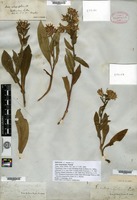
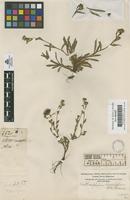
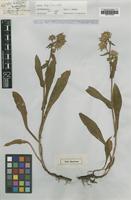
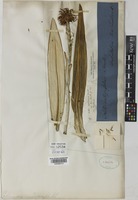
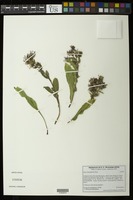
Isotype of Aster integrifolius Nuttall [family ASTERACEAE]
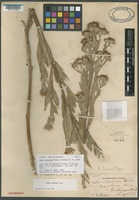
Syntype of Aster jessicae Piper [family ASTERACEAE]
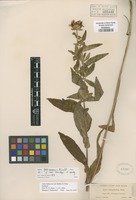
Syntype of Aster foliaceus Lindl. ex DC. var. burkei A. Gray [family ASTERACEAE]
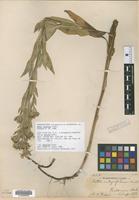
Type of Aster jessicae Piper [family ASTERACEAE]
Original material of Xanthocephalum linearifolium (DC.) Greenm. [family COMPOSITAE]
Type of Aster integrifolius Nutt. [family ASTERACEAE]
Celmisia coriacea Hook.f. [family ASTERACEAE]
Aster integrifolius Nutt. [family ASTERACEAE]
Previous
Next

Name

Identification
Aster integrifolius Nutt. [family ASTERACEAE ] (stored under name);
Related name
  • Xanthocephalum linearifolium
  • Aster jessicae
  • Aster integrifolius
Common name
  • Thickstem aster, Flora of North America Vol. 20

Flora

Entry for Eurybia integrifolia (Nuttall) G. L. Nesom [family ]
Herbarium
Flora of North America (FNA)
Collection
Flora of North America
Resource Type
Reference Sources
Entry From
Flora of North America, Vol 20,
Names
Eurybia integrifolia (Nuttall) G. L. Nesom [family ], Phytologia, 77: 260. 1995
Aster integrifolius Nuttall [family COMPOSITAE], Trans. Amer. Philos. Soc., n. s., 7: 291. 1840
Aster amplexifolius Rydberg [family COMPOSITAE]
Treatment Author(s)
Luc Brouillet
Information
Plants 15–70 cm, usually in clumps, sometimes in large clones, densely long-stipitate-glandular distally; woody, branched, thick, usually short rhizomes or short caudices. Stems 1–3+, straight, stout, glabrous or sparsely hispid proximally, distally ± hispido-villous. Leaves basal and cauline, firm, margins entire, strigoso-ciliate, distal also stipitate-glandular, apices mucronate, faces glabrous or glabrescent to ± densely hispid or strigose (then ± scabrous), particularly on veins, midveins sometimes notably hispido-villous, proximally ± sparsely, distally ± densely stipitate-glandular; basal and proximal cauline long-petiolate (to 100+ mm), petioles ± broadly winged, bases sheathing or auriculate-clasping, blades ovate-lanceolate to narrowly elliptic or oblanceolate, 33–180+ × 11–50 mm, bases attenuate, apices acute or obtuse to rounded; mid sessile, blades oblong or oblanceolate to oblong-lanceolate, lanceolate, or lance-ovate, 30–140 × 7–27 mm, gradually reduced distally, bases auriculate-clasping, apices usually acute, rarely obtuse; distal (arrays) narrowly ovate to lanceolate, 9–50 × 3–20 mm. Heads 3–41+ in elongate, racemo-corymbiform arrays, branches ascending. Peduncles ± densely long-stipitate-glandular; bracts 0(–2), densely stipitate-glandular. Involucres campanulate, 8–14 mm, much shorter than pappi. Phyllaries 25–40 in 3–4 series, inner often purplish, oblong-lanceolate (outer) to linear-lanceolate (inner), ± unequal, membranous, bases pale, indurate, sometimes rounded (outer), distally foliaceous (3/4+ in outer, seldom to base, to 1/5 in inner) and wider than bases, margins narrowly scarious (non-foliaceous parts), purplish (at least inner), ciliate and/or stipitate-glandular (along foliaceous parts), apices squarrose, usually acute, sometimes acuminate, faces densely stipitate-glandular. Ray florets 8–27; corollas violet-purple, 10–15 × 1.2–2.2 mm. Disc florets 20–50; corollas pale yellow turning pinkish or purplish, 6–7.8 mm, slightly ampliate, tubes much shorter than cylindric to narrowly funnelform throats, lobes erect, lanceolate, 0.6–0.8 mm. Cypselae greenish stramineous, fusiform-obconic, slightly compressed, 4.2–4.7 mm, ribs 7–10, faces ± densely hirtellous; pappi of stramineous to tawny bristles 7–8 mm, ± equaling disc corollas. 2n = 18.
Phenology
jun-aug (summer), sep-nov (fall)
Altitude range
1600–3200 m;
Distribution
USA Calif.USA IdahoUSA Mont.USA Nev.USA Oreg.USA UtahUSA Wash.USA Wyo.
Discussion
Eurybia integrifolia is found in mountain ranges bordering the Basin and Range Province, from the Sierra Nevada and Cascade ranges in the west to the Rocky Mountains and Colorado Plateau in the east.

Related Materials

  • Terms and Conditions
  • Privacy Policy
  • Cookie Policy
  • Cookie Settings
  • Accessibility
  • Help
  • Contact Us
  • Facebook
  • Twitter
ITHAKA

JSTOR is part of ITHAKA, a not-for-profit organization helping the academic community use digital technologies to preserve the scholarly record and to advance research and teaching in sustainable ways.

©2000-2026 ITHAKA. All Rights Reserved. JSTOR®, the JSTOR logo, JPASS®, Aluka®, and ITHAKA® are registered trademarks of ITHAKA.

╳