JSTOR Global Plants Home
  • Home
  • Browse
  • About
  • Access
  • Account
    • Saved Items
    • Profile
  • Log in

Global Plants

Skip to Main Content
  • JSTOR Global Plants Home
  • Global Plants

    • Browse
    • About
    • Access
    • Account
      • Saved Items
      • Profile
Log in
  • Browse
  • About
  • Access
  • Account
    • Saved Items
    • Profile
Advanced Search

Compilation
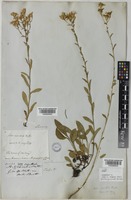
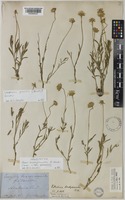
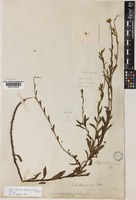
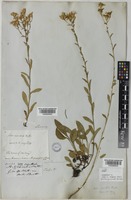
Aster gracilis

11 Images see all

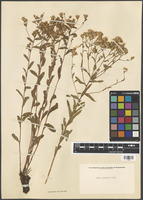
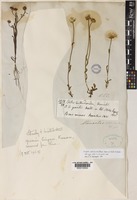
Aster gracilis Nutt. [family COMPOSITAE]
Camptacra brachycomoides (F.Muell.) N.T.Burb. [family COMPOSITAE]
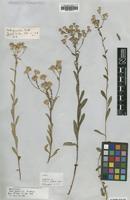
Erigeron bellidioides (Buch.-Ham.ex D.Don) C.B. Clar [family COMPOSITAE]
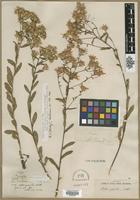
Aster gracilis Nutt. [family COMPOSITAE]
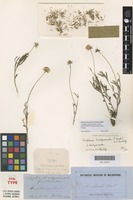
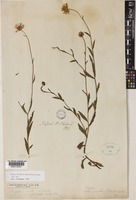
Lectotype of Aster brachycomoides F.Muell. [family ASTERACEAE]
Aster gracilis Nutt. [family ASTERACEAE]
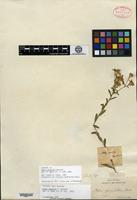
Type? of Aster gracilis Nutt. [family ASTERACEAE]
Isotype of Aster gracilis Nuttall [family ASTERACEAE]
Erigeron bellidioides (Buch.-Ham.ex D.Don) C.B. Clar [family COMPOSITAE]
Type of Aster gracilis Nutt. [family ASTERACEAE]
Erigeron bellidioides (Buch.-Ham. ex D.Don) C.B. Cla [family COMPOSITAE]
Previous
Next

Name

Identification
Aster gracilis Nutt. [family ASTERACEAE ] (stored under name);
Related name
  • Aster gracilis
Common name
  • Slender aster, Flora of North America Vol. 20

Flora

Entry for Eurybia compacta G. L. Nesom [family ]
Herbarium
Flora of North America (FNA)
Collection
Flora of North America
Resource Type
Reference Sources
Entry From
Flora of North America, Vol 20,
Names
Eurybia compacta G. L. Nesom [family ], Phytologia, 77: 259. 1995
Aster gracilis Nuttall [family COMPOSITAE], Gen. N. Amer. Pl., 2: 158. 1818,. not Eurybia gracilis Bentham 1837
Aster surculosus Michaux var. gracilis (Nuttall) A. Gray [family COMPOSITAE]
Treatment Author(s)
Luc Brouillet
Information
Plants 15–50(–70) cm, in clumps, eglandular; caudices thickened, woody, ovoid to spheric. Stems 1–8+, erect, simple, strict, glabrescent, usually ± densely villous distally. Leaves basal and cauline, thick, firm (only midnerves conspicuous), margins entire or nearly so, indurate, scabrous, apices indurate, mucronate, faces scabrous (especially distal) to sometimes glabrous, adaxial sometimes villous (especially proximal) at least along midnerves; basal often withering by flowering (bases sometimes marcescent), petioles erect, longer than blades, bases sheathing, winged, ciliate, blades narrowly elliptic to ovate or obovate, 20–70 × 8–20 mm, bases cuneate, margins sometimes crenulate-serrulate, teeth mucronate, apices obtuse to rounded; cauline usually sessile, sometimes subsessile (ascending), lanceolate to oblanceolate, 15–80(–90) × 2.5–12 mm, bases sheathing to auriculate-clasping (distal), apices acute. Heads 3–55+ in flat-topped, corymbiform arrays, branches ascending, slender. Peduncles slender, villous; bracts 1–2, often 1 near heads, leaflike (bases sometimes indurate and white as in phyllaries). Involucres cylindro-campanulate, 6.5–9 mm, slightly shorter than pappi. Phyllaries 24–35 in 4–5 series, oblong (outer) to lanceolate (inner), unequal, coriaceous (outer) to membranous (inner), bases indurate, rounded (outer), margins hyaline, narrowly scarious, ± erose, ciliate (outer), apices reflexed, green (except innermost), purple-margined, less scarious, rounded or obtuse (outer) to acuminate (inner), mucronate, abaxial faces glabrous or obscurely puberulent, eglandular. Ray florets (5–)8–14; corollas blue-violet to rose-purple or bluish, often pale, 5–8(–10) × 1–1.8 mm. Disc florets 10–20; corollas pale yellow, 5.5–6.2 mm, not ampliate, tubes longer than narrowly funnelform throats, lobes triangular, 0.65–0.9 mm. Cypselae stramineous, cylindro-obconic, 1.75–2.6 mm, ribs 9–12 (crowded), faces glabrate to strigillose; pappi of tawny to cinnamon bristles 5.9–6.2 mm, equaling disc corollas. 2n = 18.
Altitude range
0–200 m;
Distribution
USA Del.USA Ga.USA Md.USA N.J.USA N.C.USA S.C.USA Va.
Discussion
Eurybia compacta may be extirpated from much of its original range (Georgia, Maryland, South Carolina, Virginia) and may now be of conservation concern. It is present on the Atlantic coastal plains and outer Piedmont. A. Cronquist (1980) stated that it approaches E. surculosa on one hand, and E. avita and E. paludosa on the other. This reflects the close affinity between sections Calliastrum and Heleastrum (see above). I have seen no voucher for the Alabama report.

Related Materials

  • Terms and Conditions
  • Privacy Policy
  • Cookie Policy
  • Cookie Settings
  • Accessibility
  • Help
  • Contact Us
  • Facebook
  • Twitter
ITHAKA

JSTOR is part of ITHAKA, a not-for-profit organization helping the academic community use digital technologies to preserve the scholarly record and to advance research and teaching in sustainable ways.

©2000-2026 ITHAKA. All Rights Reserved. JSTOR®, the JSTOR logo, JPASS®, Aluka®, and ITHAKA® are registered trademarks of ITHAKA.

╳